Whatspp/Phone:
+8618666402929
Email:info@shinysteeljewelry.com
Factory address:
No. 5 Changsheng Road, Chang’an Town, Dongguan City, Guangdong Province, China.
 Skip to content
Whatspp/Phone:
+8618666402929
Email:info@shinysteeljewelry.com
Factory address:
No. 5 Changsheng Road, Chang’an Town, Dongguan City, Guangdong Province, China.

You’ve seen the “waterproof” claims all over social media, but do you know what stainless steel jewelry actually is?
Is it just cheap metal, or is it a legitimate, high-performance alternative to silver and gold?
As a veteran manufacturer at ShinySteelJewelry, I don’t just sell these pieces—I engineer them. I know that there is a massive difference between standard industrial steel and the 316L surgical steel used in premium accessories.
In this guide, we’re going beyond the marketing fluff. You’re going to learn the exact alloy composition, the truth about PVD plating technology, and why this material has become the global standard for hypoallergenic, tarnish-free durability.
Let’s get technical.
As jewelry manufacturers, we define stainless steel jewelry as the ultimate blend of durability, affordability, and modern aesthetics. Unlike soft precious metals, stainless steel is a highly durable alloy engineered to withstand daily wear without losing its signature shine. If you are wondering what is stainless steel jewelry at its core, it is a masterclass in metallurgy designed for absolute longevity.
To understand what makes this metal so resilient, we have to look at its base elements. We combine three primary components to manufacture this robust material:
The true magic of our stainless steel jewelry lies in its self-repairing defense mechanism. By incorporating at least 10.5% chromium into the alloy, the metal naturally reacts with oxygen in the environment. This reaction forms a microscopic, invisible chromium oxide layer on the surface of the piece.
When we evaluate stainless steel against cheaper fashion jewelry base metals, the difference in structural integrity is night and day.
When customers ask me what is stainless steel jewelry made of, the answer always comes down to the specific metal grade. Not all steel performs the same way. The grade dictates how well your jewelry holds up against daily wear, sweat, and the elements.
We rely on two main grades in the jewelry industry, but they serve entirely different purposes.
The defining difference between basic 304 and premium 316L lies in a specific element: molybdenum.
Thanks to this specific alloy blend, 316L surgical steel makes for truly waterproof jewelry. You can confidently wear it in the shower, at the beach, or during a heavy workout without worrying about rust or damage.
One of the biggest selling points for stainless steel jewelry is its resilience against water. Unlike cheaper base metals that rust immediately or precious metals that require delicate handling, stainless steel is built for real life.
You can confidently wear high-quality stainless steel pieces in the shower, pool, or ocean. The chromium oxide layer we discussed earlier acts as a self-healing barrier. When exposed to water—even saltwater—this layer prevents the iron inside from oxidizing (rusting). While 304 stainless steel is water-resistant, 316L surgical steel is the superior choice for frequent swimmers because it contains molybdenum, which specifically resists corrosion from chlorides found in saltwater and sweat.
Sterling silver is known for tarnishing; it reacts with sulfur in the air, turning black over time and requiring constant polishing. Stainless steel does not have this problem. It is inherently tarnish-resistant. You can leave a stainless steel necklace on a bathroom counter for months, and it will look exactly the same when you pick it up. This low-maintenance aspect makes it a favorite for everyday wear.
If you are looking for gold tones, the application method matters. Traditional gold plating on brass or silver often fades or flakes off quickly when exposed to water.
We utilize Physical Vapor Deposition (PVD) plating, a vacuum coating process that bonds the color to the steel at a molecular level.
For brands looking to create durable collections, partnering with a stainless steel jewelry manufacturer that specializes in PVD technology ensures your customers get waterproof jewelry that actually lasts.
For brands and wholesalers, the biggest safety question is always about allergies. The short answer is yes, high-quality stainless steel jewelry is hypoallergenic and safe for the vast majority of people, making it a reliable choice for mass-market retail.
There is a common misconception that stainless steel contains absolutely zero nickel. In reality, nickel is an essential element that gives the steel its hardness and luster. However, in high-grade alloys, the nickel is tightly bonded within the molecular structure. We adhere to strict EU REACH and US Prop 65 standards, ensuring that while the alloy contains trace amounts of nickel, it does not leach out onto the wearer’s skin.
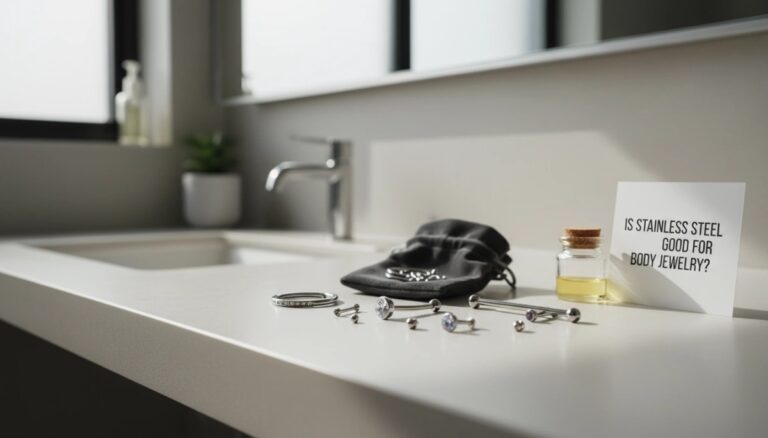
We primarily manufacture using 316L surgical stainless steel, the same material used in medical implants and body piercing jewelry. This grade is bio-compatible, meaning it is non-reactive and generally will not irritate sensitive skin. This makes it the ideal material for items worn in close, constant contact with the body, such as our stainless steel bracelet collections or heavy chains.
The safety of the jewelry depends on nickel release, not just total composition. The chromium oxide layer acts as a barrier, preventing the nickel from reacting with sweat or skin oils. Lower-grade steels lack this stability, but our 316L and 304 grades are rigorously tested to ensure they remain skin-friendly for everyday wear.
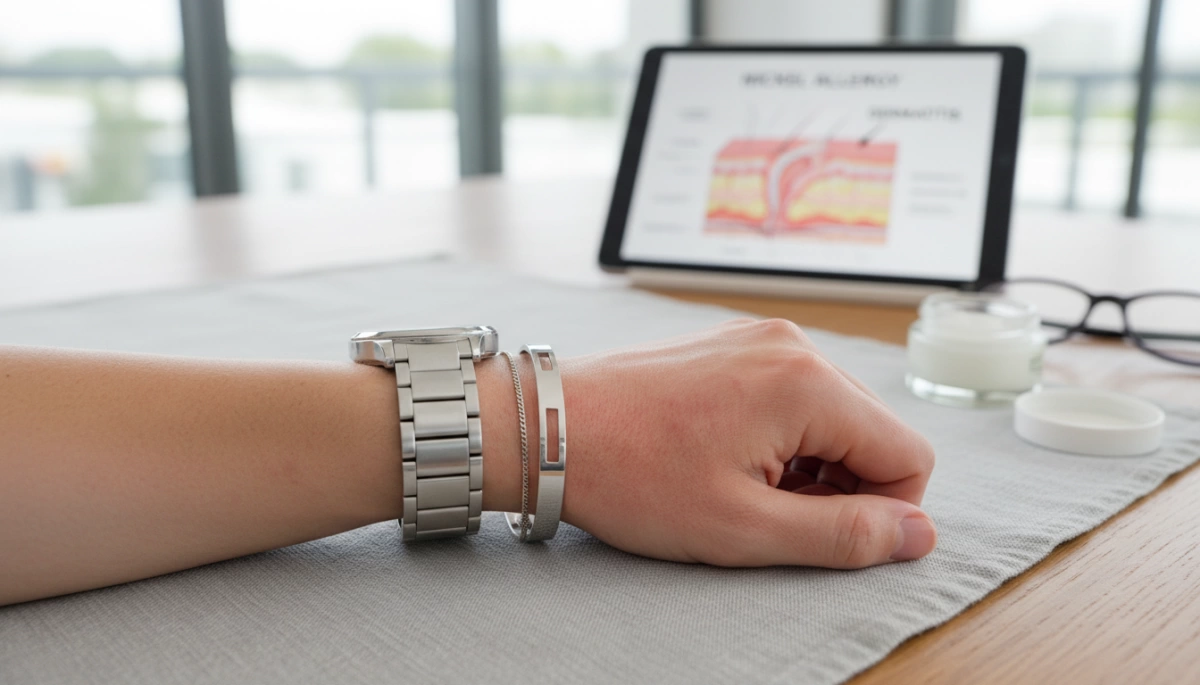
One of the most common complaints in the fashion jewelry market is the dreaded “green finger.” This discoloration is strictly a result of chemical oxidation. It occurs when acids in human sweat react with metals like copper or brass, forming copper salts that leave a green residue on the skin. This is a major pain point for consumers and a frequent cause of returns for retailers selling plated brass items.
Stainless steel jewelry eliminates this issue entirely. The metal is chemically stable and does not react with the skin’s natural acidity. Unlike cheaper alloys, the chromium oxide layer on our custom stainless steel rings creates a barrier that prevents oxidation, even when worn tightly against the skin where moisture gets trapped.
When asking what is stainless steel jewelry best known for, stability is the answer. We exclusively manufacture using high-grade 316L and 304 stainless steel, which are formulated to remain inert. This ensures the metal retains its original color and, more importantly, keeps your customers’ skin free from stains, regardless of humidity, sweat, or daily wear.
When customers ask me exactly what is stainless steel jewelry and how it stacks up against traditional metals, I always point to daily practicality. Precious metals are classic, but our modern American lifestyles demand durability.
The biggest difference between these two comes down to the Mohs hardness scale and daily maintenance.
If you want the look of high-end pieces without the stress of damaging an investment, steel is the practical choice.
Mining for new precious metals takes a heavy toll on the earth. Stainless steel is 100% recyclable and can be repurposed endlessly without losing its structural integrity. Because of this, it has quickly become a leading choice for sustainable fashion accessories. Choosing steel means getting a lifetime piece with a fraction of the environmental footprint.
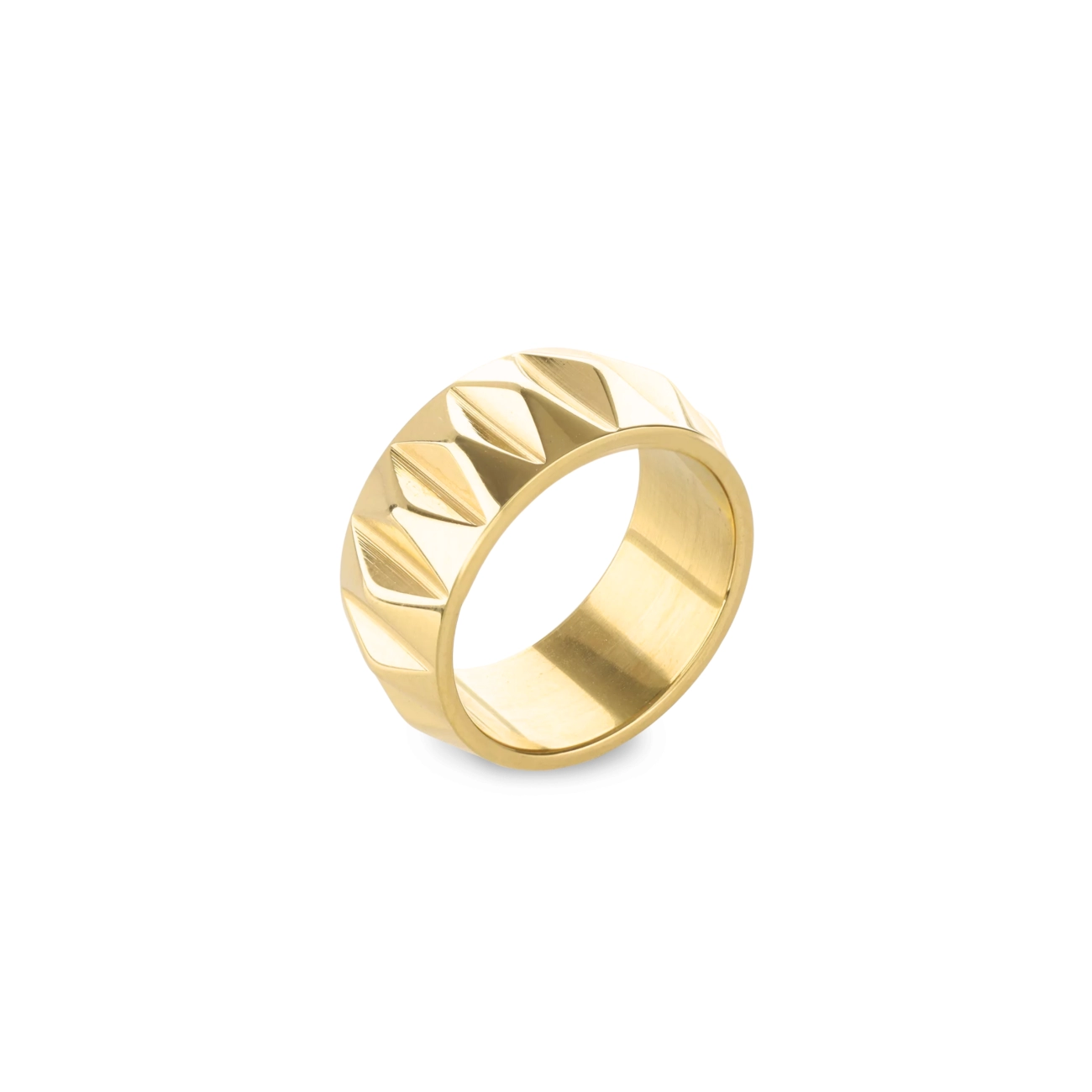
As a manufacturer working with global brands, we see firsthand why stainless steel jewelry has become a staple in the accessory market. It offers a balance of durability and aesthetics that precious metals often struggle to match at a scalable price point. However, understanding the material’s limitations is just as important as knowing its strengths.
For modern consumers, stainless steel jewelry represents affordable luxury jewelry. It provides the visual appeal of platinum or white gold without the exorbitant cost or high maintenance.
While the material is superior for durability, the disadvantages of stainless steel jewelry mostly revolve around its rigidity. Because the metal is so hard, it lacks the malleability of traditional precious metals.
| Feature | The Challenge |
|---|---|
| Resizing | Unlike gold or silver, stainless steel cannot be easily resized by a local jeweler. The high melting point requires specialized welding equipment. |
| Repair Difficulty | If a prong breaks or a deep scratch occurs, repairing it is labor-intensive and often costs more than replacing the item. |
| Design Rigidity | The metal’s hardness makes it difficult to set very delicate, intricate stones that require soft metal to hold them in place. |
This rigidity is particularly relevant for categories like stainless steel mens rings, where precise sizing is critical from the start. Since we cannot easily stretch or compress the band after production, we emphasize using CNC precision tooling to ensure exact sizing during the manufacturing phase.
To understand what is stainless steel jewelry truly capable of, you have to look at how it is made. Unlike softer precious metals that are almost exclusively cast, working with 316L and 304 steel requires heavy-duty industrial processes. We approach production through two main avenues to ensure the highest quality for global brands:
Regardless of whether a piece is cast or machined, the machine finish is never the final step. We prioritize hand-polishing to ensure “wearability.” Stainless steel is an incredibly hard metal; if the edges aren’t expertly smoothed and buffed by hand, the jewelry can feel sharp or uncomfortable. High-quality polishing creates that mirror-like finish and ensures the piece glides over the skin without irritation.
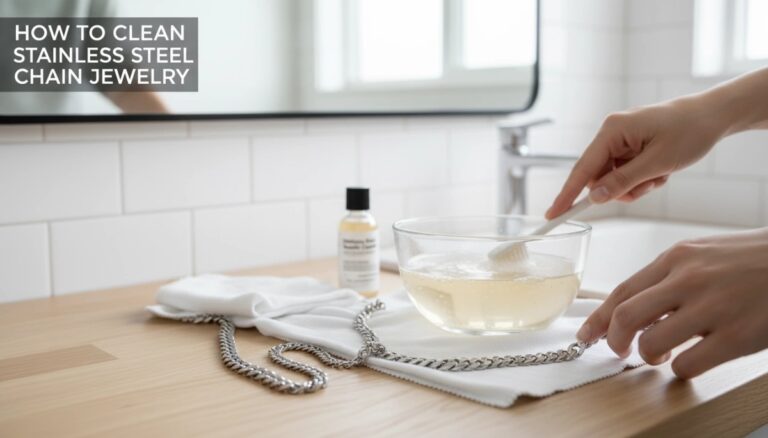
One of the biggest selling points for end-consumers is the low maintenance required. Since the chromium oxide layer protects the metal, you don’t need special chemical cleaners or polishing dips.
Because our PVD plating is bonded at a molecular level, this gentle cleaning routine is safe for gold, rose gold, and black finishes, keeping them vibrant for years without fading.