Whatspp/Phone:
+8618666402929
Email:info@shinysteeljewelry.com
Factory address:
No. 5 Changsheng Road, Chang’an Town, Dongguan City, Guangdong Province, China.
 Skip to content
Whatspp/Phone:
+8618666402929
Email:info@shinysteeljewelry.com
Factory address:
No. 5 Changsheng Road, Chang’an Town, Dongguan City, Guangdong Province, China.

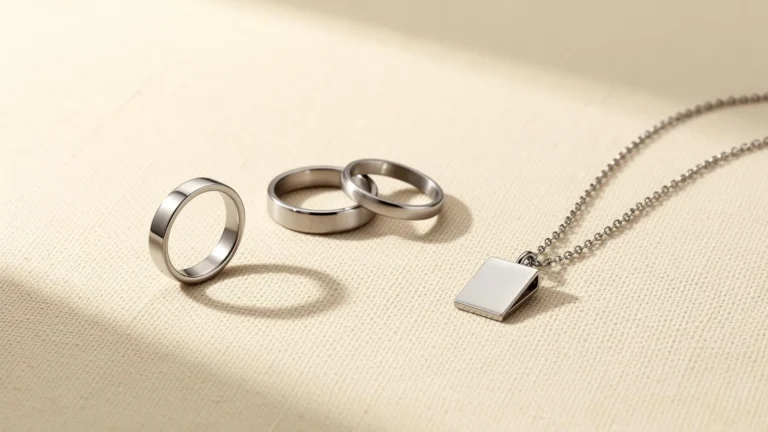
Stainless steel isn’t just a budget-friendly alternative to precious metals; it is a powerhouse material that balances durability with aesthetic versatility. Whether I am overseeing a custom OEM production run for a global brand or advising a startup on their first collection, I always emphasize that the quality of the base metal dictates the longevity of the product. Stainless steel jewelry has become a staple in the market because it offers the look of platinum or white gold without the fragility or high maintenance.
The reason stainless steel jewelry doesn’t rust like iron is purely scientific. The alloy contains a specific percentage of chromium. When exposed to oxygen in the air, this chromium forms a microscopic, invisible layer known as chromium oxide.
This passive layer acts as a shield. It seals the metal away from water and air, preventing rust and corrosion. The best part? If the surface gets slightly scratched, the chromium reacts with oxygen to “heal” the layer, maintaining that signature shine. This self-repairing characteristic is why stainless steel is the preferred choice for durable, everyday accessories.
In the manufacturing world, not all steel is created equal. To ensure safety and quality, we strictly utilize two specific grades in our factory:
Both grades we use are Nickel-Free, Lead-Free, and fully compliant with strict EU REACH and US Prop 65 standards. This ensures that the jewelry is safe for the end consumer and legal for sale in major Western markets.
When we produce gold, rose gold, or black jewelry, we don’t rely on traditional wet painting methods that chip easily. We utilize PVD (Physical Vapor Deposition) and IP plating.
While PVD is incredibly durable, it still requires proper care to maintain its luster over years of wear. Understanding this plating process is the first step in knowing how to clean stainless steel jewelry without damaging the finish.
Before diving into how to clean stainless steel jewelry, let’s set up your workspace. You don’t need expensive commercial chemicals to get the job done right. A safe DIY jewelry cleaner using everyday household items is actually the best route for protecting your metal.
Keep it simple. Here is the exact toolkit I recommend grabbing from around the house:
Sort your pieces before you start scrubbing. Not all items should be tossed into the exact same bowl.
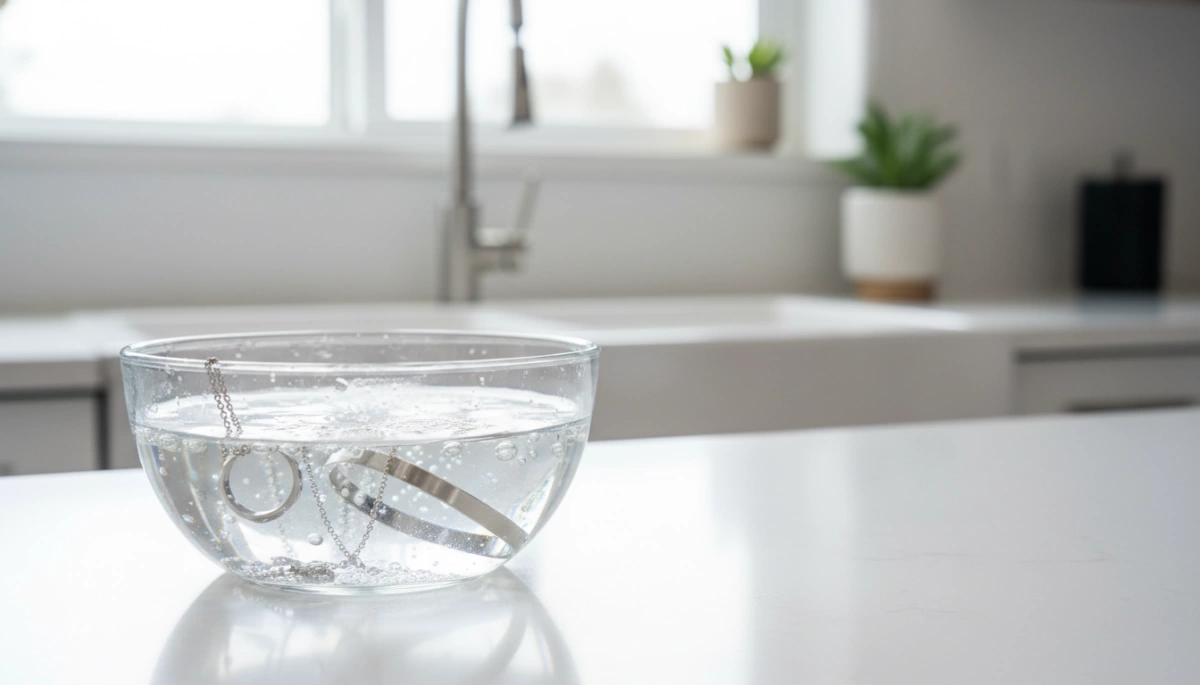
When figuring out how to clean stainless steel jewelry for daily wear, I always start with the classic soap and water routine. It’s a completely safe DIY jewelry cleaner that works perfectly for everyday items, whether you are polishing up a delicate pendant or scrubbing sweat off heavy-duty men’s stainless rings.
Here is my quick, four-step process to get that shine back:
Sometimes, a quick wash isn’t enough to cut through layers of lotion, sweat, or accumulated dirt. When your stainless steel jewelry starts looking a bit dull, a simple baking soda jewelry cleaning hack can act as a gentle abrasive to lift grime without damaging the metal’s surface integrity. This method is particularly useful for items with intricate details where dirt likes to hide.
You don’t need expensive chemical cleaners to get professional results. We recommend a simple homemade mixture that is safe for the 316L and 304 surgical steel grades we manufacture.
Once your paste is ready, apply it generously to the jewelry. If you are cleaning a complex stainless steel bracelet with many links or a mesh design, use a soft-bristled toothbrush to work the paste into the gaps.
After scrubbing, rinse the jewelry thoroughly under warm running water. It is critical to remove every trace of baking soda, as dried residue can leave a white film in the crevices of a stainless steel necklace. Once rinsed, immediately dry the piece with a soft, lint-free microfiber cloth. Buffing the metal while drying will help restore its original high-polish shine and prevent water spots.
While we manufacture our pieces using durable 316L and 304 surgical grades, even the highest quality stainless steel jewelry has its kryptonite. Preserving the integrity of the metal and the longevity of PVD plating requires avoiding specific hazards that can compromise the finish.
Never expose your jewelry to harsh household cleaners. Although stainless steel is resistant to rust, chemical agents like bleach and chlorine can break down the protective chromium oxide layer, leading to pitting or permanent discoloration. This is especially critical for PVD plated jewelry (Gold, Rose Gold, or Black finishes). The chemicals can strip the plating, revealing the underlying base metal.
A common myth is that toothpaste is a good polish. In reality, most toothpaste contains micro-abrasives designed to scrub enamel, which can leave tiny scratches on the mirror-polished surface of your rings or bangles. Similarly, never use steel wool or scouring pads. These will instantly dull the shine and ruin the smooth texture of custom stainless steel jewelry. Stick to soft microfiber cloths to maintain that factory-fresh luster without abrasion.
Ultrasonic cleaners are powerful tools often used in professional settings, but they aren’t always suitable for home use with every design.
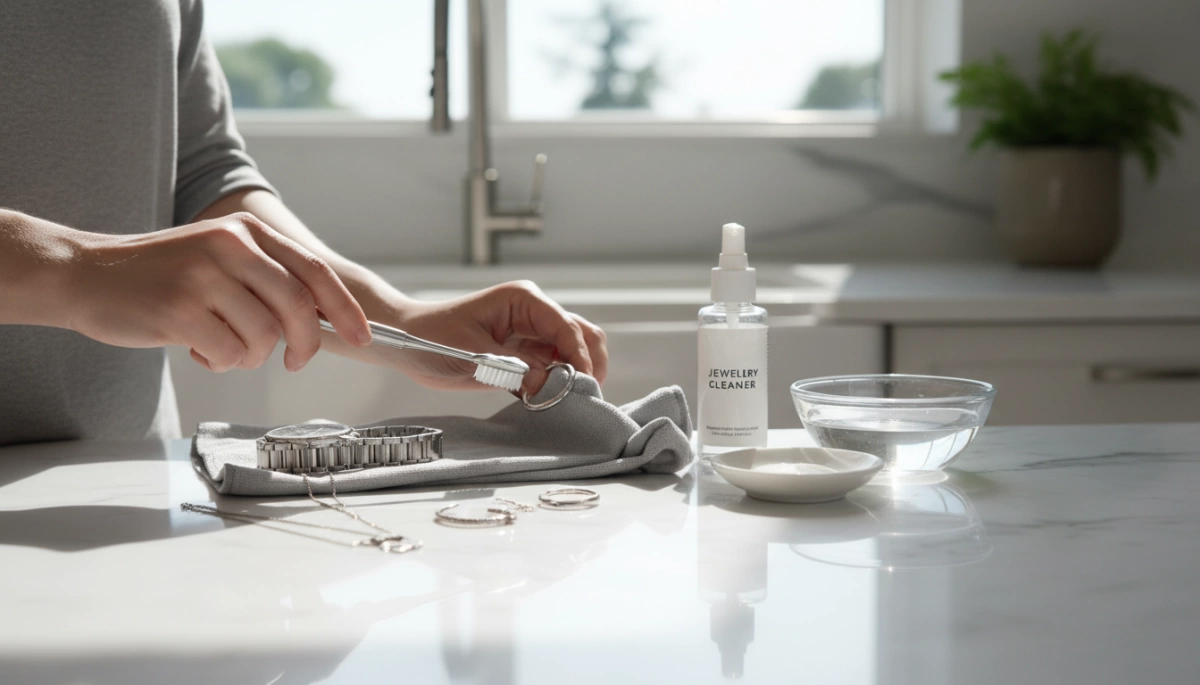
Stainless steel is famous for its durability, but keeping that factory-fresh mirror finish requires a little discipline. You don’t need to baby it like soft sterling silver, but adopting a few smart habits will ensure your stainless steel jewelry stays brilliant for years.
This is the golden rule for jewelry care. Your accessories should always be the final touch to your outfit and the very first thing you remove when you get home.
Tossing all your accessories into a single drawer is a recipe for surface damage. Even though stainless steel is a hard metal, constant metal-on-metal contact will eventually cause micro-scratches, especially on high-polish items.
As a manufacturing partner for global brands, we see firsthand that the customer experience doesn’t end at the sale—it extends to how well the product holds up over time. Including a well-designed care card in your custom packaging is a low-cost, high-impact strategy. It not only reduces customer service inquiries regarding maintenance but also reinforces the premium nature of your brand. When customers understand how to clean stainless steel jewelry properly, they are less likely to damage the finish accidentally, leading to higher satisfaction and fewer returns.
Trust is built on transparency. When you explicitly tell your customers how to care for their purchase, you are signaling that your product is designed to last. For DTC brands, this is a critical retention tool. A physical card included in the box serves as a tangible reminder of quality, distinguishing your label from fast-fashion competitors who treat jewelry as disposable. By educating buyers on the durability of 316L and 304 surgical steel, you validate their purchase decision and build confidence in your brand’s expertise.
To maximize the value of your packaging, ensure your care card covers the technical essentials while maintaining your brand voice. Here is what we recommend including based on our OEM production standards:
When sourcing stainless steel jewelry, the integrity of the base metal dictates the longevity of the final product. At ShinySteelJewelry, we rely exclusively on 316L and 304 Surgical Stainless Steel, as well as Titanium and Lead-Free Eco-Brass. We understand the strict safety requirements of the US market; that’s why our production lines ensure every piece is Hypoallergenic, Nickel-Free, and fully compliant with EU REACH and US Prop 65 standards.
To ensure your collections maintain their luster, we utilize advanced PVD and IP plating technologies engineered for superior color stability. We back our manufacturing with strict quality control protocols and fully support third-party inspections by agencies such as SGS, Intertek, and V-Trust before any shipment leaves our facility.
We built our factory infrastructure to support global brands, wholesalers, and online DTC labels who need agility without sacrificing quality. With over 15 years of experience and a 98% on-time delivery rate, we make custom manufacturing accessible and secure.
Yes, you can. Because we manufacture exclusively with high-grade 316L and 304 surgical stainless steel, our jewelry is inherently waterproof and rust-resistant. Unlike cheaper metals that tarnish immediately upon contact with water, our pieces maintain their integrity. However, keep in mind that soaps and shampoos can leave a film on the surface over time, which may temporarily dull the PVD plating’s shine until it is rinsed off.
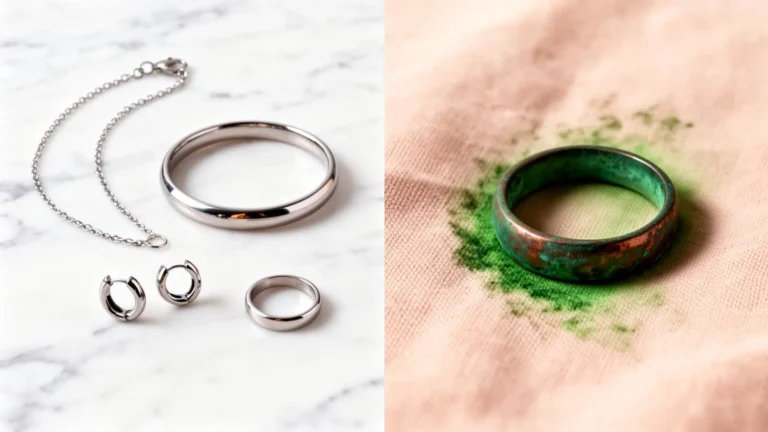
No, it will not. The dreaded “green finger” is a reaction caused by copper or high-nickel content, which reacts with skin acidity. Our products are guaranteed hypoallergenic, Nickel-Free, and Lead-Free, fully compliant with EU REACH and US Prop 65 standards. This makes them safe for sensitive skin and ensures no discoloration, which is critical for items like custom stainless steel rings that have tight, constant contact with the skin.
For pieces worn daily, we recommend a gentle cleaning once a month to remove accumulated body oils, lotions, and dust. If the jewelry is worn only occasionally, a quick wipe with a soft cloth before storage is sufficient. Regular maintenance ensures the PVD and IP plating (whether gold, rose gold, or black) retains its color stability for years.
While raw stainless steel is highly durable, we advise against using vinegar, especially on PVD-plated items. Vinegar is acidic and can be too harsh for the plated finish over time. To protect the longevity of the color and finish, stick to mild dish soap and warm water. This method is effective without risking the integrity of the protective coating.
 Optimized by Seraphinite Accelerator