Whatspp/Phone:
+8618666402929
Email:info@shinysteeljewelry.com
Factory address:
No. 5 Changsheng Road, Chang’an Town, Dongguan City, Guangdong Province, China.
 Skip to content
Whatspp/Phone:
+8618666402929
Email:info@shinysteeljewelry.com
Factory address:
No. 5 Changsheng Road, Chang’an Town, Dongguan City, Guangdong Province, China.
You might already know that finding a jewelry manufacturer is the biggest hurdle to scaling your brand…
But where do you actually start?
Well, you’re in for a treat because I’ve put together a complete, step-by-step blueprint.
As an industry veteran, I know that choosing the right partner goes far beyond just asking how much it costs to manufacture jewelry. It is about protecting your intellectual property, securing a reliable low MOQ jewelry supplier, and avoiding costly overseas scams.
In this post, you’re going to learn exactly how to find a custom jewelry manufacturer you can actually trust.
I will give you actionable advice based on real-world B2B jewelry sourcing experience, guiding you through the entire jewelry manufacturing process from vetting overseas jewelry suppliers to the final polish.
If you are ready to turn your sketches into a profitable reality safely, this guide is for you.
Let’s dive right in.
If you are wondering how to find a jewelry manufacturer that actually delivers on quality and time, the hard truth is that it starts with you. Before sending out a single email or requesting a quote, you need a rock-solid grasp of your own production needs. Going to a factory without a clear plan is the fastest way to be ignored or overcharged. I have learned firsthand that defining your technical and financial requirements upfront is the non-negotiable first step to successful B2B jewelry sourcing.
When navigating how to manufacture jewelry, you will encounter three main production models. Knowing exactly which route you want to take dictates the type of custom jewelry factory you need to approach.
| Manufacturing Model | What It Actually Means | Best Suited For |
|---|---|---|
| OEM (Original Equipment Manufacturer) | You provide the technical designs (CAD or tech pack); the factory builds your completely custom piece from scratch. | Brands focused on highly unique designs requiring custom jewelry prototyping and exclusive rights. |
| ODM (Original Design Manufacturer) | The factory owns the base design, but you can make slight modifications (like changing stone colors or chain lengths). | Brands looking to leverage existing factory expertise while adding a slight personal touch. |
| Private Label | You buy the factory’s pre-designed, ready-made products and simply add your brand’s logo or custom packaging. | Rapid launches where a private label jewelry manufacturer allows you to go to market instantly. |
You cannot simply ask a factory for “gold jewelry” and expect an accurate quote. Vagueness leads to poor quality control and unpredictable costs. You must explicitly define your materials to the micron level.
Figuring out how much it costs to manufacture jewelry requires reverse engineering your business model. You must understand your target margins before negotiating with any overseas jewelry suppliers.
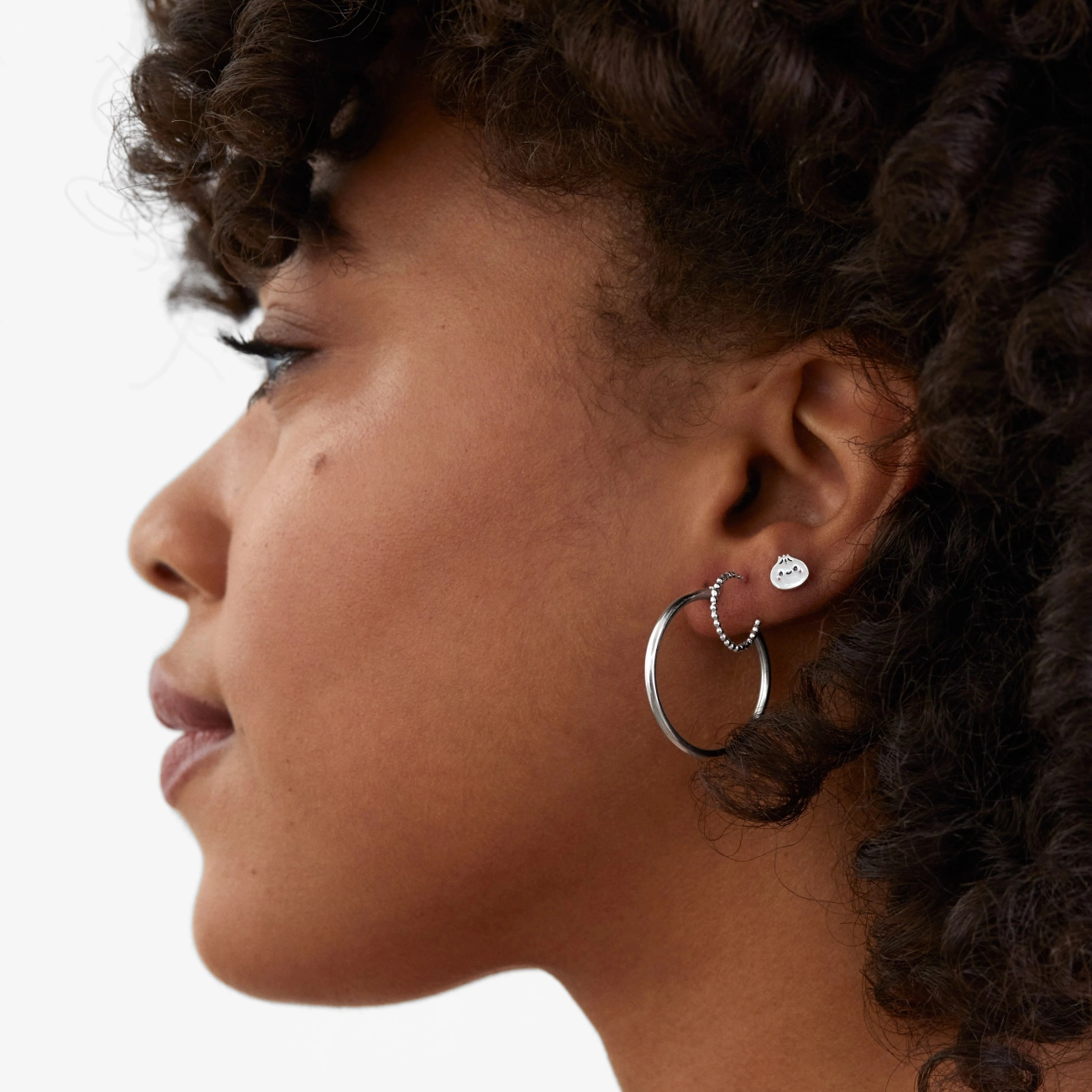
When clients ask me how do I find a jewelry manufacturer, I always tell them to focus on the top three proven channels. Whether you want to source locally in the US or tap into competitive overseas jewelry suppliers, knowing exactly where to look speeds up your B2B jewelry sourcing process.
Here are the most effective places to track down a reliable custom jewelry factory:
Platforms like Alibaba, ThomasNet, and Global Sources are standard starting points. They allow you to filter thousands of suppliers by material, compliance records, and location.
If you want to know how to find a jewelry maker you can trust from day one, get out there and meet them face-to-face. Major US events like JCK Las Vegas or ASD Market Week are massive hubs for the jewelry industry.
Often, the most direct route yields the best long-term partnerships. Firing up Google and searching for your specific niche—like looking up how to find a custom jewelry manufacturer that specializes in durable men’s stainless rings—will bring up dedicated factory websites instead of generic directories.
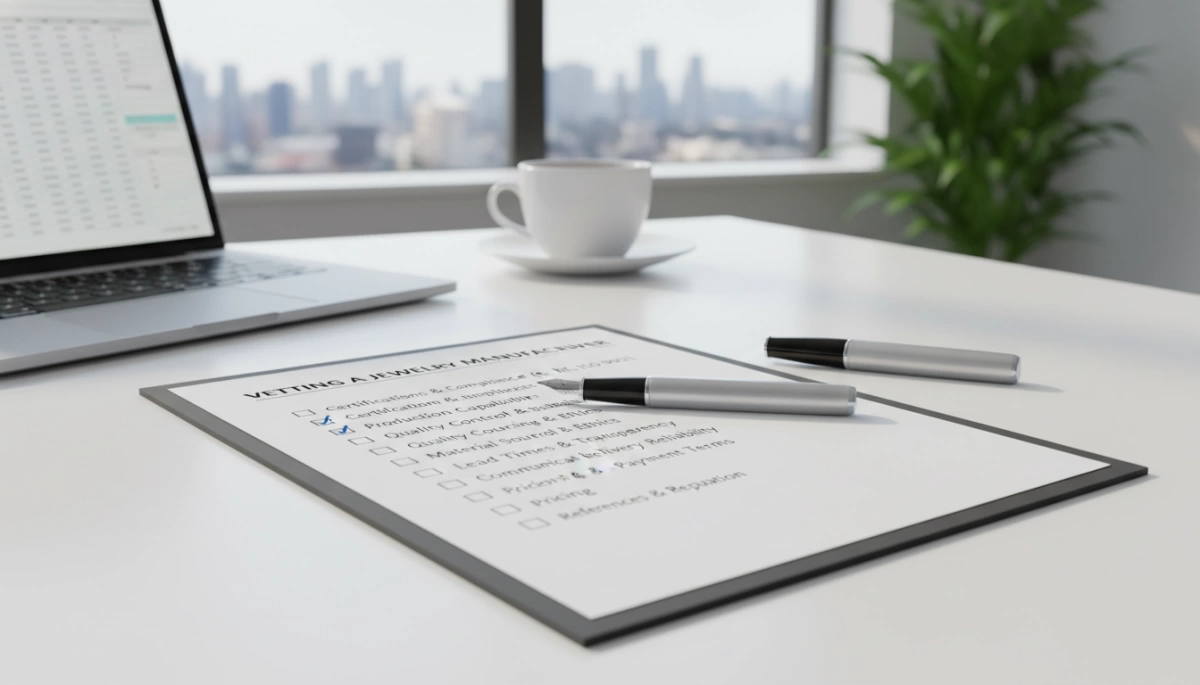
Once you know where to look, finding a good jewelry manufacturer comes down to asking the right questions and verifying their credentials. It is not just about price; it is about building a reliable supply chain. Here is my 5-point checklist for vetting a potential factory.
You need a partner whose production requirements align with your current budget and scale. If you are launching a new collection or testing the market, finding a low MOQ jewelry supplier is essential. Always ask them upfront about their minimums per design, per size, and per color to ensure you don’t overextend your inventory budget.
Your custom designs are the lifeblood of your brand. When learning how to find a jewelry maker you can genuinely trust, you must prioritize IP protection. Ask if they are willing to sign a Non-Disclosure Agreement (NDA). A reputable factory will respect your privacy and guarantee that your exclusive molds and designs will never be sold to competitors or featured in their public catalogs.
You need to verify that the factory actually has the equipment and skills to make your specific product.
Never assume consistent quality is guaranteed. You must ask about their internal inspection standards, defect rates, and material testing procedures. A trustworthy manufacturing partner will have a rigorous quality control process in place at multiple stages of production to ensure every piece meets your exact specifications before it is boxed.
Good communication makes or breaks your manufacturing relationship, especially when working with overseas suppliers. Pay close attention to how they handle your initial outreach.
Understanding exactly how to manufacture jewelry gives you a major advantage when dealing with suppliers. It helps you set realistic timelines, manage your budget, and know exactly what you are paying for at each stage. When we guide new brands through the jewelry manufacturing process, we break it down into three core phases to keep everything streamlined and predictable.
Everything starts with your idea. Before any metal is poured or polished, your design needs to be translated into a technical language the factory understands.
You should never jump straight into a large mass production run without holding a physical sample in your hands first.
Once you give the green light on the prototype, we move directly into fulfilling your full order.
In my experience, knowing how to find a good jewelry manufacturer isn’t just about spotting the right partner—it’s also about knowing exactly who to avoid. When you are vetting overseas jewelry suppliers or a local custom jewelry factory, keep a sharp eye out for these dealbreakers:
Protect your brand from day one. If the initial setup feels sketchy, forced, or unprofessional, cut your losses and move on to a better supplier.
Finding a reliable partner in B2B jewelry sourcing can make or break your business. At ShinySteelJewelry, we know exactly what it takes to launch and scale successfully in the highly competitive United States market. Whether you are currently trying to figure out how to find a custom jewelry manufacturer for a brand-new collection or need a better partner to scale your existing production, we have you covered.
Here is exactly why emerging designers and established retail brands choose us as their go-to custom jewelry factory:
If you are ready to build a profitable, long-lasting brand, our expertise in private label jewelry manufacturing ensures your pieces meet the highest retail standards. We take all the guesswork and risk out of dealing with overseas jewelry suppliers by providing clear, responsive communication, fast turnaround times, and consistent quality you can stake your brand’s reputation on.
If you are figuring out how to find a jewelry manufacturer overseas without getting burned, it all comes down to strict due diligence. Here is how we recommend protecting your brand and investment:
The timeline depends heavily on the complexity of your design and the materials used, but a standard production run usually follows this schedule:
Not necessarily. While handing over finished 3D CAD files will definitely speed up your timeline, a solid custom jewelry maker can work from almost anything. If you are just learning how to manufacture jewelry from scratch, you can provide us with simple 2D sketches, reference photos, or technical packs. Our in-house engineering team will take those basic concepts and build the professional CAD files for your approval before we ever start making molds.