Whatspp/Phone:
+8618666402929
Email:info@shinysteeljewelry.com
Factory address:
No. 5 Changsheng Road, Chang’an Town, Dongguan City, Guangdong Province, China.
 Skip to content
Whatspp/Phone:
+8618666402929
Email:info@shinysteeljewelry.com
Factory address:
No. 5 Changsheng Road, Chang’an Town, Dongguan City, Guangdong Province, China.

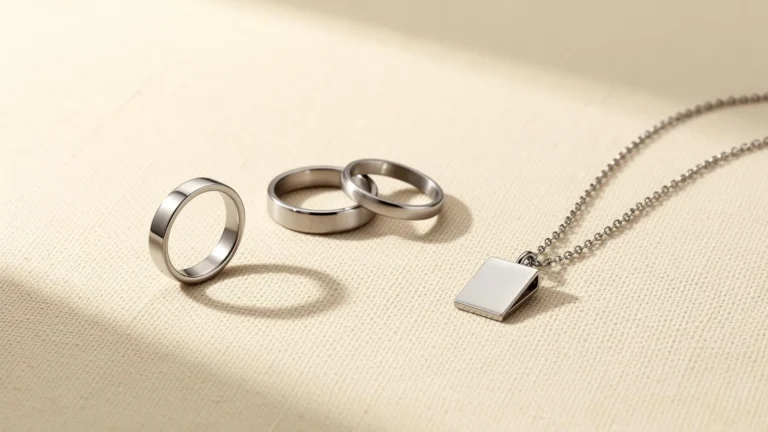
At ShinySteelJewelry, we rely on 316L stainless steel jewelry as the backbone of our manufacturing for global brands. But to understand why is 316l stainless steel good for jewelry, you have to look past the shine and into the metallurgy. It is not just standard steel; it is a specialized austenitic alloy designed for extreme durability and safety.
The alphanumeric code isn’t random. It represents a specific chemical composition that dictates how the metal behaves against sweat, water, and wear.
| Component | What It Means | Why It Matters for Jewelry |
|---|---|---|
| 316 (The Grade) | Contains 16-18% Chromium, 10-14% Nickel, and 2-3% Molybdenum. | Molybdenum is the key differentiator. It gives the alloy superior resistance to chlorides (salt water, sweat) compared to standard 304 steel. |
| L (Low Carbon) | Stands for Low Carbon (maximum 0.03%). | Lower carbon content prevents corrosion after high-temperature processing (like welding or laser cutting). It ensures the jewelry remains rust-proof structurally. |
You will often see 316L stainless steel jewelry marketed as “Surgical Steel.” This isn’t just a buzzword; it refers to the metal’s bio-compatibility. Because 316L resists corrosion so effectively, it prevents metal ions from leaching out when in contact with biological fluids.
When we manufacture collections for global brands, we don’t select metals at random. 316L stainless steel jewelry has become the dominant material in the mid-tier and fashion jewelry market for a specific reason: it hits the perfect sweet spot between industrial strength and luxury aesthetics. Here is why it is the go-to choice for our OEM clients.
Is 316l stainless steel good for jewelry if you have sensitive skin? Absolutely. While stainless steel alloys do contain trace amounts of nickel, the molecular structure of 316L binds these elements tightly. This results in an extremely low nickel release rate that is safe for the human body.
Our production strictly adheres to international safety standards, including EU REACH and US Prop 65. For items that have constant contact with the skin, such as a stainless steel necklace, this bio-compatibility is non-negotiable. We use 316L specifically because it minimizes the risk of allergic reactions, making it safe for the vast majority of wearers—even those who cannot wear lower-grade fashion jewelry.
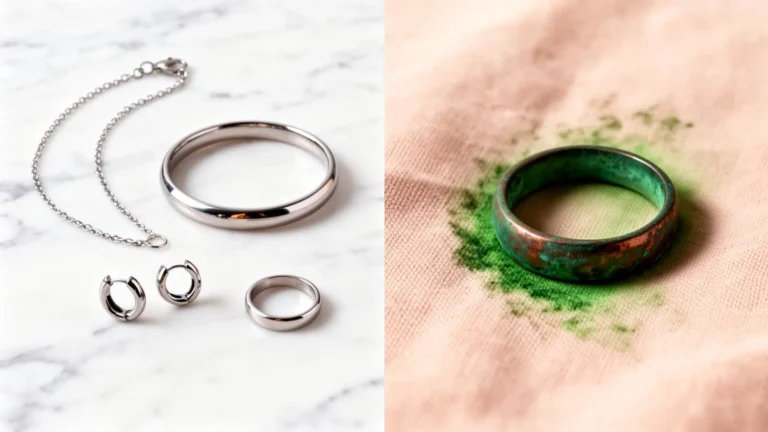
We have all seen cheap accessories turn a customer’s finger green. This reaction occurs when copper in base metals reacts with the acids and sweat on the skin. 316L stainless steel is chemically stable. It does not oxidize or react with skin oils to produce that dreaded green tint.
When you source from us, you are getting a material that maintains its integrity. Your customers won’t face discoloration issues, which directly protects your brand’s reputation for quality and reduces return rates.
Jewelry needs to survive real life. 316L is inherently waterproof and sweatproof. Unlike sterling silver, which tarnishes quickly when exposed to humidity, or plated brass that can corrode, 316L handles the elements with ease.
We enhance this natural durability with PVD (Physical Vapor Deposition) plating. This vacuum coating process bonds gold, rose gold, or black tones to the steel at a molecular level, ensuring the finish doesn’t flake or fade after a few showers.
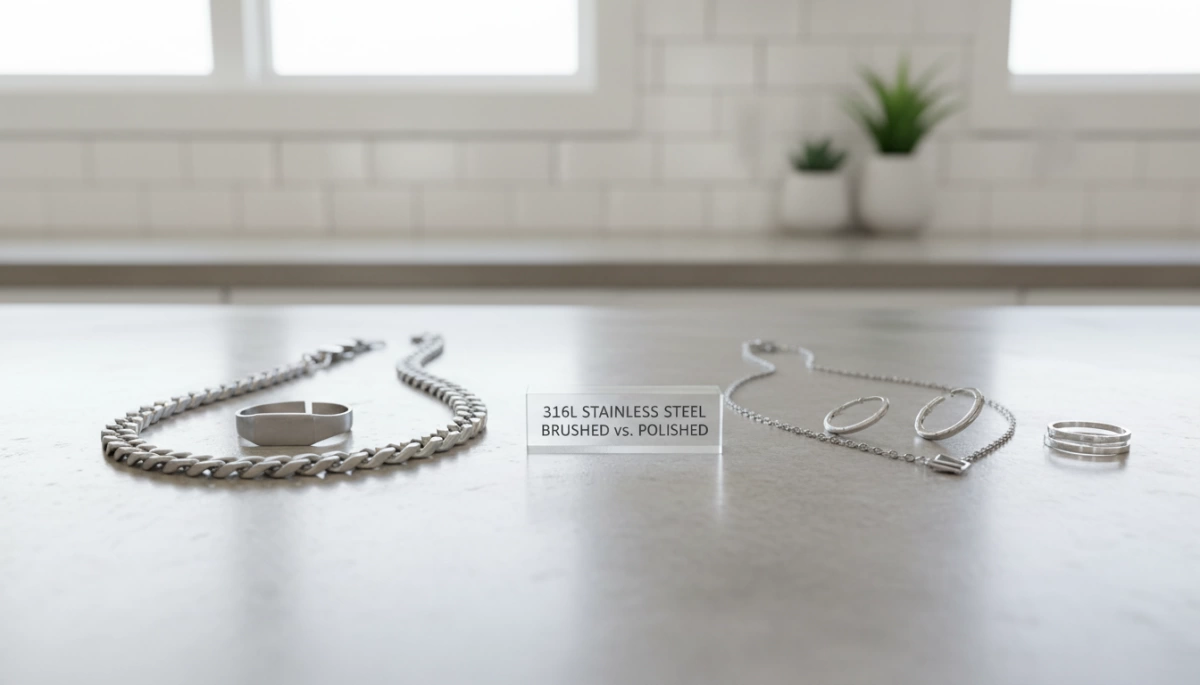
When sourcing materials for your jewelry line, understanding how 316l stainless steel jewelry stacks up against other metals is critical for your brand’s reputation and bottom line. We often see buyers debating between steel, silver, and gold. Here is the breakdown from a manufacturing perspective.
This is the most common confusion in the industry. Visually, they look identical, but chemically, they are worlds apart.
Sterling silver has a high perceived value, but it comes with maintenance headaches that can frustrate end consumers.
Solid gold is an investment asset, while stainless steel is the king of fashion and durability.
When asking “is 316L stainless steel good for jewelry,” the answer often hinges on how well it can mimic precious metals without the hefty price tag. Raw stainless steel has a sleek, industrial silver tone, but modern manufacturing techniques allow us to transform it into luxurious gold, rose gold, or black finishes that rival solid gold in appearance.
The secret to high-quality 316L stainless steel jewelry lies in Physical Vapor Deposition (PVD). Unlike traditional electroplating used on cheaper metals, PVD is a vacuum coating process that bonds the color to the steel at a molecular level. This results in a finish that is significantly more durable and resistant to corrosion from sweat and seawater.
For brands sourcing custom gold plated bracelets, PVD is the gold standard. It allows us to offer rich 14k or 18k gold tones that won’t fade or tarnish easily. This technology ensures that the jewelry remains hypoallergenic and safe for sensitive skin, as the coating seals the underlying metal effectively.
Before any plating occurs, the base metal must be perfected. We utilize advanced polishing techniques to ensure every piece of 316L stainless steel jewelry has a mirror-like shine or a sophisticated matte texture, depending on the design requirements.
As a dedicated stainless steel jewelry manufacturer, we ensure that the combination of superior 316L steel, PVD plating, and expert polishing results in a product that looks expensive but is built to last a lifetime.
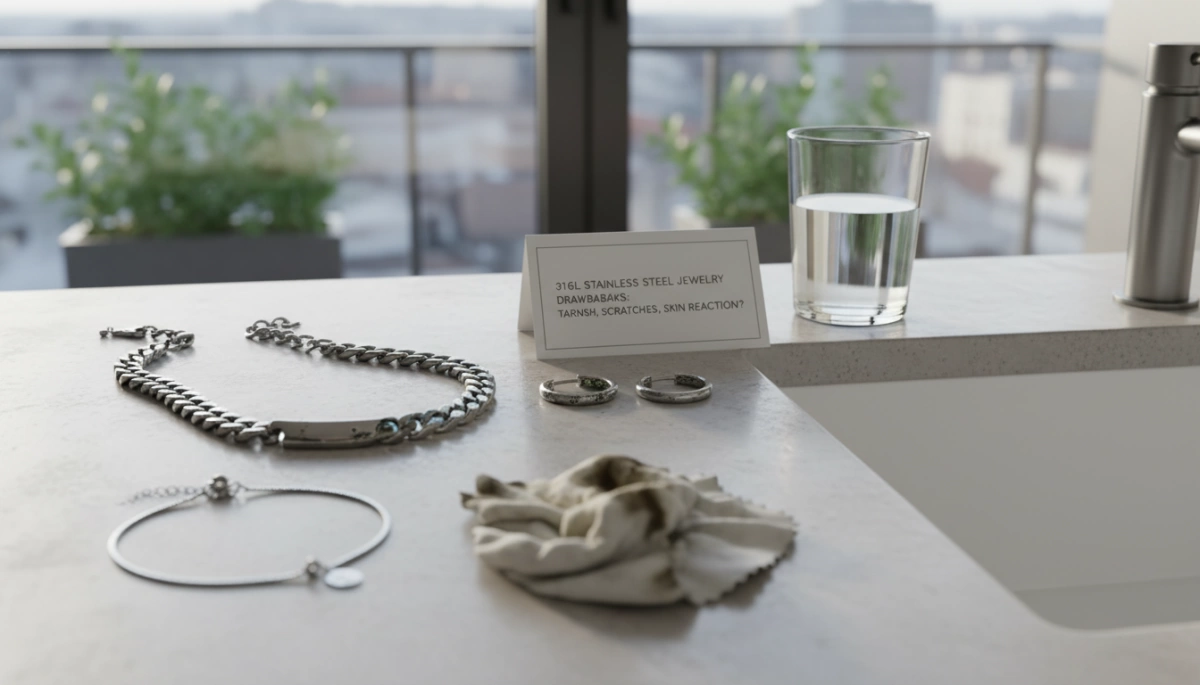
Is 316L stainless steel good for jewelry? Absolutely, but as a manufacturer, we believe in total transparency. While 316L is the industry standard for durability and safety, it is not the perfect solution for every single application. Understanding these limitations helps brands make smarter sourcing decisions.
The most significant drawback for the end consumer is resizing. Because 316L stainless steel jewelry is incredibly hard and possesses a very high melting point, a traditional bench jeweler cannot simply cut and solder it like they would with gold or sterling silver.
Stainless steel is a functional industrial metal, not a precious metal. Unlike solid gold, platinum, or even silver, 316L does not hold intrinsic scrap value. Consumers buy these pieces for their aesthetic appeal, hypoallergenic properties, and longevity, not as a financial asset that will appreciate over time. It is affordable fashion, not an heirloom investment.
The same rigidity that makes 316L scratch-resistant also makes it difficult to manipulate manually.
As a manufacturer working with global brands, I see firsthand why 316l stainless steel jewelry has become the backbone of modern accessory lines. For business owners, the question “is 316l stainless steel good for jewelry” isn’t just about aesthetics—it’s about building a scalable, risk-averse business model. Sourcing 316L offers a strategic advantage that balances cost, quality, and brand reputation.
The financial argument for 316L is undeniable. It offers the visual appeal of precious metals like platinum or white gold at a fraction of the raw material cost. This allows brands to maintain healthy profit margins while offering affordable luxury to consumers.
Your brand reputation hinges on the quality of the product. When customers ask, “is 316l stainless steel good for jewelry,” they are really asking if it will last. 316L delivers on the promise of longevity.
Modern consumers care about the environmental impact of their purchases. 316L stainless steel is a highly sustainable material choice.
We get these questions daily from brand owners and wholesalers looking to stock their inventory. Here is the straight talk on what you need to know about 316l stainless steel jewelry.
No, it does not. One of the main reasons is 316l stainless steel good for jewelry is its incredible resistance to water. The molybdenum content in the alloy creates a protective barrier against oxidation. Your customers can wear our 316l stainless steel jewelry in the shower, the ocean, or the pool without worrying about it rusting or turning their skin green. It is built for 24/7 wear.
Generally, no. 316L is an austenitic stainless steel, which means it is non-magnetic in its raw form. However, during the manufacturing process—specifically when we cold-work the metal into custom stainless steel jewelry designs—it can develop a very weak magnetic pull. If you stick a strong magnet to it, you might feel a tiny bit of attraction, but it won’t snap onto the magnet like iron would.
Technically yes, but it is not practical for standard jewelry repair shops. Unlike silver or gold, which can be soldered with a standard torch, stainless steel requires very high heat and aggressive flux to bond. In our factory, we don’t use traditional soldering; we utilize high-precision laser welding to assemble components. This ensures a clean, seamless bond that doesn’t compromise the metal’s corrosion resistance.
“Better” depends on what you are selling.
If you are developing a line specifically for fresh body piercings, you might want to look at our titanium nose ring hoops and body jewelry options. For necklaces, rings, and bracelets, 316L remains the industry standard for durability and style.
 Optimized by Seraphinite Accelerator