Whatspp/Phone:
+8618666402929
Email:info@shinysteeljewelry.com
Factory address:
No. 5 Changsheng Road, Chang’an Town, Dongguan City, Guangdong Province, China.
 Skip to content
Whatspp/Phone:
+8618666402929
Email:info@shinysteeljewelry.com
Factory address:
No. 5 Changsheng Road, Chang’an Town, Dongguan City, Guangdong Province, China.

Are your customers constantly asking: is stainless steel good for body jewelry?
There is a lot of confusion out there.
Between “mystery metals,” nickel allergies, and the endless debates over “surgical” versus “implant-grade,” finding the truth can be frustrating.
As an experienced OEM manufacturer, I know that choosing the right materials is crucial for your brand’s reputation and your customers’ health.
In this guide, you are going to learn exactly what makes high-grade steel safe for body jewelry, how it actually compares to titanium, and how to confidently source hypoallergenic pieces that scale your business.
Let’s dive right in.
I hear the same questions from brands and customers every day: “Is stainless steel body jewelry safe?” or “Will this cause an allergic reaction?” When you are sourcing jewelry, you need hard facts, not marketing fluff. Let’s look at the actual science behind what makes certain steel safe for piercings.
Not all steel is created equal. Knowing the exact alloy is crucial for your business reputation and your customers’ health.
Here is a quick breakdown of the metals you will encounter:
People often worry about the side effects of stainless steel jewelry, specifically nickel allergies. Roughly 10% to 20% of the population has some level of sensitivity to nickel. This leads to the obvious question: is surgical steel good for body jewelry if it contains nickel?
The short answer is yes. In high-grade 316L surgical steel, the manufacturing process tightly binds the nickel within the metal alloy. This crystalline structure traps the nickel entirely, preventing it from leaching into the skin and triggering a reaction.
Safety requires more than just meeting basic nickel-free piercing jewelry standards. As a supplier, I always emphasize the importance of adhering to strict global health regulations.
Working with an EU REACH compliant jewelry manufacturer guarantees your inventory is non-toxic. It ensures your body jewelry is legally compliant and safe to sell in major global markets.
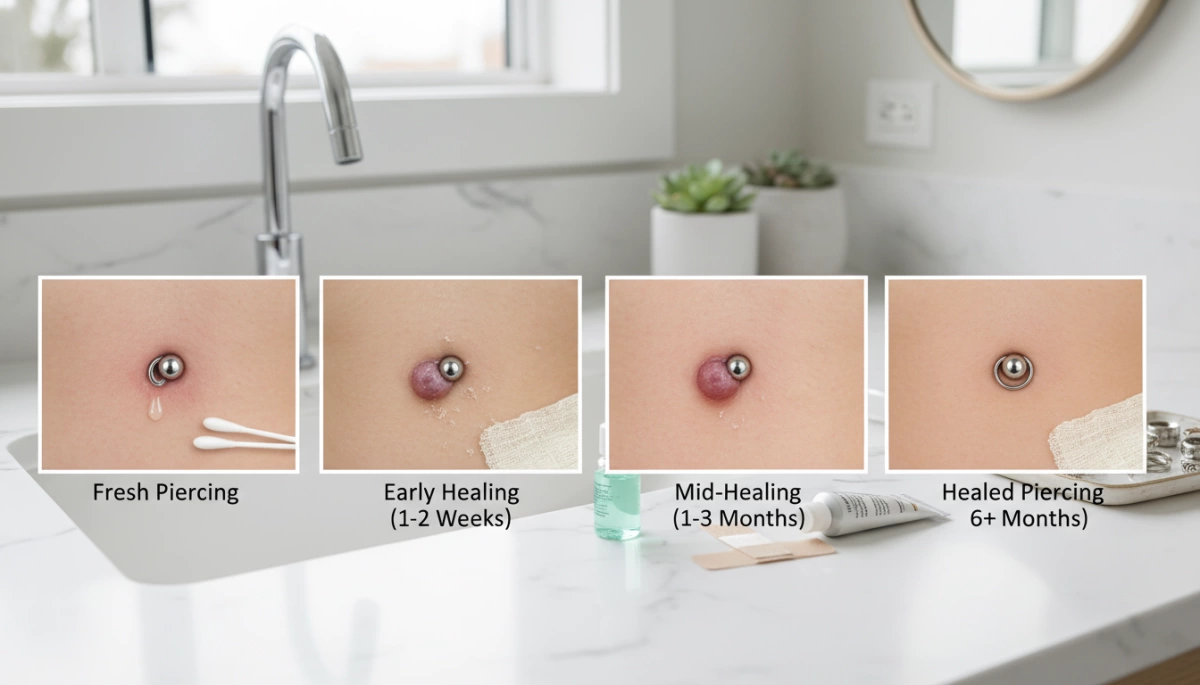
When I talk to brand owners about manufacturing body jewelry, the most critical factor we discuss is timing. The state of the piercing—whether it’s an open wound or completely healed—dictates exactly which metal you should use.
For unhealed piercings, the rules are strict. According to Association of Professional Piercers (APP) guidelines, standard surgical steel is typically avoided for initial piercings. Fresh wounds are highly sensitive, and even the smallest trace elements in standard alloys might trigger irritation. During the initial healing phase, piercers rely exclusively on ASTM F-138-compliant steel or implant-grade titanium to ensure zero complications.
So, is stainless steel body jewelry safe once the skin has recovered? Absolutely. Once a piercing is fully healed, 316L and 304 stainless steel become the undisputed industry standards for lobes, cartilage, and body modifications.
Here is why 316L surgical stainless steel jewelry is the best metal for healed piercings:
If you are looking to scale your brand with reliable, high-margin pieces, browsing a comprehensive stainless steel jewelry product catalog gives you direct access to the exact 316L and 304 grades the market demands. For healed piercings, standard stainless steel simply offers the most unbeatable balance of affordability, safety, and long-term performance.
When stocking your inventory or choosing daily wear, the debate between titanium and steel always comes up. Both metals are excellent, but they serve different needs. Here is exactly how they stack up against each other.
Yes, absolutely. While titanium is often recommended for fresh piercings, high-grade steel is the undisputed champion for healed piercings. It wins on everyday affordability and incredible durability.
The benefits of stainless steel jewelry go beyond just body piercings. The exact same scratch-resistant, rust-proof qualities that make it safe for body modifications are the reason we rely on it to craft heavy-duty accessories like our stainless steel men’s bracelets. For daily wear, long-lasting shine, and a price point that makes sense, stainless steel remains the industry standard.
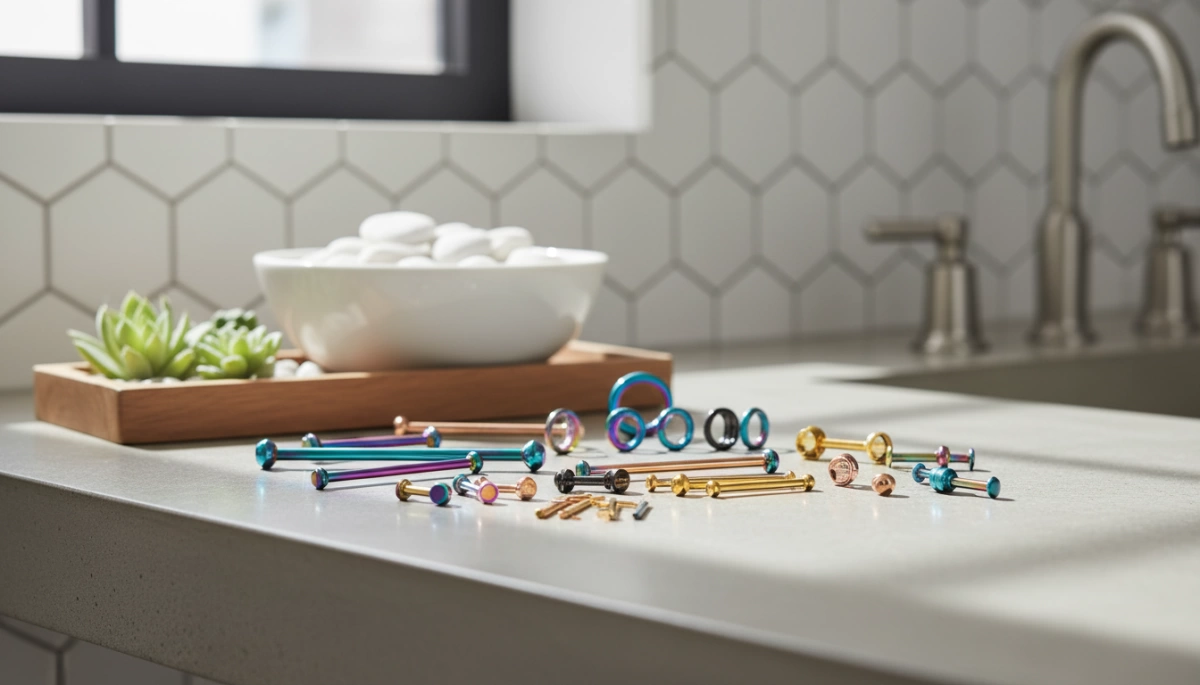
You aren’t limited to standard silver when choosing body jewelry. We can easily achieve rich gold, rose gold, or sleek black finishes on steel without sacrificing safety.
To get these vibrant colors, we skip standard liquid plating and use Physical Vapor Deposition (PVD) and Ion Plating (IP). Instead of just painting a layer on top, this high-tech method changes the game:
When customers ask is stainless steel good for body jewelry?, the quality of the color finish matters just as much as the base metal. One of the biggest benefits of stainless steel jewelry treated with PVD is its incredible longevity.
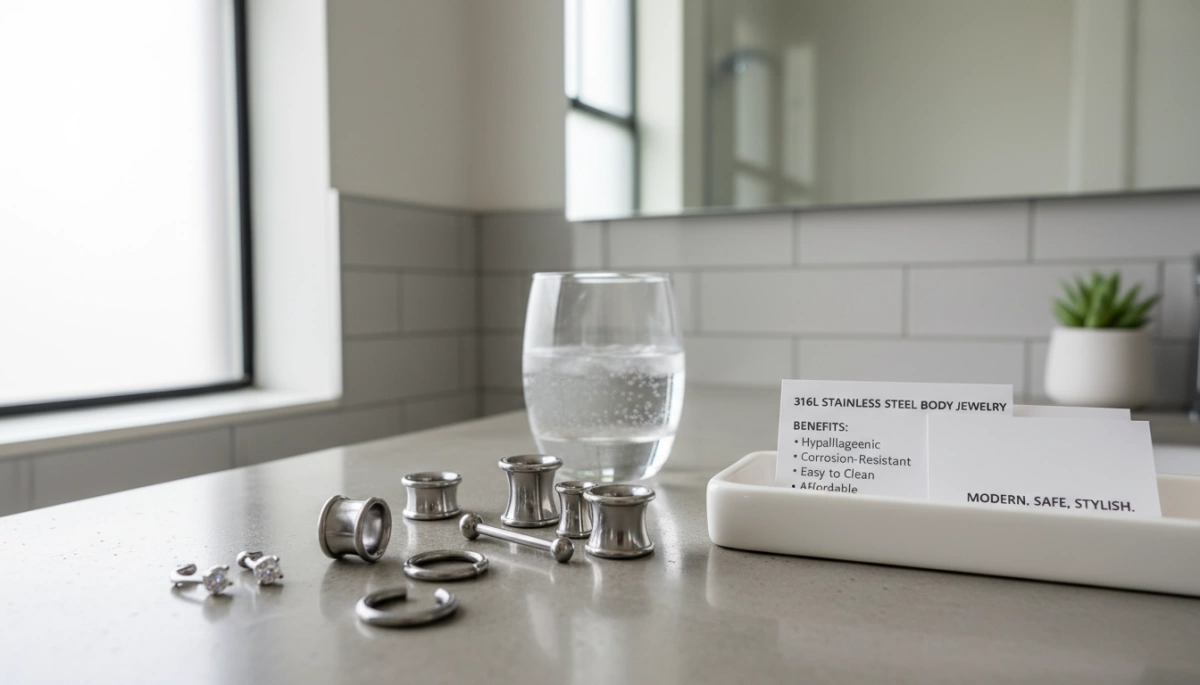
As a manufacturer, I see firsthand why the biggest names in the industry build their collections around 316L surgical stainless steel jewelry. It is the absolute backbone of custom body jewelry manufacturing. But what exactly makes it the ultimate choice for scaling a retail brand in the US market? It ultimately comes down to two major factors: cost-effective scaling and unmatched design versatility.
To grow a successful jewelry line, managing your production costs without sacrificing quality is essential. This is exactly where steel outshines the competition.
Understanding the benefits of choosing stainless steel jewelry for your business is the very first step to building a resilient, highly profitable product line.
Stainless steel isn’t just cost-effective; it is incredibly adaptable on the factory floor. When we feed complex 3D CAD designs into our machining equipment, 316L steel holds the most intricate details without warping or snapping.
Manufacturing Versatility at a Glance:
| Application | Design Characteristics |
|---|---|
| Heavy Men’s Accessories | Dense, durable, and highly resistant to daily wear and tear. |
| Delicate Cartilage Studs | Precision-machined threading and secure micro-gem settings. |
| Intricate Body Rings | Smooth hinge mechanics with strong shape retention. |
From chunky, bold statement chains to micro-pave tragus bars, steel handles it all effortlessly. This versatility ensures that a single core material can support your entire catalog. You can streamline your supply chain, keep costs low, and still deliver the safe, high-quality pieces your customers demand.
When brand owners ask me, is stainless steel good for body jewelry, I point straight to its massive retail success and high profit margins. Building a skin-friendly, reliable jewelry brand is incredibly straightforward. As a trusted OEM body jewelry manufacturer in China, we streamline the entire production phase so you can focus on scaling your US business.
You do not need a large upfront capital investment to start selling hypoallergenic piercing jewelry wholesale. We keep inventory risks low so you can test new trends directly with your audience.
Retail trends move fast in the United States, and your supply chain needs to keep up. We guarantee rapid turnaround times to get your high-grade steel inventory on the shelves faster.
Protecting your brand’s reputation is our priority. Every single item undergoes a rigorous custom jewelry process to ensure compliance with strict safety standards before it ever reaches the shipping dock.