Whatspp/Phone:
+8618666402929
Email:info@shinysteeljewelry.com
Factory address:
No. 5 Changsheng Road, Chang’an Town, Dongguan City, Guangdong Province, China.
 Skip to content
Whatspp/Phone:
+8618666402929
Email:info@shinysteeljewelry.com
Factory address:
No. 5 Changsheng Road, Chang’an Town, Dongguan City, Guangdong Province, China.

When clients ask me, “what is surgical steel jewelry?”, I always start with the science. To understand why 316L surgical stainless steel is one of the most reliable hypoallergenic jewelry materials on the market, you have to look at its chemical breakdown. It is not just basic metal; it is a highly engineered alloy specifically formulated for durability, safety, and continuous everyday wear.
Here is the exact elemental breakdown that gives surgical steel jewelry its premium reputation:
When people ask me exactly what surgical steel jewelry is, the first thing I clear up is how it differs from the metal used to make kitchen appliances. While they sound similar, not all steel is created equal for daily wear.
Regular stainless steel is incredibly tough, but we specifically use 316L surgical stainless steel for our collections. That “L” stands for low carbon. Lowering the carbon content makes the metal much easier to weld and shape without compromising its durability. This is exactly what we need when crafting intricate, long-lasting pieces like our stainless steel men’s rings.
The most important difference between surgical steel and regular stainless steel comes down to how your skin reacts to them. Standard stainless steel can sometimes cause irritation if worn constantly. Because 316L surgical steel is refined to tightly bind its trace metals, it prevents skin reactions. This makes surgical grade steel the preferred choice for prolonged skin contact, fresh piercings, and everyday body jewelry.
| Feature | 316L Surgical Steel | Standard Stainless Steel |
|---|---|---|
| Carbon Level | Low (The “L” in 316L) | Higher |
| Skin Safety | Hypoallergenic, ideal for sensitive skin | Can cause irritation with prolonged wear |
| Primary Use | Premium jewelry, body piercings, medical tools | Appliances, cutlery, industrial equipment |
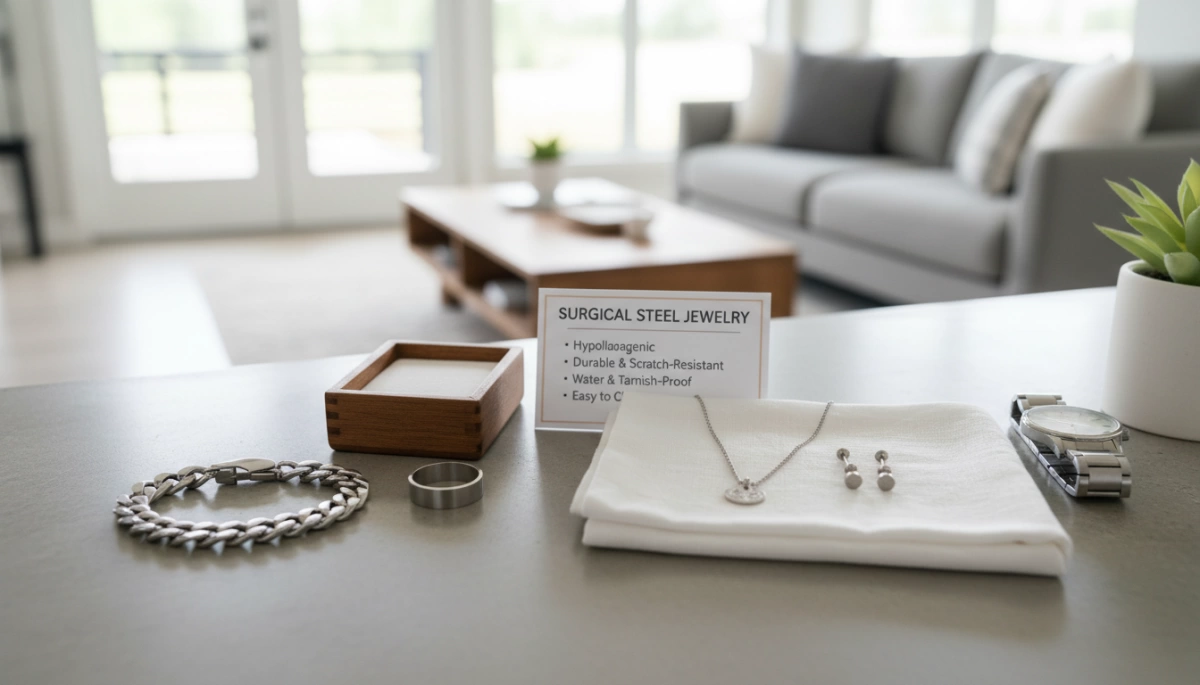
When customers ask us, “what is surgical steel jewelry?”, we point directly to its everyday performance. As a brand, we rely on 316L surgical stainless steel because it perfectly balances premium aesthetics with rugged practicality for the US market. Here is exactly why it is the go-to material for modern accessories.
| Feature | Surgical Steel Jewelry | Pure Silver / Gold |
|---|---|---|
| Water Resistance | Excellent (No rust or green skin) | Poor (Silver tarnishes rapidly) |
| Durability | High (Highly scratch-resistant) | Low (Prone to bending and scratches) |
| Maintenance | Zero maintenance required | Requires frequent polishing |
| Price Point | Highly Affordable | Expensive |
By leveraging these core benefits, surgical steel jewelry offers hypoallergenic, tarnish-free, and long-lasting wear for worry-free daily wear.
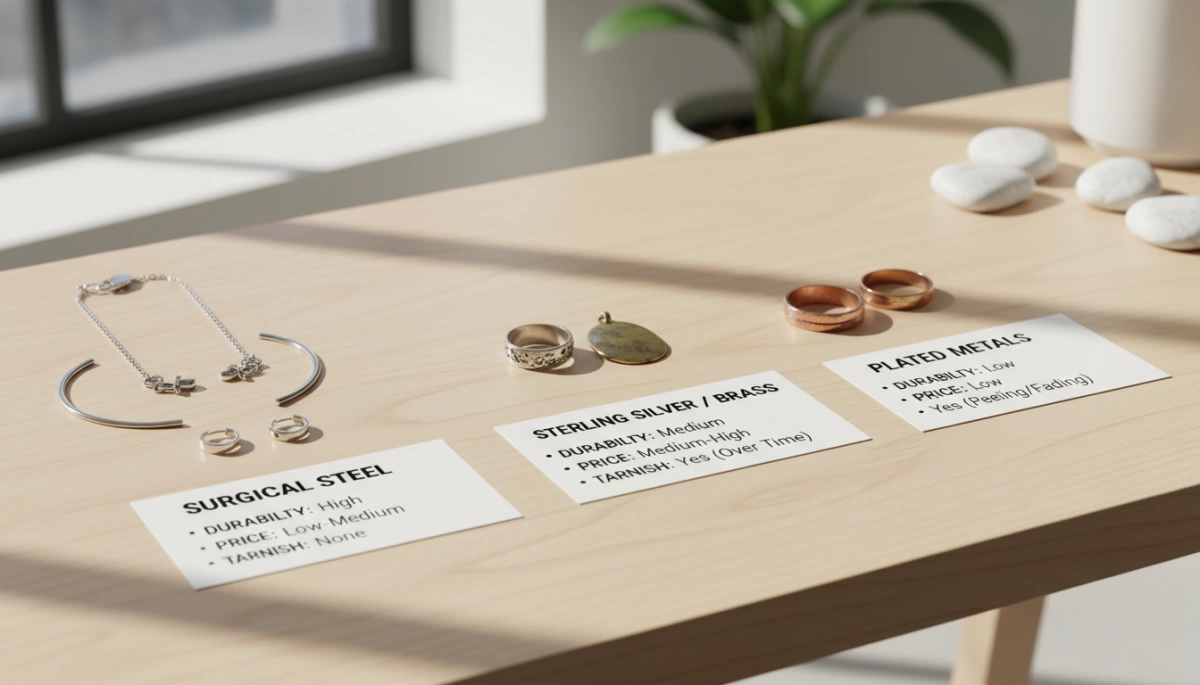
When we design and manufacture our pieces, we clearly see how 316L surgical stainless steel stacks up against the competition. If you are wondering exactly what surgical steel jewelry is going to offer over other materials, here is the straightforward breakdown.
Customers often ask us if surgical steel is like sterling silver. While they share a bright, reflective finish, their everyday performance is completely different.
When dealing with body jewelry, the conversation usually shifts to implant grade titanium vs surgical steel. The right choice depends entirely on the healing stage of your skin.
As a wholesale surgical steel jewelry manufacturer, I see exactly why modern brands are shifting heavily toward 316L collections. It all comes down to reliability, safety, and ease of production.
United States buyers want everyday jewelry that lasts. Because 316L resists tarnishing and is highly hypoallergenic, it drives massive customer satisfaction. For brands, this means a significant drop in return rates and higher repeat purchases.
Safety is non-negotiable in this industry. Using 316L surgical stainless steel ensures your products are safe for sensitive skin. It easily meets strict EU REACH compliant jewelry metals standards and clears US California Proposition 65 requirements, giving brands total peace of mind to sell globally.
From a production standpoint, 316L is incredibly versatile. Whether your designs require precise CNC machining or complex custom cast steel jewelry, this metal handles it perfectly. It allows us to seamlessly scale up custom jewelry manufacturing for everything from minimal rings to intricate pendants without losing fine details.
| Why Brands Choose 316L | The Direct Benefit to Your Business |
|---|---|
| High Customer Satisfaction | Drastically lower return rates and higher brand loyalty. |
| Global Safety Compliance | Meets US Prop 65 and EU REACH standards legally and safely. |
| Production Versatility | Perfect for custom 316L jewelry OEM, casting, and precise CNC machining. |
No, it does not. The chromium in 316L surgical stainless steel forms an invisible protective shield. This prevents rust and blocks tarnishing, even when exposed to water, sweat, or daily wear. To keep the finish looking brand new, just follow a basic care routine for your pieces.
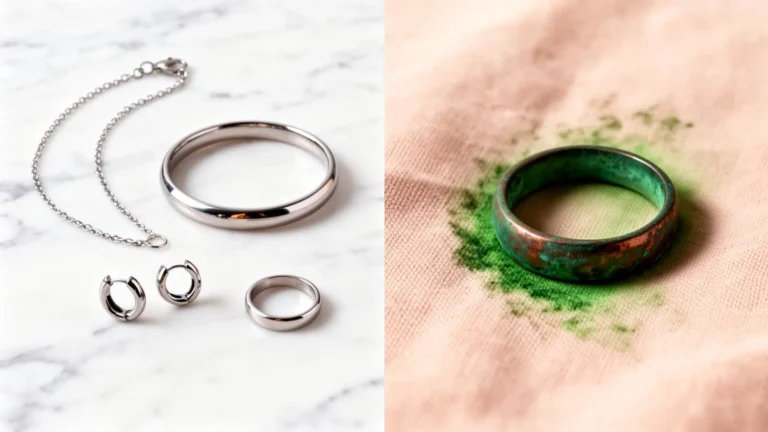
Absolutely not. That dreaded green ring happens when cheap metals like copper or brass react with the natural acids in your sweat. Surgical steel contains no reactive copper base, meaning it is perfectly safe for everyday wear and will never leave green marks on your skin.
No, it is a completely different metal. While it shares a similar bright, polished appearance with sterling silver, surgical steel is an alloy made mostly of iron, chromium, and nickel. It is actually much stronger, highly scratch-resistant, and significantly more affordable than real silver.
Generally, no. High-quality 316L surgical steel is an austenitic alloy, which makes it naturally non-magnetic. You might detect a very faint magnetic pull if the metal was heavily shaped or bent during manufacturing, but a standard piece of surgical steel jewelry will not stick to a magnet.
 Optimized by Seraphinite Accelerator