Whatspp/Phone:
+8618666402929
Email:info@shinysteeljewelry.com
Factory address:
No. 5 Changsheng Road, Chang’an Town, Dongguan City, Guangdong Province, China.
 Skip to content
Whatspp/Phone:
+8618666402929
Email:info@shinysteeljewelry.com
Factory address:
No. 5 Changsheng Road, Chang’an Town, Dongguan City, Guangdong Province, China.

You might be asking yourself right now: is 316 stainless steel good for jewelry?
The short answer? Absolutely.
In fact, it’s one of the most durable, waterproof, and hypoallergenic metals available today.
But as a jewelry brand owner, you know that choosing the exact right material can make or break your next collection. Lowering return rates and keeping your customers’ skin safe is crucial for a successful business.
Well, you’re in for a treat because I’ve put together the ultimate guide to 316 stainless steel jewelry.
In this post, you’re going to learn exactly what makes this surgical-grade metal so special, how it stacks up against standard 304 steel and sterling silver, and why building your brand around it is such a smart investment.
So if you’re looking to design stunning, everyday pieces that never tarnish and keep your buyers coming back for more, this guide is for you.
Let’s dive right in.
If you are wondering which grade of stainless steel is used for jewelry that actually lasts, the answer is the 300 series. Specifically, 316 and 316L are the industry benchmarks. But what makes these specific alloys stand out?
You don’t need a degree in metallurgy to understand why we choose these metals for our production lines. Regular steel rusts. To prevent that, chromium is added to create “stainless” steel. However, 316 and 316L step it up a notch by adding a crucial element: molybdenum.
This element is a complete game-changer. It drastically increases the metal’s resistance to harsh corrosives, especially chlorides found in seawater and human sweat. When clients ask me, is 316 stainless steel good for jewelry?, this is exactly why my answer is a resounding yes. It thrives and stays pristine in daily wear conditions where cheaper metals quickly degrade and tarnish.
While both are top-tier choices for waterproof, tarnish-resistant jewelry, you often see them mentioned separately. Here is how they stack up against each other:
Why the lower carbon content matters for jewelry:
During high-heat manufacturing processes such as laser welding or complex casting, the lower carbon content in 316L prevents structural weakening. It prevents carbon from separating and reacting with the chromium, ensuring the metal remains 100% rust-proof, even at microscopic joints.
So, is 316l stainless steel good quality for jewelry? Absolutely. It is the premium standard. Both 316 and 316L deliver a lifetime of wear, but 316L provides that extra edge of structural integrity during the custom jewelry production process, guaranteeing your pieces remain flawless from the factory floor to your customer’s hands.
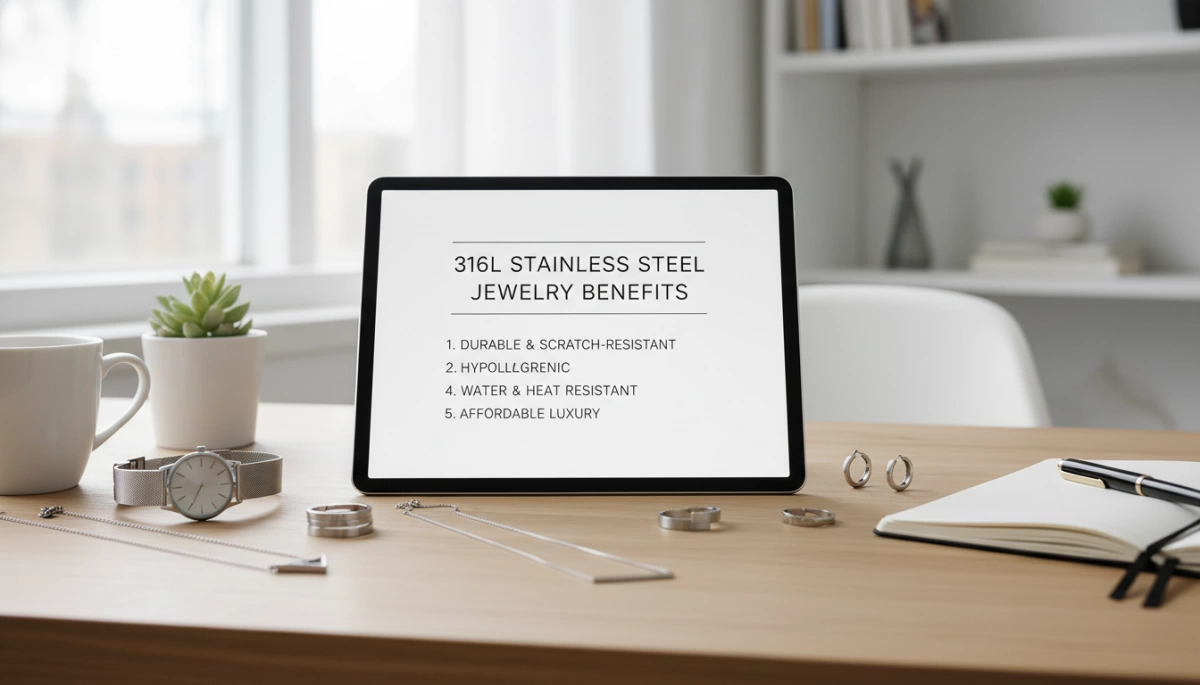
If you are wondering whether 316L stainless steel is a good choice for jewelry, the answer is a solid yes. As a jewelry manufacturer, we rely on this exact grade because the benefits of stainless steel jewelry are impossible to ignore. Here are the top five reasons why it consistently dominates the market.
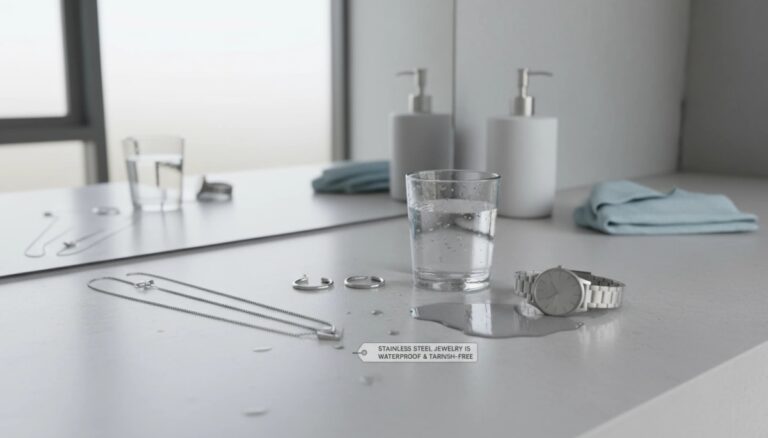
American consumers want jewelry they can actually live in. 316L delivers exactly that. It allows us to craft waterproof and tarnish-resistant jewelry that easily survives daily showers, heavy workouts, and summer beach trips. The high chromium and molybdenum content means it will not rust or oxidize, keeping its brilliant shine with zero maintenance.
Nobody wants jewelry that causes breakouts or turns their skin green. Because of its highly stable metallurgical structure, 316L is considered a medical-grade material. It is the gold standard for producing hypoallergenic and nickel-free jewelry, making it a perfectly safe and comfortable bet for customers with highly sensitive skin.
When asking is stainless steel a good metal for rings or heavy-wear items, durability is the deciding factor. 316L is exceptionally tough. It withstands daily wear and tear without bending, denting, or scratching. This ruggedness makes it the ultimate base metal for everyday staple pieces, like a heavy-duty men’s stainless steel bracelet, that needs to take a beating and still look brand new.
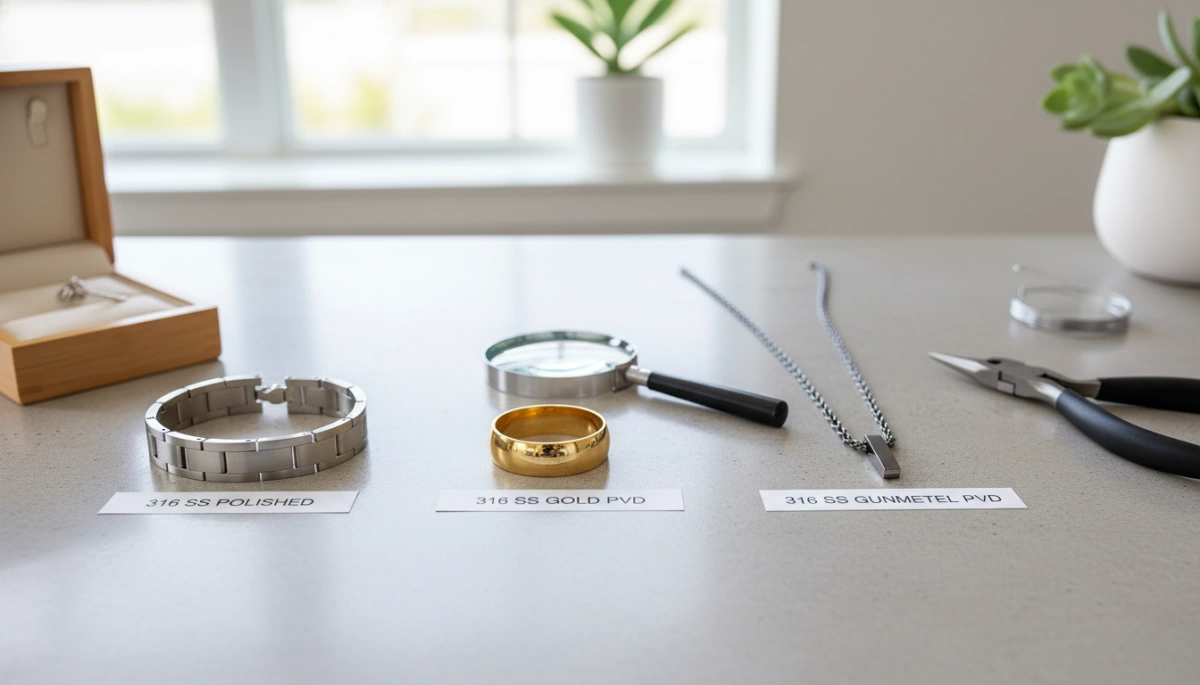
Want the luxury look of solid 18k gold without the steep price tag? 316L takes PVD plating flawlessly on stainless steel. This advanced vacuum-coating process binds the gold, rose gold, or black finish to the steel at a molecular level. The result is a vibrant, premium finish that will not easily chip, flake, or fade off over time.
Sustainability matters to today’s buyers. 316L stainless steel is 100% recyclable. Unlike the harsh environmental impact of mining precious metals, producing and recycling stainless steel has a significantly lower carbon footprint. It is a smart, guilt-free material choice for building a modern jewelry line.
When figuring out what grade of stainless steel is used for jewelry, it usually comes down to performance against everyday wear and tear. Clients constantly ask me if 316 stainless steel is good for jewelry, and to really understand the value, we have to stack it up against the other common metals dominating the market.
Both alloys are widely used, but 316 is the clear upgrade for premium pieces. The primary difference lies in how they handle harsh conditions like salt, chlorine, and sweat.
People constantly weigh stainless steel vs sterling silver jewelry when building their brand. It ultimately comes down to lifestyle and maintenance.
Brass is widely used in cheap, fast-fashion jewelry, but it has a terrible reputation for causing skin reactions.
We hear a lot of questions from brands and customers asking, is 316 stainless steel good for jewelry? Here are the straightforward answers based on our manufacturing experience.
Yes. Thanks to its specific alloy blend, this metal handles moisture incredibly well. It is true waterproof and tarnish-resistant jewelry. You can confidently wear it in the shower, at the gym, or right into the ocean without worrying about it rusting or corroding.
Absolutely. Surgical grade stainless steel 316L is the gold standard for skin safety. While it does contain trace amounts of nickel to strengthen the alloy, that nickel is tightly bound at a molecular level and won’t leach out. This makes it an ideal material for hypoallergenic and nickel-free jewelry. Because of this extreme biocompatibility, our stainless steel body jewelry is perfectly safe for sensitive ears and everyday wear.
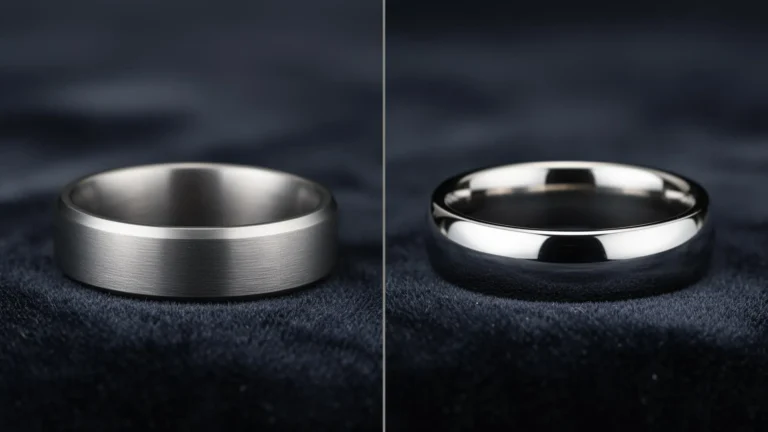
Bare 316 stainless steel will never tarnish, rust, or turn your skin green. The natural silver tone is permanent. For colored pieces—like gold or black—we use an advanced PVD (Physical Vapor Deposition) plating process. Unlike traditional water-dipped plating that chips away, PVD bonds the color coating to the steel in a vacuum environment. This results in a highly durable, scratch-resistant finish that holds its color through years of daily wear.
When brands ask us, “Is 316L stainless steel good quality for jewelry?” the answer always comes down to the bottom line. From a business perspective, choosing the right material makes or breaks a product line. As a trusted wholesale stainless steel jewelry manufacturer, we see firsthand why the biggest names in the US market consistently rely on 316L. It simply solves the most common headaches in the retail jewelry business.
Here is exactly why top brands partner with 316 stainless steel jewelry suppliers to build out their collections:
If you are looking for a reliable wholesale stainless steel jewelry manufacturer, we have the infrastructure and expertise to scale your brand. At ShinySteelJewelry, we specialize in custom OEM/ODM jewelry production tailored specifically to the high standards of the US market. We help you maximize the benefits of choosing stainless steel jewelry for your business by delivering flawless, retail-ready products from day one.
Here is exactly what you get when you partner with us as your 316 stainless steel jewelry supplier:
Whether you are launching a delicate stainless steel necklace collection or heavy-duty statement pieces, our production lines are built for precision. So, is 316 stainless steel good for jewelry? When manufactured with top-tier technology and strict quality control, it is undeniably the best choice for building a highly profitable, zero-return jewelry brand.