Whatspp/Phone:
+8618666402929
Email:info@shinysteeljewelry.com
Factory address:
No. 5 Changsheng Road, Chang’an Town, Dongguan City, Guangdong Province, China.
 Skip to content
Whatspp/Phone:
+8618666402929
Email:info@shinysteeljewelry.com
Factory address:
No. 5 Changsheng Road, Chang’an Town, Dongguan City, Guangdong Province, China.

If you have ever dealt with cheap rings turning your skin green or causing an itchy rash, you know the frustration. You want durable jewelry materials you can actually trust. As a jewelry manufacturer, I work extensively with jewelry-grade stainless steel—primarily the industry-standard 304 and premium 316L surgical stainless steel.
At its core, stainless steel is a highly resilient alloy. It combines iron and carbon with a heavy dose of chromium for superior rust resistance, along with trace amounts of nickel to boost its structural strength.
Here is the exact breakdown of what to expect when choosing stainless steel for your daily wear or brand collection:
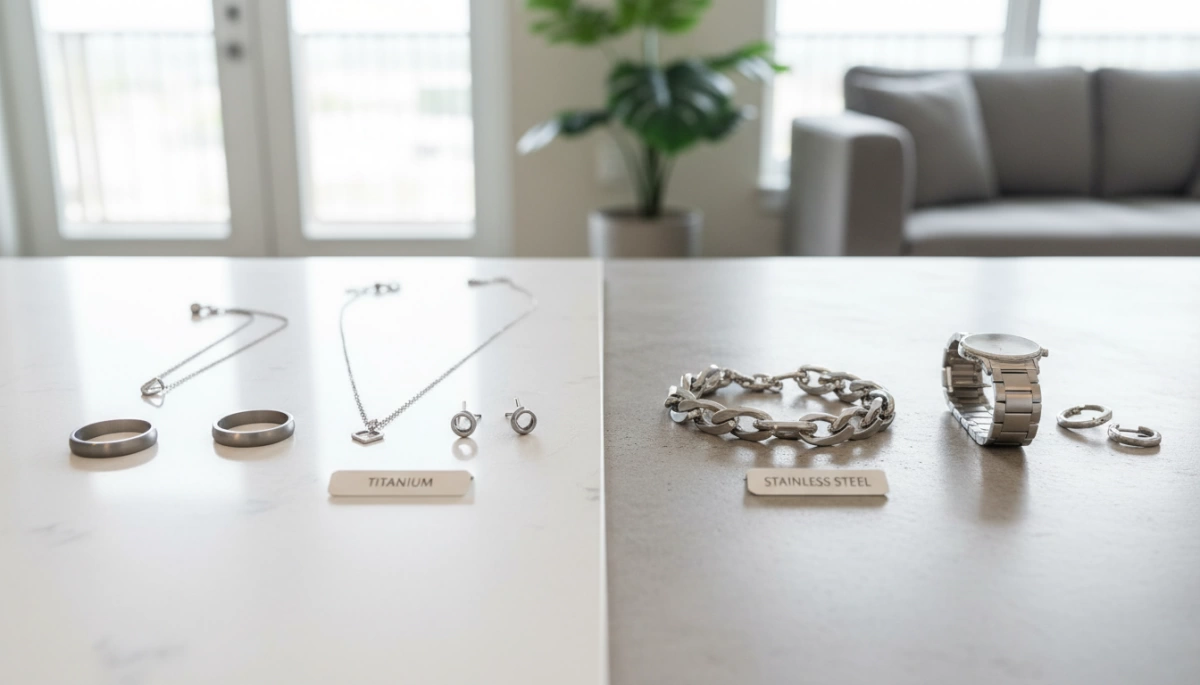
Titanium is a natural elemental metal. In our jewelry manufacturing process, we primarily focus on implant-grade titanium (specifically ASTM F136). Because it is a natural element rather than a mixed alloy, it interacts with the human body in a highly safe and predictable way.
When figuring out which one is better stainless steel or titanium, we have to look at how these metals actually perform in daily life. Understanding the difference between titanium and stainless steel comes down to skin sensitivity, weight, durability, and cost.
Here is the direct breakdown of these hypoallergenic jewelry metals:
If you have ultra-sensitive skin or a brand new piercing, implant-grade titanium jewelry is the undisputed winner because it is 100% nickel-free. People often ask, is titanium better than stainless steel earrings? For fresh piercings, yes. However, premium 316L surgical stainless steel is completely safe for the vast majority of healed piercings and everyday wear. It fully complies with strict safety standards, including EU REACH and US Prop 65.
Titanium delivers a feather-light, “forget-it’s-there” comfort. On the other hand, stainless steel carries a substantial, traditional heft. For many customers, especially those shopping for mens stainless steel rings, that solid, weighted feel is exactly what they want.
Both materials are outstanding waterproof jewelry metals that will never rust or tarnish. But is titanium or stainless steel better for rings? While titanium boasts incredible tensile strength, stainless steel slightly edges it out in raw scratch resistance. For a daily-wear ring that constantly bumps into hard surfaces, steel maintains its flawless finish a bit longer.
| Feature | Titanium | Stainless Steel (316L) |
|---|---|---|
| Allergy Safety | 100% Hypoallergenic (Best for fresh piercings) | Safe for most (Best for healed piercings) |
| Weight | 45% Lighter | Solid, traditional heavy feel |
| Scratch Resistance | Good | Excellent |
| Production Cost | Premium / High | Budget-friendly / Cost-effective |
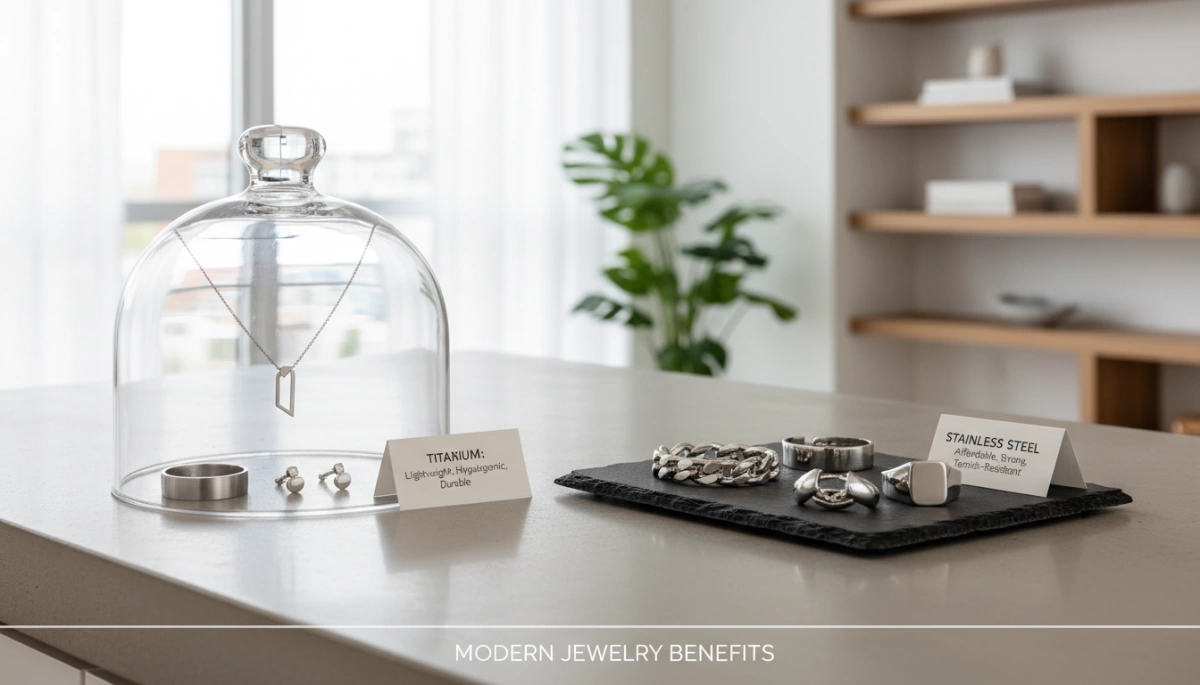
When deciding which is better for jewelry titanium or stainless steel, it really comes down to what you are wearing and how you plan to use it. Here is exactly how to choose the right material for your collection.
For fresh body modifications, implant-grade titanium jewelry is the undisputed studio standard. It contains zero nickel, making it the best metal for sensitive skin. If you are getting a fresh piercing and need a safe, non-irritating titanium nose ring hoop, titanium is your go-to.
Once your piercing is completely healed, 316L surgical stainless steel becomes a fantastic, budget-friendly alternative. When comparing titanium vs surgical steel piercings, the rule of thumb is simple: use titanium to heal, and use steel to maintain.
When it comes to wedding bands and men’s rings, the debate centers heavily around the physical weight of the piece.
So, is titanium or stainless steel better for rings? It depends entirely on your comfort preference. If you want to actually feel the weight of your jewelry, go with steel. If you hate heavy accessories, titanium wins.
For daily fashion pieces like necklaces and bracelets, stainless steel easily dominates the market. It is highly affordable and takes to PVD plating stainless steel processes perfectly. This means you get vibrant, durable gold and rose gold finishes that resist fading over time. Whether you are designing thick street-style chains or styling men’s pierced ears with trendy everyday studs, stainless steel offers the ultimate balance of toughness, lower costs, and premium aesthetics.
When it is time to scale your brand, finding a reliable custom stainless steel jewelry manufacturer makes all the difference. At ShinySteelJewelry, we expertly machine both premium 316L surgical stainless steel and titanium to meet the exact demands of the US market.
We keep the custom jewelry manufacturing process streamlined and scalable for our partners:
When deciding which is better for jewelry titanium or stainless steel for your upcoming collection, let your target audience guide your strategy.
If you are still wondering which is better for jewelry titanium or stainless steel, here are the most common questions we get from our clients.
Yes. Both are excellent waterproof jewelry metals. You can shower, sweat, and wash your hands without taking them off. Titanium is completely immune to corrosion, and high-grade stainless steel jewelry features a protective chromium layer that effectively prevents rust, tarnishing, and green skin.
While titanium boasts immense structural strength and won’t easily bend or warp out of shape, its surface is slightly more prone to minor scuffs compared to steel. Regardless, both are highly durable jewelry materials perfectly suited for heavy daily wear.
When comparing titanium vs surgical steel piercings, titanium is the undisputed winner for fresh holes. Sourcing custom titanium body jewelry made from implant-grade material ensures you get a 100% biocompatible piece that promotes faster, irritation-free healing.
316L surgical stainless steel is safe for the vast majority of people and is a great option for healed piercings. However, it does contain trace amounts of tightly bound nickel. If you have a severe allergy, need the best metal for sensitive skin, or require strictly nickel-free earrings, titanium is the safer choice.


