Whatspp/Phone:
+8618666402929
Email:info@shinysteeljewelry.com
Factory address:
No. 5 Changsheng Road, Chang’an Town, Dongguan City, Guangdong Province, China.
 Skip to content
Whatspp/Phone:
+8618666402929
Email:info@shinysteeljewelry.com
Factory address:
No. 5 Changsheng Road, Chang’an Town, Dongguan City, Guangdong Province, China.

When you ask, “is stainless steel jewelry waterproof?” the short answer is a resounding yes. We design our stainless steel jewelry to be your ultimate everyday companion. Unlike standard base metals that quickly oxidize and ruin your favorite pieces, stainless steel is inherently built to handle moisture. Whether you are caught in a sudden downpour or simply washing your hands, you can trust that your accessories will not instantly degrade. To understand why stainless steel does not rust in water, we have to look at the unique chemical makeup of the metal itself.
The secret weapon inside every piece of waterproof stainless steel jewelry is chromium. To be officially classified as stainless steel, the metal alloy must contain at least 10.5% chromium. Here is exactly how this incredible element protects your tarnish-free daily wear jewelry:
Not all stainless steel is created equal. When shopping for reliable, long-lasting accessories, you will typically encounter two main grades: 304 and 316L. Understanding the difference is crucial for maximizing your jewelry’s lifespan.
Quick Grade Comparison:
The short answer is yes. One of the biggest selling points of this metal is its resilience. Unlike cheap costume jewelry that turns your skin green or rusts after one wash, can you shower with stainless steel jewelry without ruining it? Absolutely. I’ve seen firsthand that high-quality steel stands up to the daily grind better than almost any other affordable metal. It is designed for 24/7 wear, meaning you don’t have to constantly take it off and put it back on every morning.
Regular tap water is generally harmless to 316L surgical steel. The protective chromium layer prevents oxidation, making shower-safe gold necklaces and silver-tone chains a reality for everyday users. Whether you are wearing custom stainless steel necklaces or simple studs, the metal resists corrosion from plain water and steam effectively.
However, while the steel itself is tough, you should be mindful of the construction.
While the water is fine, the products you use in the shower can cause aesthetic issues. Is stainless steel jewelry waterproof? Yes, but it isn’t “soap-proof.” Residue from body washes, shampoos, and conditioners can accumulate in the crevices of your jewelry, killing its shine.
Here is what you need to watch out for:
If you never take your stainless steel rings for men off, simply give them a thorough rinse with plain water after you are done scrubbing. This washes away chemical residues and keeps the metal looking crisp.
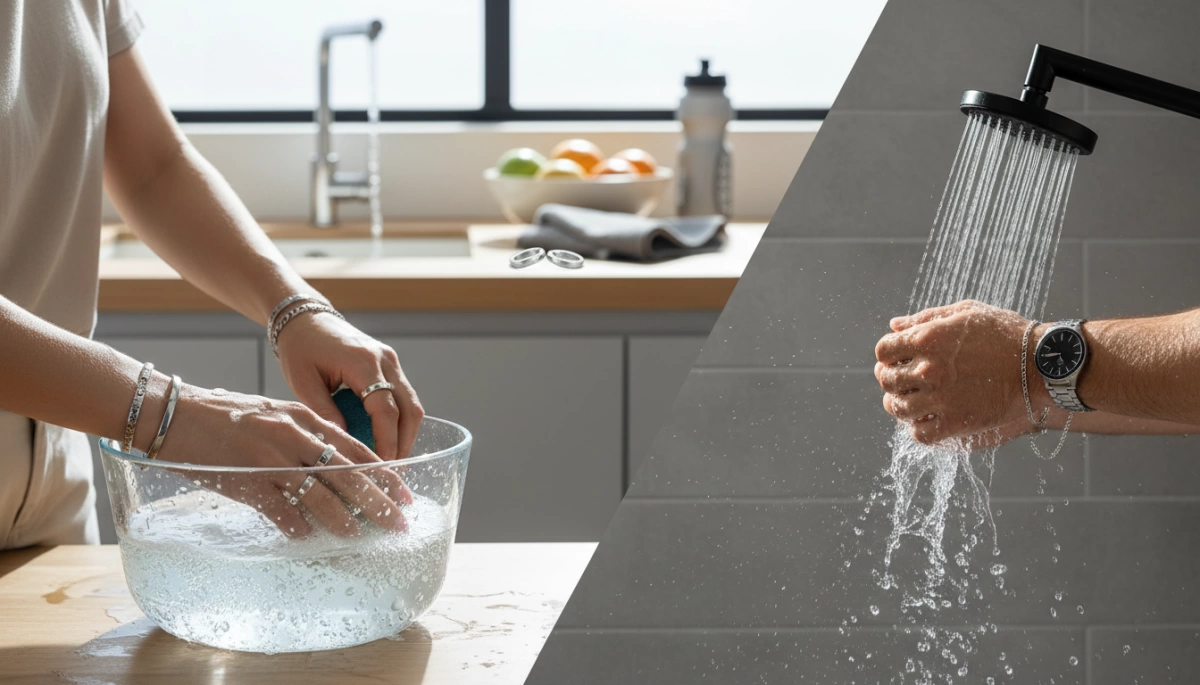
When our customers ask, is stainless steel jewelry waterproof, they usually want to know if their pieces can survive more than just a quick rinse. Taking your accessories into harsher environments like pools, oceans, and gyms requires a closer look at how the metal reacts to different elements.
If you are wondering can you swim with stainless steel chains, the answer is yes, but moderation is key.
Always rinse your stainless steel jewelry with fresh tap water after a pool day to wash away residual chemicals.
The beach brings up another common question: does stainless steel rust in water when salt is involved? Saltwater is notoriously tough on metals. Fortunately, high-grade stainless steel (especially 316L) is specifically designed for marine environments. This makes it one of the most reliable saltwater safe metal accessories you can pack for a vacation. You can confidently wear your pieces into the ocean. Just remember to give them a quick fresh water rinse afterward to prevent dried salt crystals from dulling the finish.
Human sweat contains natural salts and acids that quickly tarnish cheaper metals. The good news is that stainless steel is entirely sweat-proof. You never have to take off your gear before hitting the treadmill or the weight room. A rugged stainless steel chain for men, for example, handles intense daily workouts without losing its shine or turning your skin green. It is the ultimate sweat-proof gym jewelry for everyday wear.
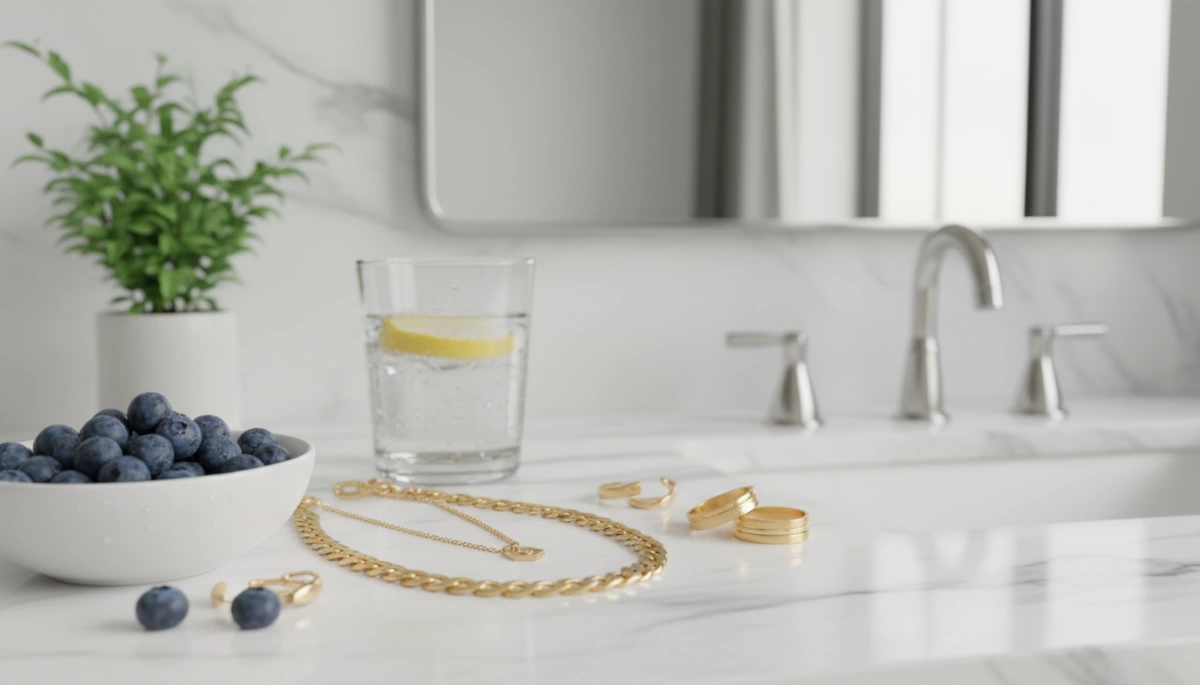
A common question we get is: is gold plated stainless steel jewelry waterproof? The honest answer is that while the metal underneath is waterproof, the gold layer requires a bit more mindfulness. Unlike solid gold, which is impervious to water, plated jewelry consists of a layer of gold over a base metal. However, compared to standard fashion jewelry made of brass or copper, gold-plated stainless steel is in a league of its own regarding water resistance.
The durability of your jewelry starts with the core. We use high-quality stainless steel because it is naturally resistant to rust and corrosion. When you ask, is gold stainless steel jewelry waterproof, you are really asking about the bond between that steel core and the gold finish.
Cheap base metals will corrode underneath the plating when wet, causing the gold to flake off and your skin to turn green. Stainless steel does not do this. It provides a stable, non-reactive foundation. While the gold tone is highly water-resistant, understanding the lifespan of gold-plated stainless steel jewelry is key; the color can last for years with proper care, even with occasional water exposure, but it isn’t invincible against constant abrasion.
We rely on Physical Vapor Deposition (PVD) coating rather than traditional electroplating for our gold tones. This is a game-changer for PVD gold plating durability.
This advanced process is why our stainless steel bracelets for men can withstand daily wear and moisture far better than items found in typical fast-fashion retailers.
To ensure your long-lasting gold tone stainless steel stays vibrant, treat it with a little respect around water. While you can shower with it, reducing exposure extends its life.
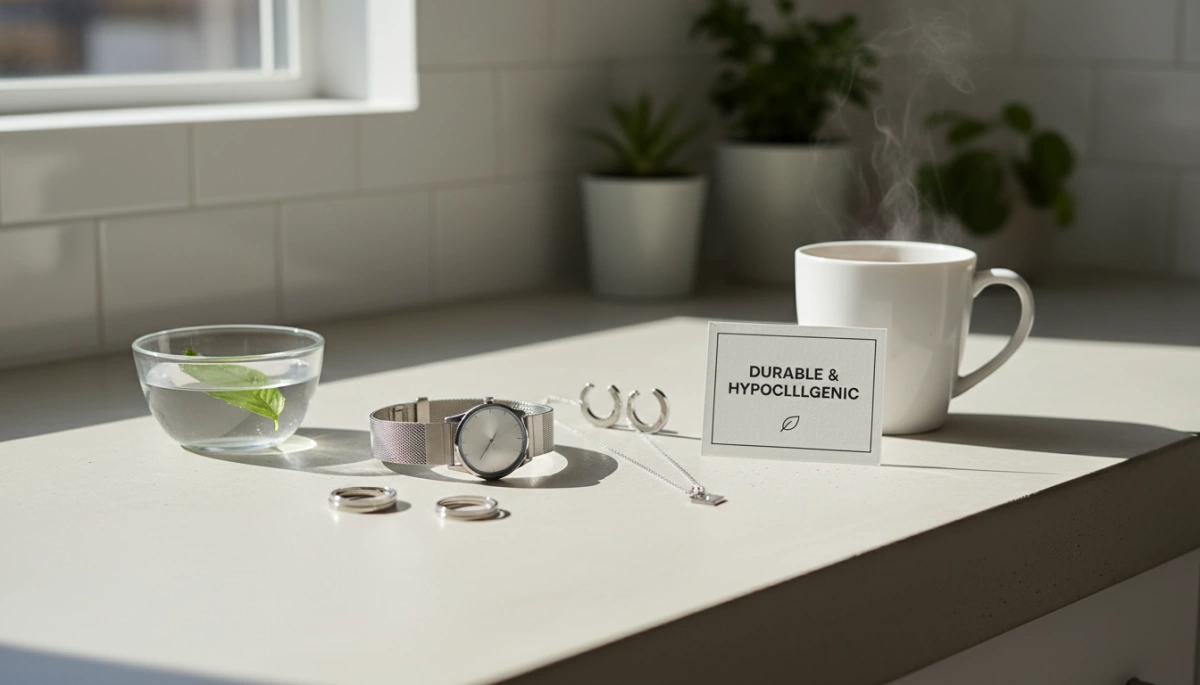
When investing in everyday accessories, the biggest question is always whether the pieces will hold up over time. The reality is that stainless steel jewelry is engineered for real life. It stands as one of the best options for tarnish-free daily wear jewelry on the market today.
People often ask, does stainless steel jewelry last through daily wear and tear? The answer is a definitive yes. A common myth is that all metals eventually rust or degrade when exposed to air and moisture. While that holds true for cheap alloys, stainless steel is fundamentally different. It features a self-healing chromium oxide layer that actively blocks rust from forming.
If you want pieces that survive years of heavy use, understanding the durability of 316L stainless steel jewelry is crucial. This specific grade handles impacts, resists scratches, and maintains its structural integrity far better than softer metals like silver or gold. You get a solid, long-lasting accessory that refuses to quit.
We have all dealt with the frustration of taking off a ring only to find a dark green band left behind on our skin. That reaction happens when base metals like copper or brass oxidize and mix with your sweat. Stainless steel eliminates this problem completely. It is the ultimate jewelry that doesn’t turn skin green.
Here is why stainless steel is the safest bet for your skin:
Even though the answer to “is stainless steel jewelry waterproof” is a resounding yes, proper maintenance is what keeps your pieces looking brand new. Taking a few extra seconds to care for your tarnish-free daily wear jewelry prevents dullness and extends its lifespan.
Ocean water and pool chemicals will not immediately destroy your metal, but they do leave behind a harsh residue. If you wear saltwater safe metal accessories to the beach or pool, always rinse them under fresh tap water as soon as you get home. This washes away corrosive salt crystals and chlorine buildup before they can compromise the metal’s protective surface.
Letting your jewelry air dry is a common mistake. Hard tap water contains minerals that leave stubborn white spots on the metal surface once the moisture evaporates.
If you are wondering how to clean dull stainless steel after months of heavy use, you only need a few basic household items. Body oils, lotion, and soap scum can easily build up and dull the finish of your everyday wear waterproof bracelets and necklaces.
Here is my go-to cleaning method:
I get asked all the time about how our pieces hold up to daily life. Here are the straight answers to your most common questions about whether is stainless steel jewelry waterproof.
Yes, you can.
It depends on the coating.
A lifetime with basic care.
 Optimized by Seraphinite Accelerator