...

Get Quick Quote

We look forward to receiving your requested information and will contact you within 6 hours!

Please enable JavaScript in your browser to complete this form.
Click or drag a file to this area to upload.
1. You can only upload 1 attachment at most 2. Supported formats: PDF, JPG,PNG, EXCEL,WORD, STP,IGS, DWG,DXF, PDF,STEP 3. The size of the uploaded file should not exceed 10MB

Is Stainless Steel Hypoallergenic for Jewelry Guide

What Does Hypoallergenic Mean for Stainless Steel Jewelry?

If you’ve ever put on a cute pair of earrings and ended up with red, itchy ears, you’re not alone. When we talk about hypoallergenic stainless steel jewelry, we’re really talking about how likely that metal is to avoid causing a reaction on your skin.

What “Hypoallergenic” Really Means in Jewelry

In plain terms, hypoallergenic jewelry is made to reduce the risk of an allergic reaction, especially for people with sensitive skin or nickel allergy.
It does not mean “zero risk” or “safe for absolutely everyone.”

You’ll see phrases like:

  • “Hypoallergenic stainless steel”
  • “Stainless steel for sensitive skin”
  • “Hypoallergenic earrings stainless steel”

All of these simply mean the piece is less likely to irritate your skin than cheap base metals or low‑quality plated jewelry.

Why “Hypoallergenic” Isn’t a Strict Standard

In the US, “hypoallergenic” is not a regulated medical term for jewelry:

  • There’s no single legal test a brand must pass to use it.
  • Some companies use “hypoallergenic” honestly for 316L surgical stainless steel and other skin‑friendly grades.
  • Others slap it on cheap stainless steel or mystery alloys that still release a lot of nickel.

Because of that, labeling alone isn’t enough. You need to look for:

  • Clear grade names like 316L, implant grade
  • Honest material breakdown (not just “metal” or “alloy”)
  • Brands that are transparent about nickel content and testing

How Nickel and Other Metals Trigger Reactions

Most “metal allergies” from jewelry are actually nickel allergies. But cobalt and sometimes chromium can also trigger issues.

Here’s what typically causes trouble:

  • Nickel – the #1 culprit in earrings, rings, and cheap fashion jewelry
  • Cobalt – sometimes present in alloys and lower‑quality metals
  • Chromium – less common, but can bother very reactive skin

Your immune system sees these metals as irritants. With enough exposure, your skin reacts with redness, itching, rash, or blisters.

Important: Stainless steel can contain nickel, but in higher quality grades (like 316L surgical stainless steel), nickel release is extremely low, which is why many people with sensitive skin can still wear it comfortably.

How Sweat, Moisture, and Long Wear Make Allergies Worse

Even if your jewelry is labeled hypoallergenic, how you wear it matters a lot:

  • Sweat and moisture (showers, pools, workouts) can increase metal ion release, especially with cheap alloys.
  • Tight‑fitting pieces (rings, watch bands, cuff bracelets) trap sweat and friction against your skin.
  • Sleeping in jewelry gives your skin zero break time and can push a mild sensitivity into a full rash.

This is why waterproof hypoallergenic jewelry made from good stainless steel is so popular: the right grade is built to resist corrosion and nickel release, even with daily wear.

Common Symptoms of Metal Allergy from Jewelry

If you’re wondering, “Can you be allergic to stainless steel jewelry?” the answer is yes—especially with the wrong grade or poor quality.

Watch for these classic signs of metal allergy where your jewelry sits:

  • Redness or pink, irritated patches
  • Itching, burning, or stinging
  • Dry, flaky, or cracked skin
  • Small bumps or blisters
  • Darkening or discoloration that doesn’t wipe off like normal dirt

These symptoms can show up with:

  • Stainless steel earrings for sensitive ears
  • Stainless steel rings worn daily
  • Necklaces, bracelets, and body jewelry that stay on for long hours

If you see this kind of reaction, it’s a sign your skin is reacting to nickel or another metal in that specific piece—not just “sensitive skin” in general.

Is Stainless Steel Hypoallergenic for Jewelry?

If you’re wondering “is stainless steel hypoallergenic for jewelry?”, the short answer is: often yes, but not always.

When Stainless Steel Is Hypoallergenic (and When It’s Not)

  • Generally hypoallergenic:
    High‑quality grades like 316L surgical stainless steel and good 304 stainless steel are considered hypoallergenic stainless steel jewelry for most people. They release very little nickel, so they’re usually safe for sensitive skin and everyday wear.
  • Not always hypoallergenic:
    Some cheaper grades (like certain 303 or high‑sulfur stainless steels) can release more nickel and may trigger metal allergies, especially in earrings or piercings. If you have a known nickel allergy, low‑quality stainless steel can still cause redness, itching, or rash.

Why Most Sensitive Skin Tolerates Stainless Steel

Most people with sensitive skin do well with:

  • 316L surgical stainless steel – ideal for stainless steel earrings for sensitive ears, rings, and body jewelry
  • Low‑nickel, low‑sulfur stainless steel – better nickel control and smoother finish against the skin

That’s why I focus our designs on higher‑grade alloys and offer options like custom engraved stainless steel rings that stay comfortable in daily wear:
custom stainless steel rings with engraving.

When Stainless Steel Might Still Cause a Reaction

You might still react to stainless steel jewelry if:

  • You have a severe nickel allergy or diagnosed contact dermatitis
  • You wear the piece 24/7 in sweat, water, or friction‑heavy spots (like tight rings or fresh piercings)
  • The jewelry is made from cheap, mislabeled “stainless steel” with higher nickel or poor finishing

In those cases, you may need to move to titanium, niobium, or implant‑grade options instead of stainless.

Safest Stainless Steel Grades for Jewelry

For allergy‑prone skin, aim for:

  • Best choice: 316L / surgical stainless steel (great for piercings, earrings, everyday rings)
  • Good choice: Quality 304 stainless steel (necklaces, bracelets, non‑pierced pieces)
  • Use caution / avoid: Some 303 and other high‑sulfur grades used in cheap mass‑market jewelry

Cheap vs Quality Hypoallergenic Stainless Steel

Cheap stainless steel jewelry:

  • Often unlabeled (no 316L / 304 grade listed)
  • Higher nickel release and rougher finishing
  • More likely to cause rash from stainless steel jewelry on sensitive skin

Quality hypoallergenic stainless steel jewelry:

  • Clearly labeled 316L, surgical stainless steel, or 304
  • Low nickel release, smoother edges, better polish
  • Holds up to waterproof, sweat‑friendly daily wear without turning your skin green

If you want durable, skin‑friendly pieces that don’t need babying, stainless steel is one of the best metals for sensitive skin jewelry when you choose the right grade and a brand that’s transparent about materials.

How Stainless Steel Works with Skin and Allergies

When people ask “is stainless steel hypoallergenic for jewelry,” what they’re really asking is how it behaves on real skin. That comes down to its makeup and how it reacts with air, sweat, and water.

Basic Stainless Steel Composition

Most stainless steel used in jewelry is an alloy of:

  • Iron – the main base metal
  • Chromium (usually 16–18%) – gives stainless steel its corrosion resistance
  • Nickel – added in many grades for strength and shine

So yes, a lot of stainless steel does contain nickel, but that doesn’t automatically mean it will trigger a metal allergy the way cheap base metal jewelry often does.

The Chromium Oxide Protective Layer

When stainless steel hits oxygen (air or water), the chromium in the metal forms a super thin, invisible film on the surface called chromium oxide.

This layer:

  • Acts like a shield between your skin and the raw metal
  • Helps block nickel release from the alloy
  • Self-heals if lightly scratched, so it keeps protecting over time

That’s a big reason hypoallergenic stainless steel jewelry often feels way more “skin friendly” than plated or mystery metals.

How It Reduces Nickel Release

Nickel allergy isn’t just about whether nickel is in the metal – it’s about how much nickel actually leaches out onto your skin, especially with:

  • Sweat
  • Friction
  • Long-term wear

Because of the chromium oxide barrier, quality grades like 316L surgical stainless steel and 304 stainless steel generally release very low levels of nickel—often below limits set by strict nickel regulations in places like the EU.

What Studies Say About Nickel Release

Research and allergy testing have shown:

  • Many 316L and implant-grade stainless steels release far less nickel than cheap nickel-plated jewelry
  • Stainless steel that meets “nickel-safe” standards is usually tolerated even by a lot of people with mild nickel sensitivity
  • Problems mostly show up with poor-quality alloys, high-sulfur grades, or fake “stainless” pieces that aren’t actually what they claim

This is why stainless steel is widely used for medical tools, implants, and body jewelry, not just fashion pieces.

“Contains Nickel” vs “Will Cause Allergy”

“Contains nickel” and “will cause a reaction” are not the same thing:

  • A stainless steel ring can contain nickel but still be low-release and safe for most people
  • A cheap “nickel-free” plated piece can still cause issues if the plating wears off and an irritating base metal is exposed

If you have sensitive skin but still want durable, water-friendly jewelry, going with trusted 316L surgical stainless steel pieces—like a well-made men’s stainless steel necklace or custom stainless steel chain—is usually a smart middle ground for price, look, and comfort in daily U.S. wear.

Best Stainless Steel Grades for Hypoallergenic Jewelry

316L Surgical Stainless Steel for Sensitive Skin

If you’ve got sensitive skin or a nickel allergy, 316L surgical stainless steel is usually the safest stainless option. It’s low‑carbon, low‑nickel, and designed to release very little nickel into the skin.

Why 316L works well:

  • Great for earrings and piercings: Most professional piercers in the U.S. trust 316L (or implant‑grade 316LVM) for first piercings because it’s stable, smooth, and slow to corrode.
  • Daily wear friendly: 316L holds up to sweat, showers, gyms, and everyday life without irritating most people. It’s a strong choice for stainless steel earrings for sensitive ears, nose rings, and everyday durable stainless steel rings.
  • Good balance of safety and price: It’s more affordable than titanium or gold but much safer than cheap base metal or mystery alloys.

If you’re shopping for men’s bands, look for 316L stainless steel rings specifically, not just “stainless” in the title. For example, a well-made line of stainless steel men’s rings can give you long-lasting, hypoallergenic wear without the premium price tag.


304 Stainless Steel for Everyday Hypoallergenic Jewelry

304 stainless steel (also called 18/8) is another common grade in hypoallergenic stainless steel jewelry.

  • When 304 is good enough: Necklaces, bracelets, and pendants that don’t stay tight on the skin or in piercings usually do fine in 304 for most people with mild sensitivity. A stainless steel cross necklace in 304, for example, works well for everyday wear for most U.S. customers.
  • When to choose 316L instead:
    • Fresh piercings or body jewelry
    • Very sensitive ears
    • Tight rings that trap sweat and soap
    • Known nickel allergy

If you know you react to metals easily, treat 304 as “okay sometimes,” and 316L as the safer default.


Nickel-Free and Low-Nickel Stainless Options

For people who want to avoid nickel as much as possible:

  • 430 stainless steel (some versions): This is a ferritic stainless steel that can be very low in nickel or essentially nickel-free. It’s better for items with light skin contact (like loose chains) rather than piercings.
  • Specialty “nickel free stainless steel jewelry”: Some brands offer proprietary nickel‑free or ultra low‑nickel stainless alloys. These can be a win if you have a true nickel allergy but still want the stainless steel look.

Always check the product description for “nickel free,” “low nickel,” or specific alloy information before you buy.


Stainless Steel Grades to Avoid for Sensitive Skin

Not all stainless steel is skin‑friendly. Some grades release more nickel or contain additives that can irritate the skin.

If you have sensitive skin or metal allergies, avoid:

  • 303 stainless steel: Contains sulfur to make machining easier, which can raise corrosion and nickel release. Not ideal for jewelry that touches skin all day.
  • High sulfur or “free-machining” grades: Any stainless specifically marketed as “easy machining” or “free cutting” isn’t what you want next to your skin.
  • Unlabeled “stainless” from cheap sources: If it doesn’t say 316L, 304, or “nickel free” and there’s no clear alloy info, skip it—especially for earrings, piercings, or tight-fitting rings.

For stainless steel for sensitive skin, I stick with 316L surgical stainless steel for anything that sits tight or goes through a piercing, and use 304 or low‑nickel options only where the risk is lower.
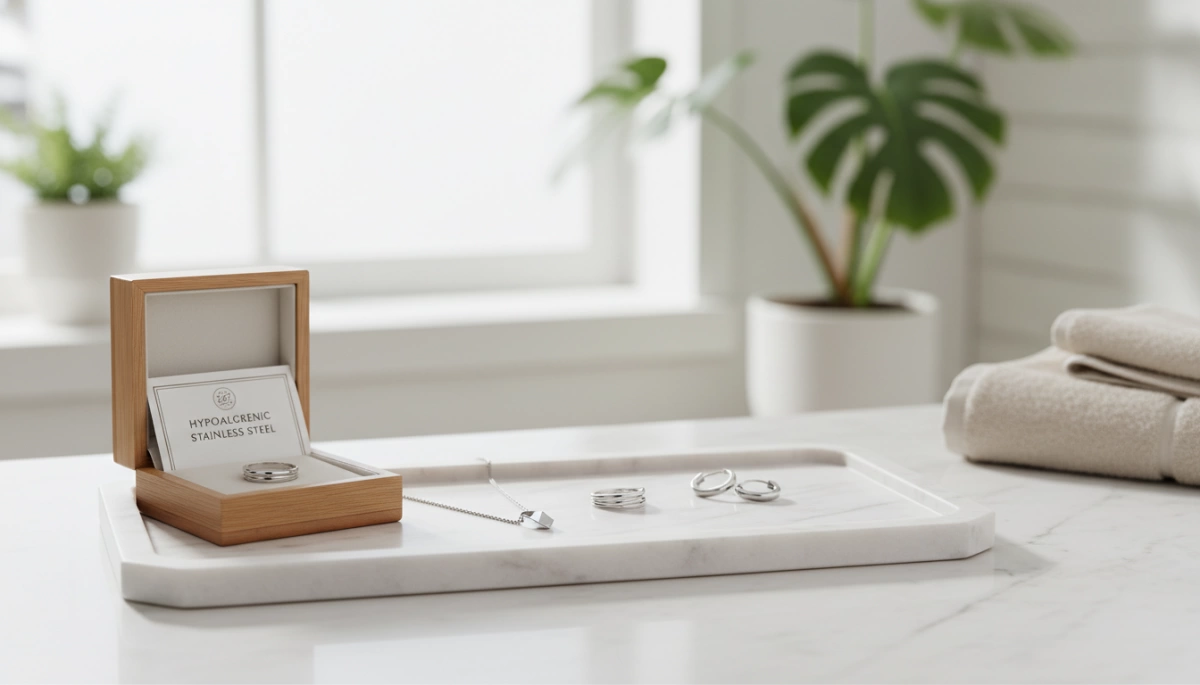
Is Stainless Steel Jewelry Safe for Sensitive Skin?

stainless steel hypoallergenic jewelry safety

Is stainless steel jewelry good for sensitive skin?

For most people with sensitive skin, hypoallergenic stainless steel jewelry (especially 316L surgical stainless steel) is a safe, everyday option. It’s:

  • Smooth on the skin
  • Low in nickel release compared to cheap base metals
  • Resistant to sweat, water, and daily wear

If you usually react to “fashion jewelry,” you’ll probably find stainless steel for sensitive skin much more comfortable.

Can you be allergic to stainless steel jewelry?

Yes, you can be allergic, but it’s not common. Reactions usually happen when:

  • You have a strong nickel allergy
  • The jewelry is low‑quality stainless with higher nickel release
  • The finish is damaged and the base metal is exposed

If you notice redness, burning, or itching every time you wear stainless, stop using it and consider allergy testing.

How stainless steel behaves on different body parts

Stainless steel usually behaves differently depending on where you wear it:

  • Earrings (lobes & cartilage): Go for 316L surgical stainless steel earrings for sensitive ears. The tissue is thin and more reactive, so quality matters.
  • Rings: Rings see the most sweat, soap, and friction. Good 316L or 304 stainless steel rings are usually skin‑friendly and don’t tarnish or turn skin green.
  • Necklaces & bracelets: These are lower risk because they don’t sit inside the skin, but sweat and perfume can still irritate sensitive areas if the metal quality is poor.

Piercing vs. non‑piercing contact

For new or healing piercings, your risk is higher because the jewelry sits inside open tissue:

  • New piercings: Use implant‑grade 316L or titanium labeled “piercing safe”
  • Healed piercings: Most people do fine with surgical stainless steel jewelry
  • Non‑piercing pieces (rings, chains, bracelets): Lower risk because they only touch the surface of the skin

If you’re sourcing or customizing pieces, it’s worth working with a supplier that understands piercing safe stainless steel standards. For example, when I handle bulk or custom stainless orders, I follow strict grade labeling and sourcing similar to what’s outlined in this guide to importing stainless steel jewelry from China: how to import stainless steel jewelry.

Sweat, water, and daily wear

Stainless steel is one of the best waterproof hypoallergenic jewelry options, but a few things still matter:

  • Sweat + friction can irritate sensitive skin, even with good metal
  • Lotions, sunscreen, and hair products can build up under jewelry
  • Chlorine and harsh cleaners can slowly damage the surface over time

Quick rinse + dry after the gym, beach, or shower usually keeps reactions away for sensitive users.

When to consider allergy testing

Consider seeing a dermatologist for patch testing before committing to stainless steel if:

  • You already know you have a severe nickel allergy
  • You react to multiple metals, including “hypoallergenic” pieces
  • You’ve had rashes from stainless steel in the past

If testing shows a strong nickel sensitivity, you may need to upgrade to titanium, niobium, or high‑karat gold instead of stainless steel, especially for piercings and long‑term wear.
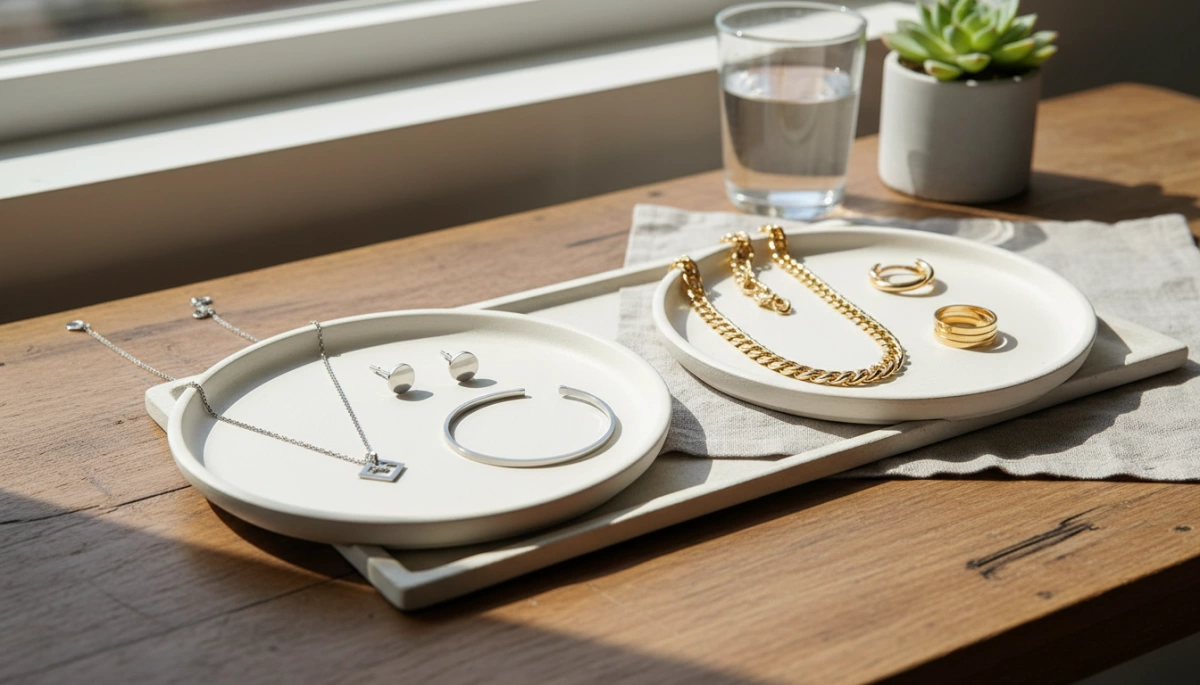
Stainless Steel vs Other Metals for Allergy‑Prone Skin

stainless steel hypoallergenic jewelry comparison

If you’ve got sensitive skin or a nickel allergy, the metal you choose matters. Here’s how hypoallergenic stainless steel jewelry stacks up against other common options in the U.S. market.

Stainless Steel vs Sterling Silver for Sensitive Skin

For most people with mild sensitivity, stainless steel for sensitive skin is more stable than sterling silver.

  • Sterling silver (925) usually contains copper and sometimes trace nickel. It can:
    • Tarnish fast
    • Turn skin green/black
    • Trigger irritation when it oxidizes or when cheap plating wears off
  • Hypoallergenic stainless steel (like 316L):
    • Rarely tarnishes
    • Has very low nickel release when you choose the right grade
    • Handles sweat, showers, and daily wear better

If you want something low‑maintenance for everyday wear instead of constantly polishing silver, stainless steel jewelry is usually the safer, easier choice. If you want a deeper breakdown of the comparison, I’ve covered it in detail in this guide to sterling silver vs stainless steel jewelry.

Stainless Steel vs Titanium for Hypoallergenic Jewelry

When it comes to best metal for sensitive skin jewelry, titanium is usually the “gold standard” for serious allergies, but stainless steel still wins for value.

  • Titanium jewelry:
    • Completely nickel‑free in most jewelry grades
    • Extremely hypoallergenic and super light
    • More expensive and harder to find in trendy, fashion‑forward designs
  • 316L surgical stainless steel:
    • Contains nickel, but releases very little when properly made
    • More affordable and widely available
    • Great balance of comfort, durability, and price for most people

If your skin reacts to almost everything, go titanium. If you just want hypoallergenic earrings stainless steel that don’t break the bank, 316L stainless is usually enough.

Stainless Steel vs Gold and Gold‑Plated Jewelry for Allergies

Gold sounds “safe,” but a lot of people with allergies still react to it—especially in the U.S. where 10K and 14K gold are common.

  • Solid high‑karat gold (18K and up):
    • More hypoallergenic, but pricey
    • Still can cause reactions if you’re sensitive to alloys like nickel or copper
  • Gold‑plated or gold‑filled:
    • Base metal underneath (often brass or mystery alloys)
    • Plating wears off and exposes cheaper metals that can trigger rashes
  • Stainless steel jewelry:
    • Can be polished, matte, or gold‑colored (PVD coated) without losing durability
    • Doesn’t rely on thin plating to stay skin‑friendly

If you like a “gold look” but don’t want the cost or the allergy risk from worn‑off plating, waterproof hypoallergenic jewelry in gold‑tone stainless steel is a smart middle ground.

Stainless Steel vs Cheap Plated and Base Metal Jewelry

This is where hypoallergenic stainless steel jewelry absolutely wins.

  • Cheap base metals (brass, zinc alloys, “mystery metal”):
    • High risk of nickel and other irritants
    • Fade, peel, tarnish quickly
    • Common cause of “rash from stainless steel jewelry” that’s actually not real stainless
  • Quality stainless steel:
    • Non‑tarnish, non‑peeling surface
    • Holds its color and finish for years
    • Much safer for nickel allergy sufferers when you use proper grades like 316L or good 304

If a piece is extremely cheap and just labeled “metal” or vaguely “stainless tone,” I avoid it. I’d rather control the material and quality myself than deal with returns from irritated skin.

When Stainless Steel Is the Best Balance

For most U.S. customers with mild to moderate sensitivity, stainless steel hypoallergenic jewelry is the best all‑around choice when you weigh safety, durability, and cost:

  • Best for: daily wear rings, chains, bracelets, and even earrings for sensitive ears
  • Great balance of: low nickel release, scratch resistance, and real‑world durability
  • Better value than: solid gold, titanium, and most designer pieces, while performing better than cheap plated jewelry

If you want consistent quality for your own collection or to resell, building around 316L surgical stainless steel jewelry gives you a strong, allergy‑friendly base with far fewer customer complaints and returns than low‑grade metals.

Benefits of Hypoallergenic Stainless Steel Jewelry

Hypoallergenic stainless steel jewelry hits a sweet spot for sensitive skin, daily wear, and real-life budgets. Here’s why I rely on it in my own lineup.

Why Stainless Steel Works for Everyday Wear

BenefitWhat It Means for You
Durable & scratch‑resistantGreat for daily wear rings, bracelets, and chains that get bumped and rubbed all day.
Corrosion & tarnish resistantNo constant polishing like sterling silver; it holds its shine in real life use.
Waterproof & sweat‑friendlySafe for the gym, shower, beach, and everyday U.S. weather without turning green.
Low maintenanceQuick wipe‑down is usually enough—no babying or special cloths needed.
Style versatilityWorks for minimalist chains, chunky stainless steel rings, earrings, and body jewelry.
Cost‑effectiveLooks close to white gold or platinum at a fraction of the price.

Durability, Tarnish Resistance, and Sweat-Friendly Wear

Hypoallergenic stainless steel is tough. It handles:

  • Everyday wear: keys, laptops, gym equipment, steering wheels.
  • Moisture: sweat, humidity, and regular hand washing.
  • No tarnish drama: unlike silver, it won’t blacken or leave dark marks on your skin.

If you keep a simple cleaning habit (a quick wash with mild soap and water), the metal stays smooth and skin-friendly for the long haul. For a step‑by‑step routine, I follow the same methods we use in our own stainless steel jewelry care guide.

Style Flexibility Without the Luxury Price Tag

For U.S. shoppers who want a “fine jewelry look” without luxury pricing, hypoallergenic stainless steel is hard to beat:

  • Rings: durable stainless steel rings that don’t bend easily like softer metals.
  • Necklaces: from simple everyday chains to bold stainless steel necklaces.
  • Earrings: especially good when you want hypoallergenic stainless steel earrings you can keep in all day.
  • Body jewelry: solid choice when you want waterproof, sweat‑friendly pieces that still look polished.

You get:

  • A similar look to white gold or platinum
  • Better scratch resistance than most plated pieces
  • A much lower price than gold, platinum, or even titanium in many cases

For most people with sensitive skin who also care about budget and durability, hypoallergenic stainless steel jewelry is one of the best all‑around options on the market.

Who Should Be Careful with Stainless Steel Jewelry?

When Stainless Steel Might Not Be Safe Enough

Stainless steel is skin‑friendly for most people, but it’s not perfect for everyone. If you’re wondering “is stainless steel hypoallergenic” or “can you be allergic to stainless steel jewelry,” here’s who needs to be extra careful.

1. If You Have a Known Nickel Allergy or Contact Dermatitis

Be cautious with stainless steel jewelry if you:

  • Have a diagnosed nickel allergy or patch-test confirmation
  • React to jean buttons, belt buckles, watch backs, or cheap earrings
  • Have a history of contact dermatitis from metal

Even hypoallergenic stainless steel (like 316L) can contain nickel, and while the nickel release is low, some highly sensitive people can still react.

2. Signs Your Stainless Steel Jewelry Is Irritating Your Skin

Take stainless steel off right away and stop wearing it if you notice:

  • Redness, itching, or burning under or around the jewelry
  • Rash, bumps, or dry, flaky patches in the contact area
  • Blisters or oozing skin in more severe reactions
  • Symptoms that get worse with sweat or water (gym, shower, summer heat)

This applies to stainless steel earrings for sensitive ears, rings, necklaces, and bracelets. Any repeated irritation is a red flag.

3. When “Hypoallergenic Stainless Steel” Isn’t Enough

Even surgical stainless steel jewelry (like 316L) might not be enough if:

  • You react to high‑quality stainless steel, not just cheap pieces
  • You’ve had issues with medical implants, piercing jewelry, or surgical tools
  • Your skin breaks out within hours of wearing stainless steel

In these cases, don’t keep “testing” your skin. Switch metals.

4. When to Switch to Titanium, Niobium, or High Karat Gold

If stainless steel keeps causing problems, move to safer metals for metal allergy sufferers:

  • Titanium (especially implant grade) – top choice for severe nickel allergy
  • Niobium – extremely skin‑friendly and great for piercings and sensitive ears
  • High karat gold (14K–18K, nickel‑free) – choose yellow or rose gold, not low‑karat white gold with nickel

For new piercings and very reactive skin, titanium usually beats stainless in safety. You can compare both in more detail in this guide on titanium vs stainless steel jewelry for sensitive skin.

5. When to Talk to a Dermatologist

See a dermatologist if:

  • You’re not sure if the rash is from stainless steel jewelry
  • Reactions don’t clear up after you stop wearing the piece
  • You react to multiple metals, including “hypoallergenic” ones
  • You’re considering a new piercing and already know you’re sensitive

Ask for patch testing for nickel and other metals. That way, you’ll know if stainless steel for sensitive skin is safe for you, or if you need to stick with titanium, niobium, or specific high‑karat gold.

For anyone who can wear stainless, keeping it clean and buildup‑free also helps cut irritation risk. A simple routine like the one in this care guide for stainless steel jewelry goes a long way toward keeping your skin calm.

How to Choose Hypoallergenic Stainless Steel Jewelry

How to Read Labels (316L, Surgical, Hypoallergenic)

When you’re buying hypoallergenic stainless steel jewelry, the label is everything:

LabelWhat It MeansIs It Good for Sensitive Skin?
316LLow‑carbon surgical stainless steelBest choice for most allergies
Surgical Stainless SteelUsually 316L or 316LVMSafe for most piercings & daily wear
HypoallergenicMarketing term, not regulatedOnly trust if grade is listed (316L, 304, etc.)
Nickel FreeVery low or no nickel, but not always 0%Good, but still ask which grade

Always look for a specific grade (like 316L), not just “stainless steel” or “hypoallergenic” on its own. If you want a deeper breakdown of common grades and durability, I explain them in detail in this expert guide to stainless steel jewelry and 316L durability.


Questions to Ask Before You Buy

Ask the seller straight up:

  • “What grade of stainless steel is this?” (You want 316L or 304 at minimum.)
  • “Is this nickel free or low nickel?”
  • “Is this safe for fresh piercings or just fashion wear?”
  • “Is it solid stainless steel or plated over a base metal?”
  • “Do you have any allergy or sensitivity guarantees?”

If they can’t answer clearly, skip it.


How to Spot Low-Quality or Mislabeled Stainless Steel

Watch out for these signs:

  • The listing only says “stainless steel” with no grade
  • Very bright yellow “gold” color that looks overly shiny and fake
  • Peeling, flaking, or chipping around edges (likely plated over cheap metal)
  • Strong metallic or chemical smell
  • Super cheap price for “surgical” or “hypoallergenic” claims

For business buyers or resellers, I only work with suppliers who clearly state 316L on invoices and product specs, similar to the sourcing approach I cover in my guide on where to buy quality wholesale stainless steel jewelry.


Tips for Buying Stainless Steel Earrings for Newly Pierced Ears

For fresh piercings or very sensitive ears:

  • Choose 316L surgical stainless steel or implant‑grade titanium for the first 3–6 months
  • Go for simple studs or small hoops (less movement, less irritation)
  • Avoid heavy earrings that tug on the hole
  • Make sure the post is solid 316L, not just the decorative front
  • Avoid painted, enamel, or rhinestone-heavy studs at the start

If it’s a new piercing, your piercer’s jewelry should always be medical-grade (316L, titanium, or niobium).


Red Flags When Shopping Online for Stainless Steel Jewelry

Be extra picky online:

  • Vague descriptions: no grade, no composition, just “hypoallergenic”
  • Stock photos only, no real product close‑ups
  • No mention of returns or allergy issues in the policy
  • Seller lists multiple metals in one listing (e.g., “copper/stainless steel/alloy”)
  • Tons of bad reviews mentioning rash, itching, or discoloration

If you have sensitive skin, don’t gamble on vague Amazon/Etsy listings with unclear materials.


Why Brand Reputation and Transparency Matter

For stainless steel jewelry and sensitive skin, who you buy from is as important as what you buy:

  • Good brands clearly list steel grade, nickel content, and plating details
  • They’ll be upfront about 316L vs 304 vs mixed alloys
  • They usually have consistent quality, so one piece won’t be safe while another isn’t
  • They respond quickly when you ask, “Is this safe for nickel allergy?”

I always tell customers:
If a brand won’t tell you exactly what metal you’re putting in your skin, don’t put it on your body.
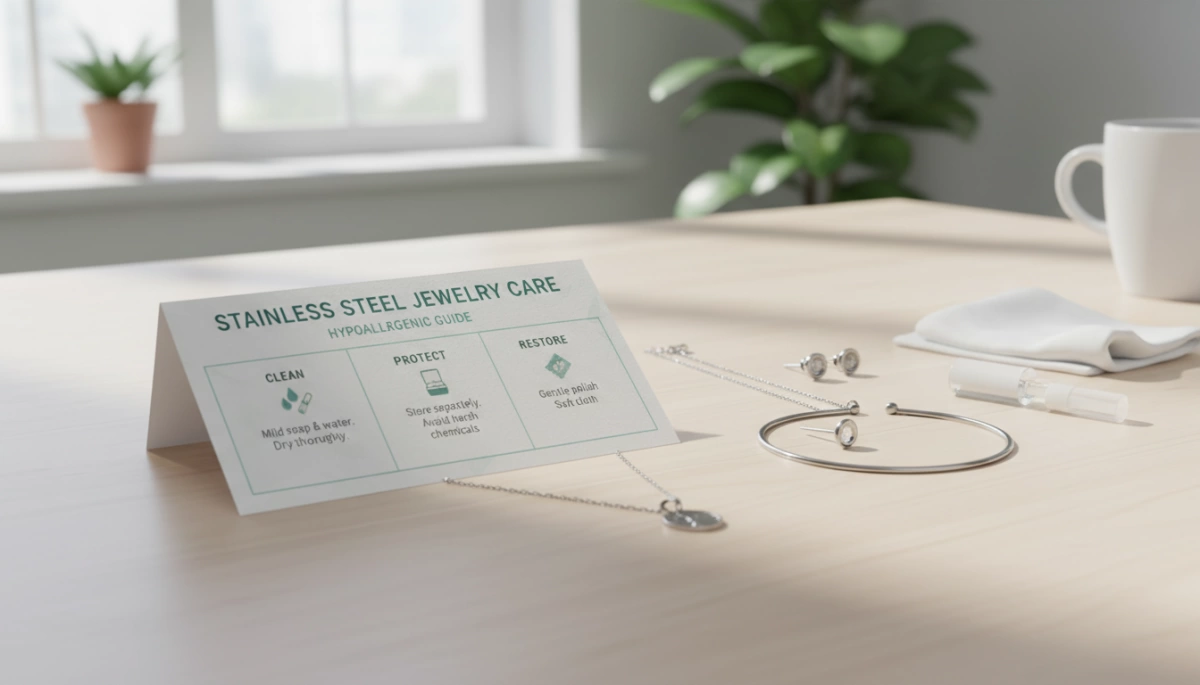
Care Tips to Keep Stainless Steel Jewelry Skin Friendly

stainless steel jewelry care hypoallergenic guide

Simple cleaning routine for stainless steel jewelry

To keep hypoallergenic stainless steel jewelry comfortable on sensitive skin, I always tell customers to stick to a quick weekly clean:

  • Mix a few drops of mild dish soap with warm water.
  • Soak your stainless steel rings, earrings, or chains for 5–10 minutes.
  • Gently wipe with a soft cloth or soft toothbrush, especially around backs of earrings and inside rings.
  • Rinse well with clean water and dry completely with a lint‑free cloth.

This removes sweat, lotion, sunscreen, and skin oils that can cause irritation even if the metal itself is hypoallergenic.

Prevent buildup that can irritate sensitive skin

Even the best stainless steel for sensitive skin can bother you if gunk builds up where metal touches your skin. Focus on:

  • Earrings: Clean posts and backs often—these trap sweat and bacteria.
  • Rings: Clean the inside band and under stones where soap scum collects.
  • Necklaces/bracelets: Wipe the clasp and chain sections that sit on your neck or wrist.

If you have very sensitive skin, a fast wipe with a damp cloth after heavy sweating or a workout helps a lot.

Best way to store stainless steel jewelry

Stainless steel is tough and doesn’t tarnish like silver, but smart storage keeps it skin‑friendly and looking new:

  • Store pieces dry, in a soft pouch or separate compartment to avoid scratches.
  • Keep earrings in a clean, closed container to keep dust and bacteria down.
  • Don’t toss stainless steel jewelry loose in a bag with cheap plated metals that can flake and transfer residue.

If you’re building a small collection of waterproof hypoallergenic jewelry, consider a simple jewelry box and a few labeled pouches for daily favorites.

Chemicals and environments to avoid

Stainless steel is durable, but harsh environments can rough up the surface and indirectly affect your skin:

  • Avoid strong cleaners, bleach, pool chemicals, and hot tubs when possible.
  • Take off jewelry before using hair dye, spray tan, or harsh disinfectants.
  • Rinse and dry pieces after swimming in pools or the ocean.

If you wear a lot of body jewelry or plan bulk purchases, look for high‑quality pieces from a stainless steel jewelry manufacturer that clearly states materials and finishes, like our own stainless steel lines on stainless steel body jewelry collections.

Protecting the chromium oxide layer

Stainless steel’s hypoallergenic reputation comes from its thin chromium oxide “shield” that limits nickel release. Good care helps keep that layer stable:

  • Gentle cleaning only—no abrasive pads or harsh scouring powders.
  • Dry thoroughly after water exposure to avoid mineral spots or buildup.
  • Avoid deep scratches that can damage the surface and expose fresh metal.

With basic cleaning and storage, your hypoallergenic stainless steel jewelry stays smooth, low‑maintenance, and skin‑friendly for long‑term wear.

FAQ: Stainless Steel and Hypoallergenic Jewelry

Is stainless steel hypoallergenic for earrings and piercings?

For most people, yes—316L surgical stainless steel is considered hypoallergenic for earrings and piercings. It has very low nickel release and is widely used for body jewelry in the U.S. For fresh piercings or very sensitive ears, I always lean toward 316L or implant‑grade steel, not cheap “stainless” with no grade listed.

Are stainless steel rings hypoallergenic for daily wear?

Quality stainless steel rings (316L and many 304 grades) are usually safe for daily wear, even on sensitive skin. If you have a strong nickel allergy or get rashes from watches or belt buckles, stick with 316L or switch to titanium.

Is hypoallergenic stainless steel really nickel free?

Most of the time, no. Hypoallergenic stainless steel usually still contains nickel, but it’s locked into the alloy and releases very little. “Hypoallergenic” means “less likely to cause a reaction,” not “nickel free.” If you need true nickel‑free jewelry, look at titanium, niobium, or some specific nickel‑free stainless grades.

How do I know if I am allergic to stainless steel jewelry?

Watch for:

  • Redness, itching, or burning where the jewelry sits
  • Small blisters or dry, flaky patches under the metal
  • Symptoms that get worse with sweat or long wear

If that sounds like you, ask a dermatologist for patch testing to confirm nickel or metal allergy.

Is stainless steel safe for kids with sensitive skin?

In most cases, yes—316L stainless steel earrings and small studs are a solid choice for kids with mild sensitivity. For kids with known nickel allergy or eczema around jewelry, I’d go straight to titanium or high karat gold for extra safety.

Can stainless steel jewelry cause a rash or itching?

It can, but usually only if:

  • You have a nickel allergy
  • The piece is low‑quality, high‑nickel steel
  • Sweat, soap, or lotion builds up under the jewelry

If you get a rash from stainless steel, remove the piece, clean the skin, and switch metals.

Is stainless steel good for nose, belly, or cartilage piercings?

For healed piercings, 316L surgical stainless steel is usually fine and very popular for nose hoops, belly rings, and cartilage studs. For new piercings or very reactive skin, many piercers in the U.S. prefer titanium as the safest start, then you can move into stainless later. If you prefer nose hoops, look at titanium options similar to these titanium nose ring hoops for a low‑risk choice.

Does stainless steel tarnish or discolor skin over time?

Stainless steel doesn’t tarnish like silver and rarely discolors skin. If you see green or black marks, it’s usually from:

  • Mixed metals or plated pieces, not true stainless
  • Dirt, sweat, or product buildup under the jewelry

A quick clean with mild soap and water usually fixes it.

Is stainless steel or titanium better for metal allergies?

For serious metal allergies, titanium wins—it’s fully nickel‑free and considered one of the best metals for sensitive skin. Stainless steel (especially 316L) is a great middle ground for most people: hypoallergenic enough, tough, and affordable.

What is the best stainless steel grade for hypoallergenic jewelry?

If you want the safest bet:

  • Best overall: 316L surgical stainless steel (especially for earrings, piercings, and all‑day wear)
  • Good for everyday jewelry: 304 stainless steel for rings, chains, and bracelets if you’re not severely nickel‑sensitive

For durable, skin‑friendly pieces like stainless steel metal rings, I always start with 316L whenever possible because it balances hypoallergenic performance, strength, and price.

Leave a Reply

Your email address will not be published. Required fields are marked *
