Whatspp/Phone:
+8618666402929
Email:info@shinysteeljewelry.com
Factory address:
No. 5 Changsheng Road, Chang’an Town, Dongguan City, Guangdong Province, China.
 Skip to content
Whatspp/Phone:
+8618666402929
Email:info@shinysteeljewelry.com
Factory address:
No. 5 Changsheng Road, Chang’an Town, Dongguan City, Guangdong Province, China.

Are you tired of your rings bending out of shape, and wondering is sterling silver or stainless steel better for jewelry? Before evaluating modern stainless steel jewelry, I always start by breaking down the traditional industry standard.
Pure silver is visually stunning, but it is extremely soft and highly malleable. If we manufactured products from 100% pure silver, they would easily crush, warp, or lose their stone settings during normal daily use. To solve this structural problem, metallurgists created a specific, hardened alloy blend.
Here is the exact composition of standard 925 sterling silver:
For centuries, this precise 925 ratio has served as the baseline for high-end manufacturing. It holds a permanent, historical status in the fine jewelry vs fashion jewelry debate. When you work with traditional sterling silver, you are using a time-tested material designed for crafting heirloom pieces meant to be passed down through generations.
When figuring out whether is sterling silver or stainless steel better for jewelry, I always advise my clients to look at the exact makeup of the metal first. Stainless steel isn’t a naturally occurring element; it is an engineered alloy composed of iron, carbon, and chromium.
Here is a quick breakdown of the mechanics that make it work:
If you are wondering whether stainless steel or sterling silver is better quality for daily, heavy wear, 316L surgical steel easily takes the crown. It contains a slight addition of molybdenum, making it incredibly resistant to harsh environments like saltwater or sweat.
We heavily utilize 316L to craft durable jewelry materials—from an everyday, scratch-resistant stainless steel ring to heavy-duty chains. Because of its high corrosion resistance and stability, it is widely recognized as one of the absolute best hypoallergenic jewelry metals for sensitive skin. Understanding the sheer resilience of these specific grades immediately highlights the benefits of choosing stainless steel jewelry for your business compared to softer, high-maintenance metals.
When customers ask me, is sterling silver or stainless steel better for jewelry, my answer always comes down to how you actually live your life. Here is the direct breakdown of how these two metals perform in the real world.
Choosing jewelry for sensitive skin means avoiding cheap alloys.
| Feature | 925 Sterling Silver | 316L Stainless Steel |
|---|---|---|
| Durability | Soft, bends under pressure | Hard, highly scratch-resistant |
| Maintenance | High (requires frequent polishing) | Zero maintenance |
| Hypoallergenic | Good | Excellent (Surgical Grade) |
| Plating | Standard electroplating fades quickly | Ultra-durable PVD gold plating |
| Best For | Heirlooms and special occasions | Active lifestyles and daily wear |
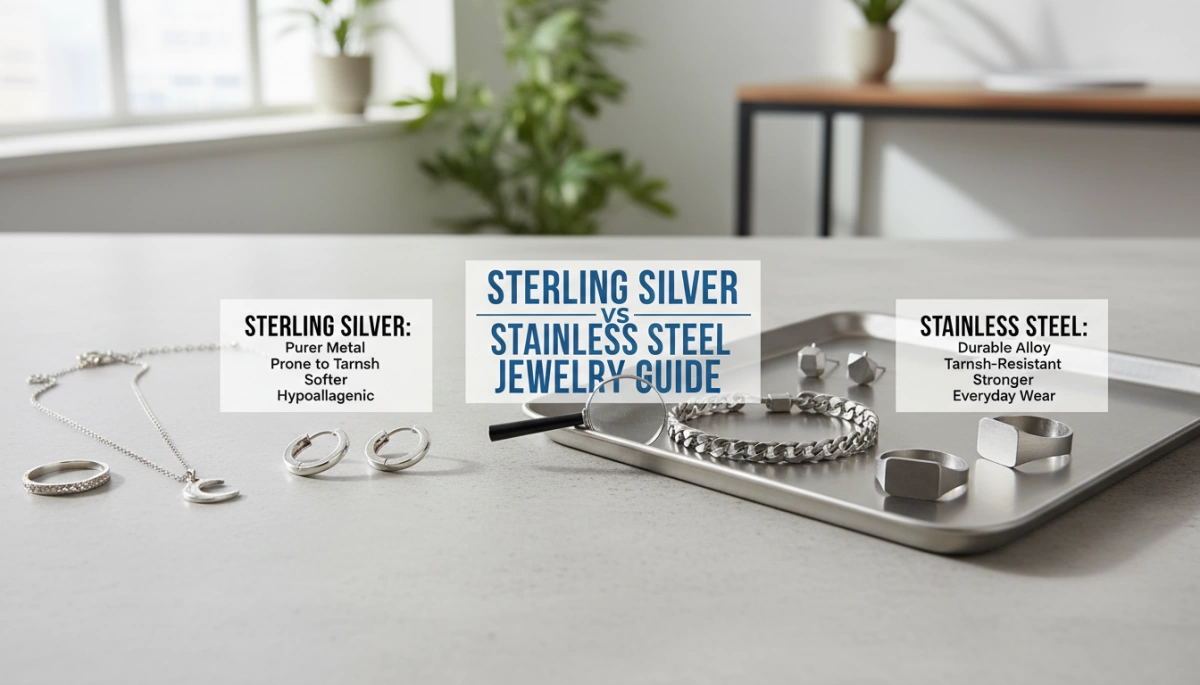
When clients ask me, “Is sterling silver or stainless steel better for jewelry?”, my answer always comes down to your daily routine. Are you looking for a traditional piece to pass down, or do you need rugged everyday wear jewelry that survives a heavy gym session?
Here is how I break down the choice for my US customers.
| Lifestyle Factor | Best Metal Choice | The Reason |
|---|---|---|
| Gym & Swimming | Stainless Steel | Resists sweat, water, and hard impact. |
| Heirloom Gifts | Sterling Silver | Holds traditional fine jewelry value. |
| Skin Allergies | Stainless Steel | Highly safe and prevents green skin. |
| Future Resizing | Sterling Silver | Soft enough to easily cut and solder. |
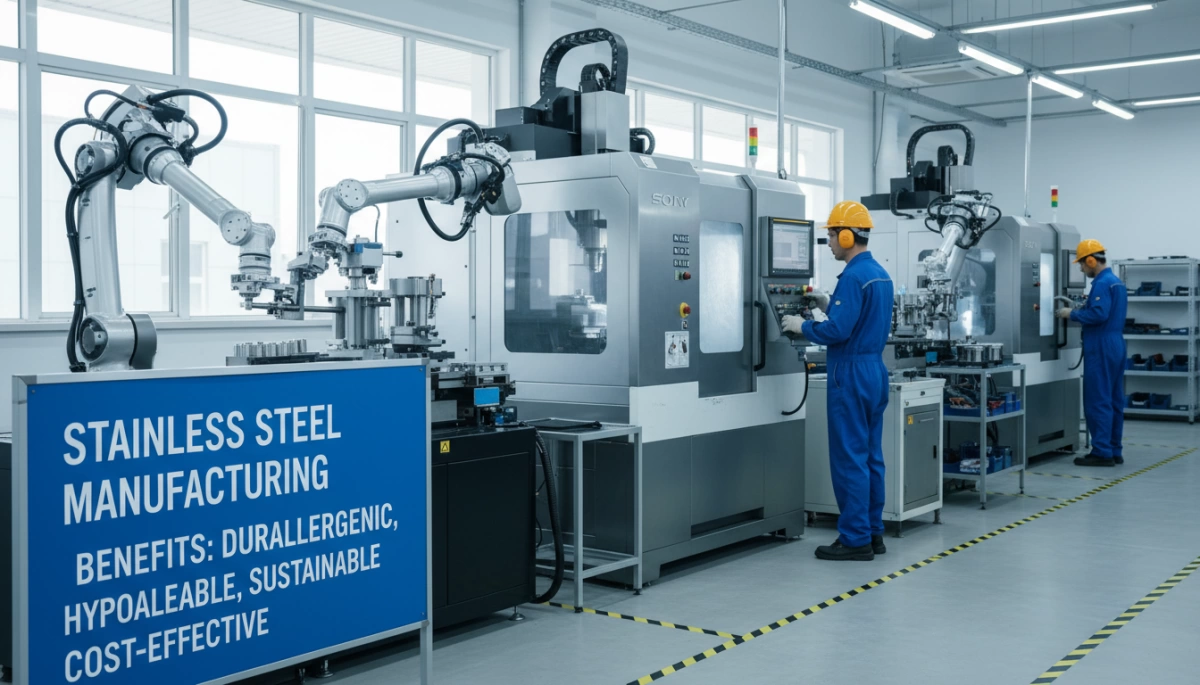
When jewelry brand owners ask me, “is sterling silver or stainless steel better for jewelry from a business standpoint?”, my answer almost always leans toward steel. The massive market shift toward stainless steel jewelry isn’t just a consumer trend; it is driven by hard retail and manufacturing benefits.
Here is exactly why modern jewelry brands are making the switch:
By eliminating storage headaches and utilizing precision tech, steel offers unmatched profit margins, durability, and scalability for growing businesses in the US market.
When customers and brand owners ask me, is sterling silver or stainless steel better for jewelry, I always break it down by answering these common questions to clear up any confusion.
Not at all. While 925 sterling silver does have a slightly brighter, whiter finish naturally, highly polished 316L surgical steel delivers a sleek, premium shine. If you are wondering is stainless steel or sterling silver better quality visually, remember that modern PVD plating makes premium steel pieces look completely indistinguishable from traditional fine jewelry.
I highly advise against it. While pure water won’t instantly destroy it, the chlorine in pools, salts, and chemicals in tap water or soaps will speed up oxidation, causing rapid tarnish. If you need true everyday wear jewelry that you never have to take off, stainless steel is the clear winner.
Absolutely not. That dreaded green mark happens when copper reacts with the acidity of your skin. High-quality stainless steel contains zero copper. It ranks at the top of hypoallergenic jewelry metals and is completely safe, making it the perfect jewelry for sensitive skin.
For modern brands, stainless steel is dominating the market. It offers zero tarnish risk while sitting in storage and significantly lower upfront costs due to the silver vs steel price gap. If you are looking to scale your business and want to know where to buy wholesale stainless steel jewelry in 2026, you’ll find that steel provides incredible profit margins, higher durability, and fewer customer returns.


