Whatspp/Phone:
+8618666402929
Email:info@shinysteeljewelry.com
Factory address:
No. 5 Changsheng Road, Chang’an Town, Dongguan City, Guangdong Province, China.
 Skip to content
Whatspp/Phone:
+8618666402929
Email:info@shinysteeljewelry.com
Factory address:
No. 5 Changsheng Road, Chang’an Town, Dongguan City, Guangdong Province, China.

The global jewelry market has seen a massive shift toward durable, tarnish-resistant materials, with stainless steel leading the charge. For retail brands, e-commerce stores, and boutique owners, securing a reliable supply chain is the foundation of market success. Navigating this market requires a clear understanding of where your inventory comes from and how it impacts your bottom line.
The journey of a piece of jewelry from raw material to a consumer’s collection involves distinct layers. At the source are the raw metal refineries, which feed into manufacturing hubs where specialized machinery stamps, casts, and polishes the metal. From there, products move through two primary B2B pathways before reaching retail shelves:
[Raw Materials] ➔ [Direct Factories] ➔ [Distributors / Wholesalers] ➔ [Retailers]
Choosing the right partner along this chain dictates your operational efficiency, inventory risk, and ultimate profitability.
Every jewelry entrepreneur eventually faces a critical operational crossroads: Do you source from stainless steel jewelry distributors, or do you partner directly with production factories?
Balancing these trade-offs is not just about finding the lowest price—it is about aligning your sourcing strategy with your business’s current capital, logistics capabilities, and scaling goals.
Stainless steel jewelry distributors act as the crucial middleman between large-scale manufacturing facilities and retail brands. Instead of manufacturing the products themselves, a stainless steel jewelry distributor buys massive volumes of inventory directly from factories, manages the logistics, stores the stock in localized warehouses, and breaks those bulk shipments down into smaller, manageable quantities for independent retailers, e-commerce stores, and boutique brands. They essentially absorb the supply chain risk and upfront capital requirements so smaller businesses don’t have to.
Partnering with stainless steel jewelry wholesale distributors offers several distinct advantages for growing retail brands:
While convenient, sourcing from a distributor has clear limitations that can impact your long-term scaling strategy:
DisadvantageImpact on Your BusinessHigher Per-Unit CostDistributors add a markup to cover their overhead, which directly shrinks your retail profit margins.Limited CustomizationYou are restricted to selling off-the-shelf designs. True OEM/ODM customization or custom branding is rarely an option.Risk of StockoutsIf a specific design becomes a bestseller, you depend entirely on the distributor’s inventory levels. If they run out, your supply chain halts.Market SaturationBecause anyone can buy from the same catalog, you will likely face direct competition from other brands selling the exact same items.

Direct stainless steel jewelry factories are the actual production facilities where raw metals are transformed into finished products. Unlike a stainless steel jewelry distributor, these factories house heavy machinery, molding equipment, polishing stations, and PVD plating setups. They handle everything from raw design files to mass production, specializing in metallurgy and high-volume output. When you partner with a factory, you are bypassing all middlemen and working directly with the source of fabrication. This gives you a front-row seat to the raw durability and safety of 316 stainless steel, ensuring the base metal meets strict global compliance standards before it ever hits the retail market.
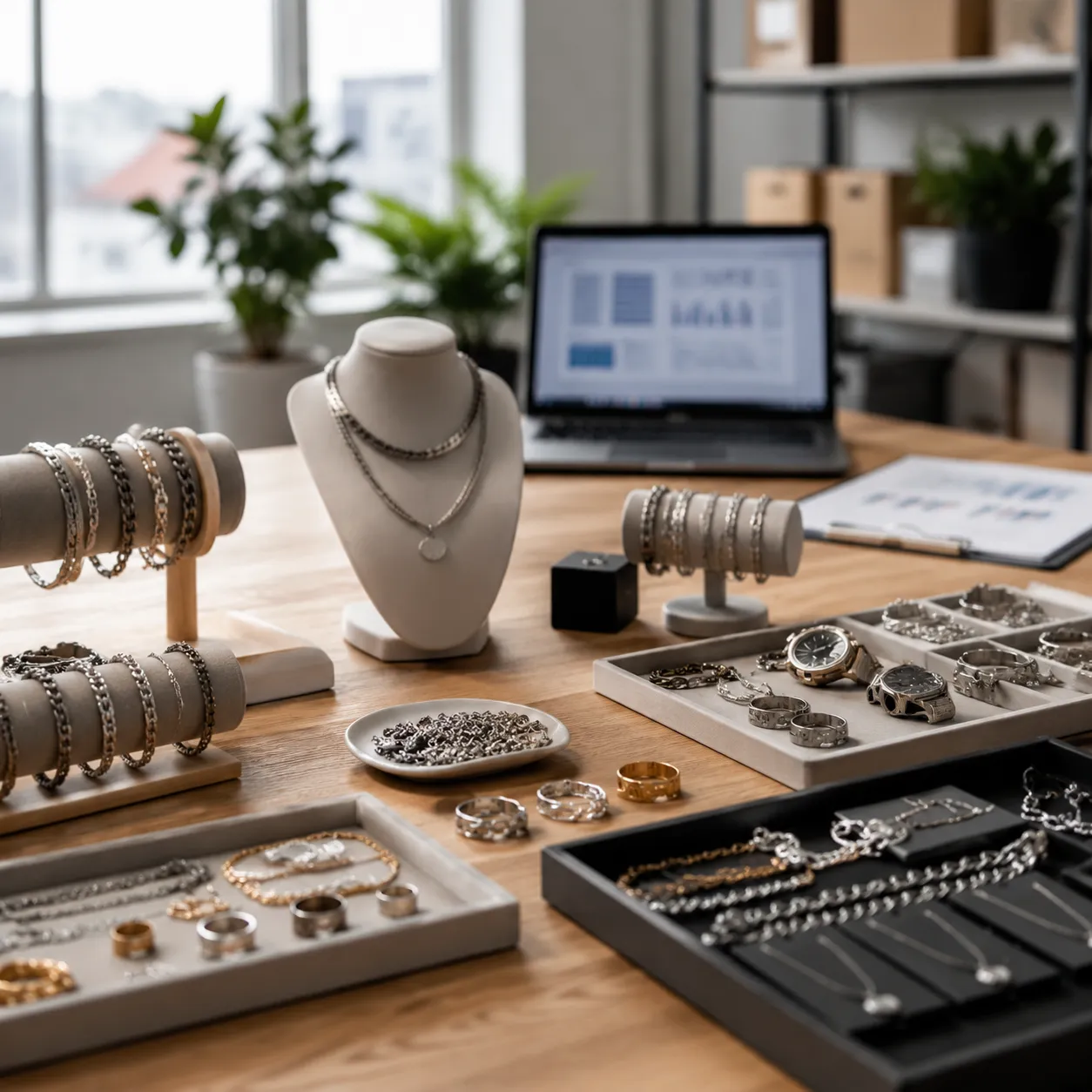
Choosing between stainless steel jewelry distributors and direct factories comes down to balancing your budget, timeline, and design needs. Here is a direct breakdown of how the two options compare across essential business metrics.
MetricStainless Steel Jewelry DistributorsDirect Manufacturing FactoriesMOQsVery Low (often 1–5 pieces per style)High (typically 50–100+ pieces per style)Unit PricingHigher (includes distributor markup)Lowest (factory-direct wholesale pricing)Lead TimesFast (ships immediately from existing stock)Slow (production takes 15–45 days)CustomizationLimited to stock items or basic engravingFull OEM/ODM (custom molds, shapes, and branding)CommunicationEasy, localized, and retail-friendlyTechnical, focused on production specs
Choosing between stainless steel jewelry distributors and direct factories comes down to your current business scale, budget, and customization needs. There is no one-size-fits-all answer, but mapping your resources against your goals will make the choice clear.
Partnering with a stainless steel jewelry distributor is the smartest move if you are just starting out or running a boutique brand. Working with reliable stainless steel jewelry wholesale distributors allows you to test the market without heavy financial risk.
You should choose a distributor if you need: Low Upfront Investment: Perfect if you are figuring out how much money do you need to start a jewelry business and want to keep initial costs minimal. Fast Inventory Turnaround: Goods are already manufactured and sitting in warehouses, ready to ship immediately. High Product Variety: You can mix and match dozens of different styles in a single small order rather than committing to one design.
Going straight to the factory is the ideal path for established brands looking to scale up and maximize profit margins. Skip the stainless steel jewelry distributor when your volume justifies the logistical overhead.
You should move to factory-direct sourcing if you need: Massive Cost Savings: Buying in bulk directly from the production line cuts out the middleman markup completely. Proprietary Designs: Essential if you want to launch custom collections using advanced customization options for stainless steel jewelry. Total Control Over Quality: Direct communication with the floor ensures your specific material tolerances and finishing standards are met.
Business FeatureChoose a DistributorGo Straight to the FactoryOrder VolumeLow to Moderate (Flexible MOQs)High Bulk Volumes (Strict MOQs)Capital RiskLow risk, low capital neededHigher upfront financial commitmentProduct CustomizationLimited to off-the-shelf catalogFully custom OEM/ODM capabilitiesShipping SpeedShips in daysProduction takes weeks or monthsProfit MarginsStandard retail marginsMaximum possible profit margins