Whatspp/Phone:
+8618666402929
Email:info@shinysteeljewelry.com
Factory address:
No. 5 Changsheng Road, Chang’an Town, Dongguan City, Guangdong Province, China.
 Skip to content
Whatspp/Phone:
+8618666402929
Email:info@shinysteeljewelry.com
Factory address:
No. 5 Changsheng Road, Chang’an Town, Dongguan City, Guangdong Province, China.

You’ve probably seen the ads promising “waterproof” and “sweat-proof” accessories…
But what is PVD plated jewelry, exactly?
Are these claims actually backed by science, or is it just another marketing gimmick?
Well, you’re in the right place because I’m about to pull back the curtain on the industry.
As a jewelry expert, I know exactly how frustrating it is to invest in a beautiful gold piece only for it to tarnish, fade, or turn your skin green after just a few wears.
In this guide, you’re going to learn the absolute truth about PVD plated jewelry, step by step.
I’ll break down the exact science behind the vacuum process, show you how it really stacks up against traditional gold plating and solid gold, and reveal exactly how long it truly lasts.
So if you want honest answers to help you find truly tarnish-free everyday jewelry, this guide is for you.
Let’s dive right in.
You’ve probably seen the term everywhere lately, but what is PVD plated jewelry exactly? As a jewelry brand owner, I hear from customers daily who are just tired of rings and necklaces that fade or chip after a week of wear.
PVD stands for Physical Vapor Deposition. It is a highly durable vacuum coating process used to apply a brilliant, tough finish to a solid base metal, usually stainless steel.
Let’s skip the heavy tech jargon and look at how this physical vapor deposition jewelry actually works. Inside a high-tech vacuum chamber, the chosen coating material is vaporized into a gas.
This gas then shoots across the chamber and bonds directly with the base metal at an atomic level. Here is exactly what happens during this vacuum coating process for jewelry:
So, is PVD gold plating real gold? The short and honest answer is yes, but it acts as a permanent surface layer rather than a solid block of gold.
The coating itself utilizes real gold, which is often combined with a tough titanium nitride coating to maximize durability and scratch resistance. When you want to know the 18k PVD gold plated meaning, it simply tells you that real 18-karat gold was vaporized and permanently bonded to the jewelry’s base.
This specific process gives you the exact luxurious look, rich color, and feel of solid gold, but completely skips the massive price tag.
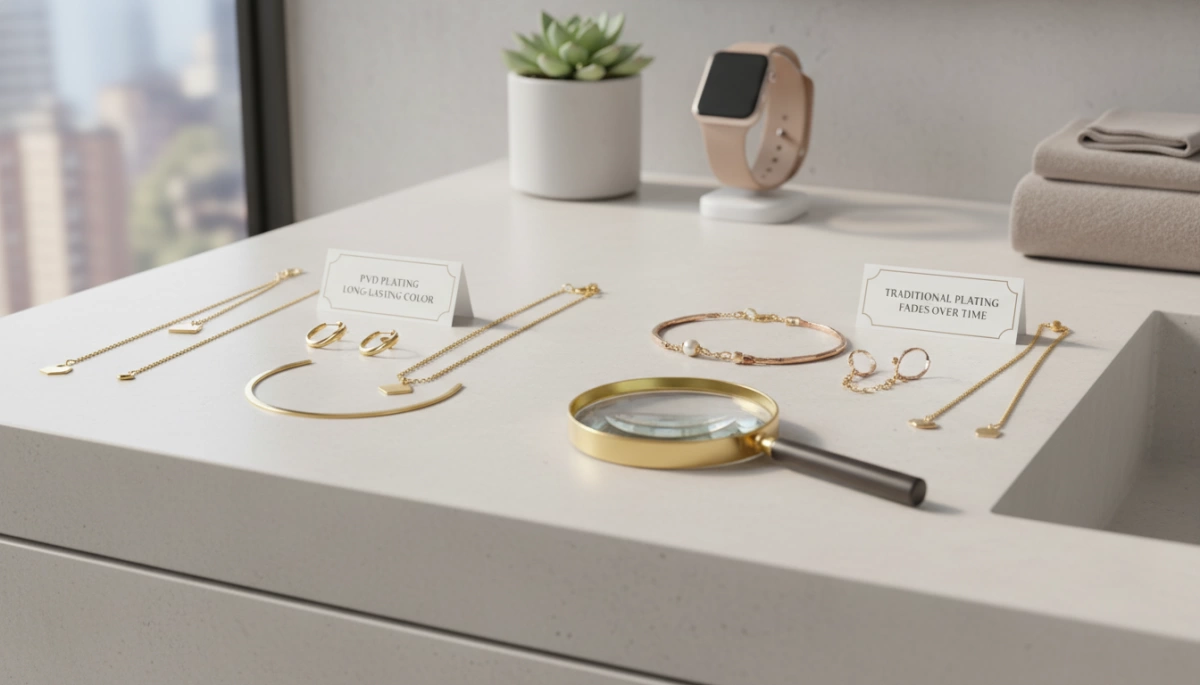
When you are shopping for jewelry, the choices can be overwhelming. You want pieces that look premium, last through your daily routine, and do not break the bank. To understand why PVD plated jewelry is dominating the market, we need to look at how it stacks up against older manufacturing methods.
Standard electroplating vs PVD is a night-and-day comparison. Traditional gold plating dips a base metal into a gold solution and uses an electric current to stick a thin layer on top. It looks great out of the box, but that thin layer quickly rubs off with normal friction, sweat, or water exposure.
PVD (Physical Vapor Deposition) uses a vacuum coating process to bond the gold at a molecular level. We pair this advanced technique with a rugged stainless steel base metal. For example, when we craft our durable stainless steel rings for men, the PVD method ensures the gold finish becomes an integrated part of the metal rather than just a fragile top coat.
| Feature | PVD Gold Plating | Traditional Gold Plating (Electroplating) |
|---|---|---|
| Durability | Extremely high; resists scratches and fading. | Low; prone to chipping and quick fading. |
| Water Resistance | Excellent; safe for sweat and showers. | Poor; tarnishes quickly when wet. |
| Lifespan | Can last years with daily wear. | Often fades within months. |
Solid gold is the ultimate luxury, but it comes with a massive price tag and the metal itself is actually quite soft. Gold-filled jewelry takes a different approach by pressure-bonding a thick layer of gold to a brass core. While PVD vs gold filled is a closer race, gold-filled pieces can still tarnish if that brass core is ever exposed.
So, what is 18k PVD gold plated meaning for your wallet and your wardrobe? It means you get the rich, warm color of genuine 18k gold layered over an incredibly tough, hypoallergenic core. Is PVD gold plating durable compared to the alternatives? Absolutely. It handles daily friction, sweat, and moisture better than almost anything else in its price bracket. Whether you are picking out an everyday stainless steel necklace or a heavy-duty chain, PVD delivers the perfect sweet spot: the luxury look of solid gold with the rugged performance of non-tarnish everyday jewelry.
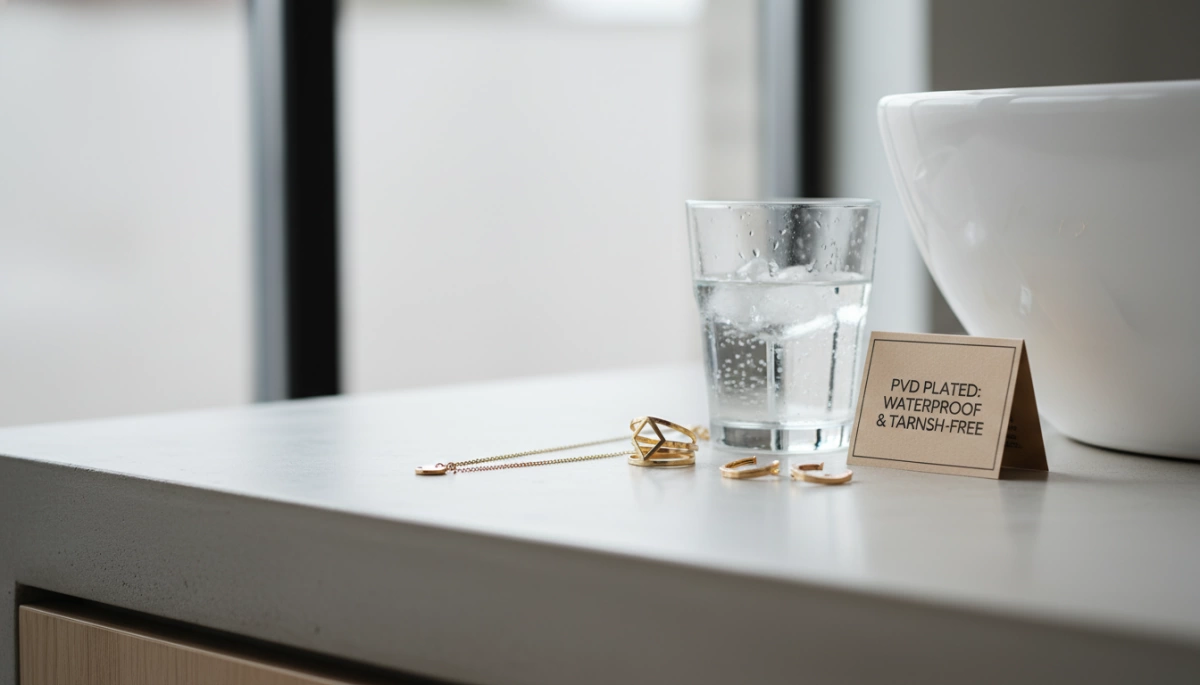
If you are wondering what PVD-plated jewelry brings to the table, it ultimately comes down to durability, safety, and sustainability. Here is exactly why this specific process is taking over the modern market.
Is it actually waterproof gold jewelry? Yes. Because the vacuum coating process binds the titanium nitride and gold color at a molecular level, it creates highly durable, non-tarnish everyday jewelry that survives your actual routine. You can wear these pieces to the gym, in the shower, or in the ocean without worrying about rapid fading, chipping, or rust. Partnering with a reliable PVD gold plated jewelry manufacturer ensures that this protective layer is thick and tough enough to handle heavy, daily wear.
We have all dealt with cheap metals leaving dark marks on our fingers and necks. The PVD process creates a hard, dense barrier that physically stops the base metal from reacting with your sweat and natural oils. When applied over a high-quality base, it results in jewelry that doesn’t turn skin green. Whether you are selling everyday chains or hypoallergenic gold rings, leveraging the benefits of choosing stainless steel jewelry for your business as the core foundation means you can offer products that are 100% safe for highly sensitive skin.
Standard electroplating relies on harsh chemical baths that generate toxic waste and pollute water. PVD manufacturing is a significant environmental upgrade. The entire coating process happens inside a sealed vacuum chamber. This means there are no hazardous chemical solutions used, zero water waste generated, and no toxic byproducts released into the atmosphere.
| Feature | The Real-World Benefit |
|---|---|
| Water Resistance | Holds up to sweat, showers, and everyday moisture without rusting. |
| Skin-Safe | Hypoallergenic barrier prevents allergic reactions and green skin. |
| Durability | Highly resistant to daily friction, scratches, and rapid tarnishing. |
| Sustainability | Clean, chemical-free vacuum process produces zero toxic waste. |
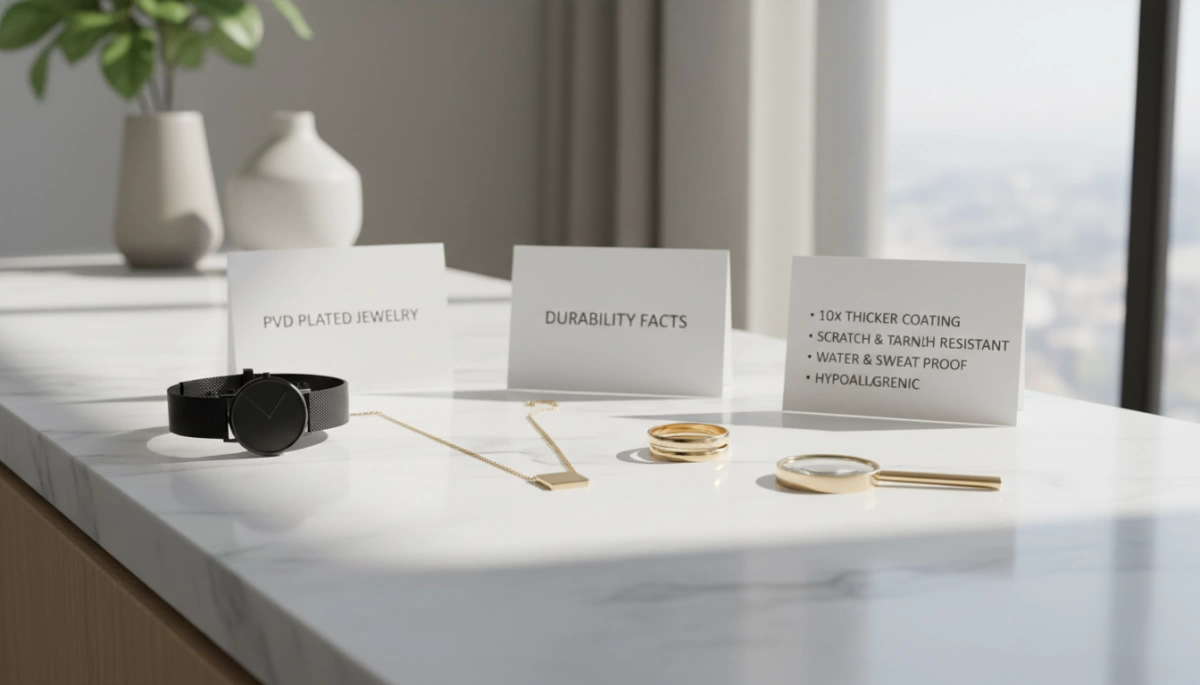
When customers ask me, “how long does PVD plating last,” I always prefer to give a straight answer rather than a sales pitch. While PVD plated jewelry is incredibly tough—far outperforming standard electroplating—it is not entirely invincible.
You have probably seen ads claiming non-tarnish everyday jewelry will literally last a lifetime without a single scratch or color change. Let’s clear the air: that is a marketing myth.
If you are wearing your pieces day in and day out across the United States—from humid Florida summers to dry Colorado winters—here is a realistic breakdown of what you can expect. For more specifics on base metal longevity, understanding how long stainless steel gold jewelry lasts gives a clear picture of the foundation beneath the gold.
Estimated Lifespan by Jewelry Type:
Ultimately, the exact timeline depends heavily on your daily habits and environment, but PVD easily remains the undisputed champion for affordable, long-lasting wear.
Even though PVD plated jewelry is incredibly durable and built for real life, giving it a little TLC goes a long way. If you want your non-tarnish everyday jewelry to keep its out-of-the-box shine year after year, here is exactly how I recommend maintaining it.
Keep it simple. Wipe your pieces down with a soft microfiber cloth after removing them. This removes daily body oils, sweat, and random smudges. If you rock stainless steel body jewelry that stays on 24/7, just give it a quick rinse with fresh water when you shower, then pat it completely dry.
Every few weeks, or whenever your 18k PVD gold plated pieces look a little dull, give them a quick spa treatment.
The vacuum coating process makes PVD tough, but it isn’t indestructible. To maximize how long your PVD plating lasts, keep these everyday hazards away from your pieces:


