Whatspp/Phone:
+8618666402929
Email:info@shinysteeljewelry.com
Factory address:
No. 5 Changsheng Road, Chang’an Town, Dongguan City, Guangdong Province, China.
 Skip to content
Whatspp/Phone:
+8618666402929
Email:info@shinysteeljewelry.com
Factory address:
No. 5 Changsheng Road, Chang’an Town, Dongguan City, Guangdong Province, China.

I’ve seen it happen countless times: a beautiful piece of jewelry looks stunning in the store but turns into a tarnished mess after one trip to the beach. To find what jewelry metal is waterproof, we first have to understand why standard fashion jewelry fails the moment it gets wet. Most “affordable” jewelry is built on a foundation of chemistry that simply isn’t designed for the elements.
[Image of metal oxidation process]
Most cheap jewelry utilizes base metals like copper and brass. These materials are highly reactive. When exposed to moisture and oxygen, a chemical reaction called oxidation occurs.
It isn’t just pure water that causes issues; it’s the environment around the water. As a jewelry manufacturer, I focus on how these specific factors accelerate the ruin of non-tarnish claims:
If you want sweat-proof necklaces or rings that survive the ocean, you have to move beyond these reactive base metals and look toward specialized metallurgy.
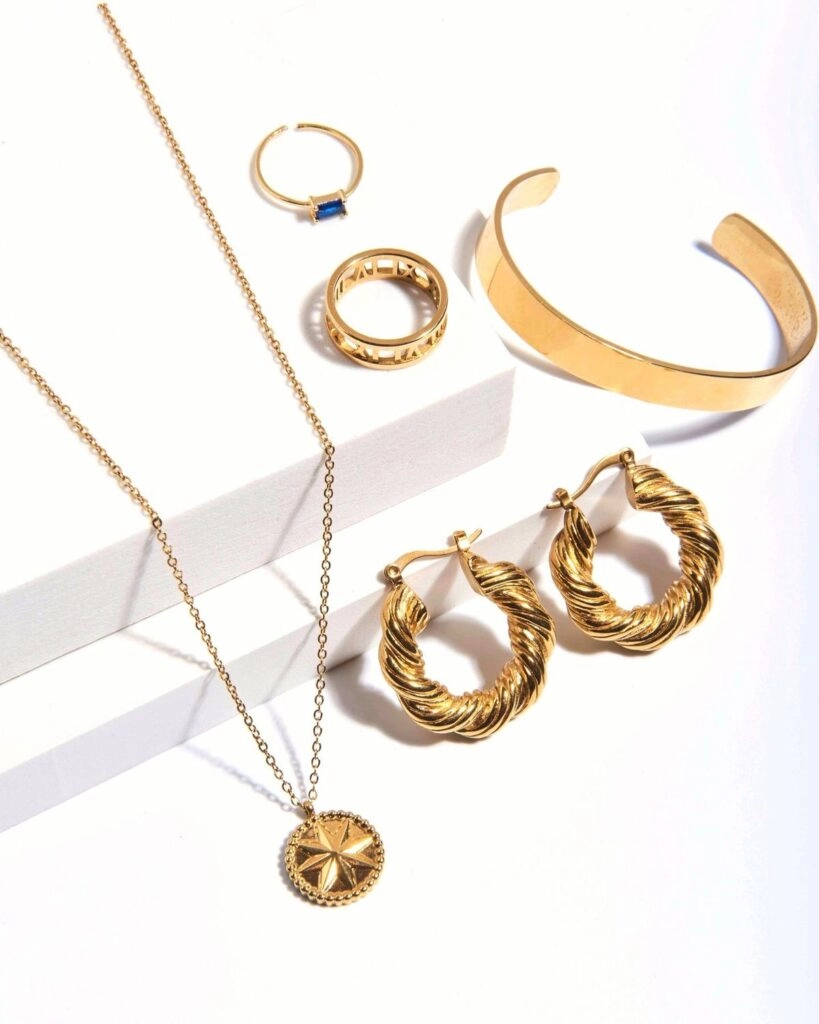
When I’m asked what jewelry material is waterproof, 316L surgical stainless steel is always my first answer. It is the industry standard for a reason. Unlike standard alloys, 316L contains molybdenum, a specific element that provides a powerful defense against “pitting” caused by saltwater and chlorine. This makes it the ultimate seawater-safe jewelry choice for anyone with an active, coastal lifestyle.
In the world of hypoallergenic jewelry manufacturing, the leap from 304 to 316L is massive. While 304 steel is fine for basic items, I always use 316L for premium pieces because of its superior durability:
If you are looking for the most reliable metal for daily wear, I’ve detailed exactly why this is the preferred choice in this guide to safe 316L surgical steel jewelry. Whether you are hitting the gym or the beach, 316L remains the most resilient 304 vs 316L stainless steel option available today.
When I look for a metal that balances extreme durability with a feather-light feel, titanium is the clear winner. It has the highest strength-to-weight ratio of any metal, which is why it’s a staple for high-end watches and corrosion-resistant alloys. Unlike heavier metals, you can wear titanium all day without feeling weighed down.
Titanium naturally forms a protective oxide layer that prevents it from reacting with the environment. This makes it a premier seawater-safe jewelry option that won’t tarnish or turn your skin green. In my experience, it’s the best material for items that stay in constant contact with the body. For example, our titanium nose ring hoop designs are specifically engineered to provide a tarnish-free jewelry metal experience that lasts a lifetime, even with 24/7 wear. For anyone prioritizing health and longevity, titanium is the ultimate “set it and forget it” metal.

If you want the high-end look of gold without the fear of it fading after one beach trip, PVD (Physical Vapor Deposition) is the industry secret. Most people ask, “what jewelry metal is waterproof?” while assuming gold-colored pieces are off-limits. With PVD vacuum plating, that’s no longer the case.
Standard electroplating involves dipping jewelry into a chemical bath to coat it with a thin layer of gold. This layer is fragile and prone to flaking. In contrast, PVD vacuum plating occurs in a high-temperature vacuum chamber where the gold is vaporized and blasted onto the surface.
As an experienced private label jewelry manufacturer, I’ve seen how PVD technology has transformed the market for tarnish-free jewelry metals. By using this vacuum process, we create sweat-proof necklaces and rings that maintain their deep gold hue without turning your skin green.
| Feature | Traditional Electroplating | PVD Vacuum Plating |
|---|---|---|
| Water Resistance | Low (Fades quickly) | High (Seawater-safe) |
| Bonding Type | Surface Layer | Molecular Bond |
| Typical Lifespan | 1-3 Months | 2+ Years |
| Chemical Resistance | Weak against perfume/sweat | Highly resistant |
This specialized IP gold plating is the only way to achieve a truly waterproof metal aesthetic for gold lovers. Whether you are swimming or showering, these pieces are designed to handle the elements while maintaining a premium finish.
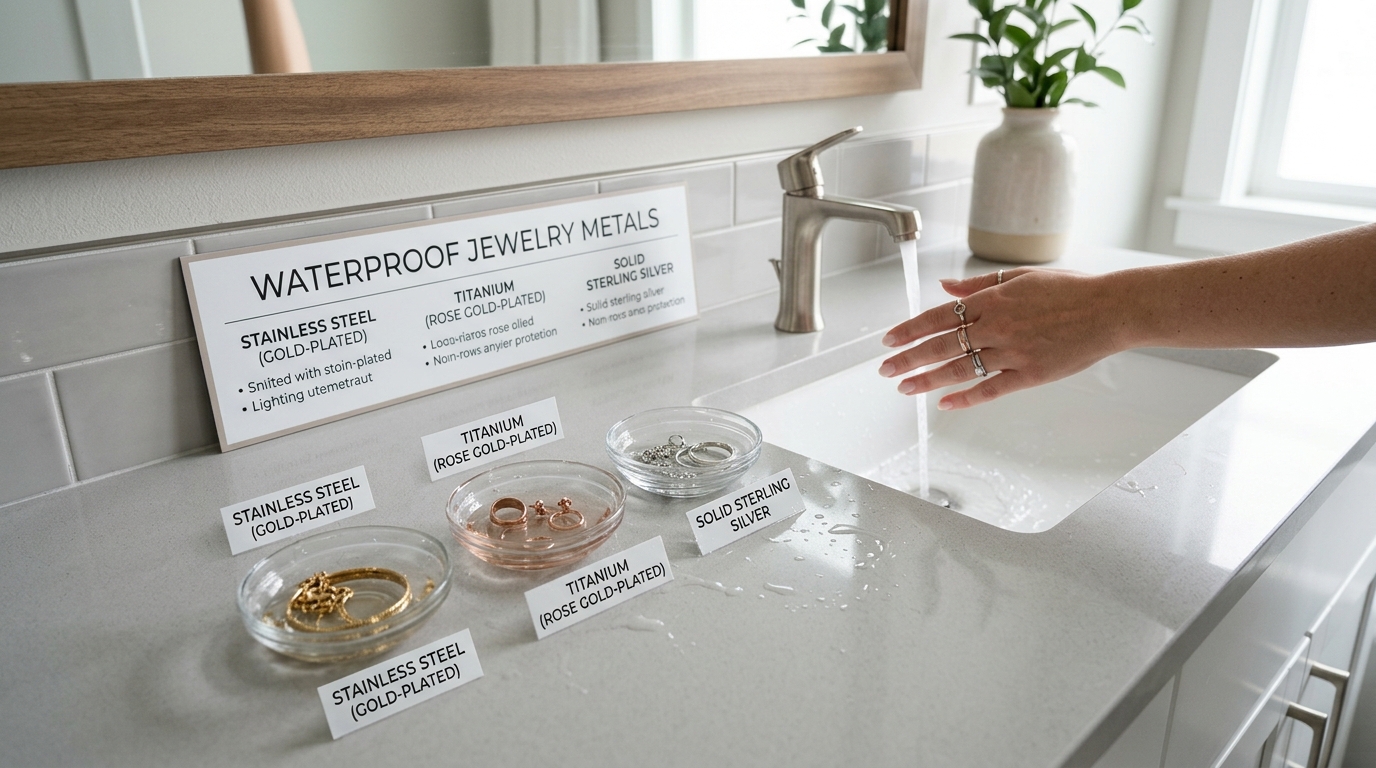
Choosing the right material is the only way to guarantee your pieces won’t end up in the trash after a summer at the beach. In the world of waterproof jewelry, there is a massive performance gap between professional-grade alloys and standard “fashion” metals like brass.
| Metal Type | Seawater Resistance | Sweat Resistance | Lifespan Expectancy |
|---|---|---|---|
| 316L Stainless Steel | High | Superior | 5-10+ Years |
| Titanium | Extreme | Maximum | Lifetime |
| Brass | Very Low | Poor | < 3 Months |
I’ve tested these materials in real-world conditions to ensure they meet high durability standards. Here is how they stack up when things get wet:
When you are looking to build a brand or stock a collection, finding a custom engraved jewelry manufacturer that truly understands what jewelry metal is waterproof is the only way to ensure long-term success. I don’t take shortcuts with my production; I focus on high-end manufacturing secrets that guarantee every piece survives the daily grind.
For the United States market, safety and quality standards are non-negotiable. I make sure all materials meet rigorous jewelry durability standards to protect both the wearer and the brand’s reputation:
I use advanced 3D prototyping to visualize every angle and stress point before a single piece is cast. Once the design is locked in, CNC precision machining takes over. This process is superior to traditional casting because:
Even though I design my collections using the most durable marine-grade jewelry metals, a little bit of care goes a long way in preserving that original shine. Whether you’re hitting the surf or the gym, keeping your pieces clean ensures the tarnish-free jewelry metals stay bright for years.
Saltwater is the ultimate test for any “waterproof” claim. While 316L surgical stainless steel and titanium are naturally corrosion-resistant alloys, salt crystals can leave a gritty residue that dulls the finish over time.
The Physical Vapor Deposition (PVD) process is incredibly tough, but it isn’t indestructible against heavy industrial chemicals. As a partner with a leading pvd gold plated jewelry manufacturer, I’ve seen firsthand how proper care extends the life of non-tarnish gold plating well beyond the two-year mark.
I get asked these questions every day by brand owners and customers alike. When you’re looking for waterproof jewelry, you need to know exactly how these metals perform in real-life conditions, like the gym, the pool, and the morning shower.
While 304 stainless steel is water-resistant, I don’t recommend it for permanent daily wear. It lacks the molybdenum found in 316L, meaning the chlorides in tap water and surfactants in body wash can eventually dull the finish. For a truly “set it and forget it” piece, 316L is the standard. If you’re curious about skin reactions during daily wear, check out my guide on does stainless steel jewelry turn skin green to see why metal quality matters.
Not immediately. PVD vacuum plating is a molecular bond, so it won’t flake or peel like cheap electroplating. However, chlorine is a harsh oxidizer. To maintain that high-end non-tarnish gold plating luster for 2+ years, I always tell my clients to rinse their jewelry with fresh water after swimming. Proper maintenance is the secret to longevity, and you can find more tips in this how to care for stainless steel jewelry complete guide.
Differentiating between 316L surgical stainless steel and cheaper 304 or 201 alloys is tough at a glance, but here is what I look for:
For those looking to launch their own line of corrosion-resistant alloys, we keep our process streamlined. My current minimum order quantities (MOQs) for custom waterproof designs are:
| Service Type | Typical MOQ | Lead Time |
|---|---|---|
| Standard 316L Designs | 50 – 100 Pieces | 15 – 20 Days |
| PVD Gold Plated Items | 100 Pieces | 20 – 25 Days |
| CNC Precision Titanium | 50 Pieces | 25 – 30 Days |
I focus on nickel-free waterproof jewelry that meets REACH and Prop 65 standards, ensuring your brand stays compliant and your customers stay happy.


