Whatspp/Phone:
+8618666402929
Email:info@shinysteeljewelry.com
Factory address:
No. 5 Changsheng Road, Chang’an Town, Dongguan City, Guangdong Province, China.
 Skip to content
Whatspp/Phone:
+8618666402929
Email:info@shinysteeljewelry.com
Factory address:
No. 5 Changsheng Road, Chang’an Town, Dongguan City, Guangdong Province, China.

Most jewelry brands claim to be “waterproof,” but after a few showers or a dip in the ocean, the finish fades and the skin turns green.
The truth? Most pieces aren’t engineered for the real world.
To create a “never-take-it-off” collection, you need more than just a marketing pitch—you need the right science. In this guide, you’re going to learn exactly what makes jewelry truly waterproof and tarnish-free.
I’m breaking down the technical standards used to build professional-grade pieces, from the corrosion resistance of 316L Surgical Stainless Steel to the molecular bond of PVD Vacuum Plating.
If you’re ready to move past fast-fashion junk and understand the power of Physical Vapor Deposition, let’s dive right in.
When we talk about tarnish-free jewelry, the conversation starts and ends with the base metal. If the core of your piece isn’t built to handle moisture, no amount of plating will save it from eventually hitting the trash can. We prioritize materials that are inherently corrosion resistant to ensure your jewelry survives the gym, the shower, and the sea.
We use 316L Surgical Stainless Steel as our primary foundation for a reason: it is the marine-grade gold standard. This isn’t your average metal; it’s the same material used in underwater diving equipment and medical implants.
The secret to the longevity of our steel is Chromium. When this element is exposed to oxygen, it forms an invisible, microscopic self-healing oxide layer. If you accidentally scratch your ring, this layer reformulates instantly to protect the underlying metal from oxidation. This is what makes our pieces truly oxidation-resistant jewelry.
While steel is our powerhouse, we utilize other high-performance metals to meet specific design needs:
| Metal Type | Best For | Key Benefit |
|---|---|---|
| Titanium | Lightweight, bold pieces | 100% biocompatible and incredibly strong. |
| Eco-Brass | Intricate, detailed jewelry | A sustainable, high-quality base that holds PVD vacuum plating exceptionally well. |
By starting with a marine-grade metal, we ensure that our jewelry doesn’t just look good on day one—it stays that way for years, regardless of your lifestyle.

When we look at what makes jewelry waterproof, the plating method is the real deal-breaker. Most “gold-plated” jewelry fails because the gold is just a thin film sitting on top of the metal. I use PVD (Physical Vapor Deposition) because it’s a total game-changer for durability. Instead of a liquid bath, the jewelry is placed in a vacuum chamber where gold is vaporized into a plasma and bonded at a molecular level.
Standard electroplating is prone to chipping and flaking because the bond is weak. In contrast, our 18k gold PVD coating creates a finish that is functionally part of the steel itself. This is why our customization options for stainless steel jewelry consistently outperform traditional fashion pieces in the real world.
Not all PVD is created equal. The industry standard for cheap “flash” plating is often around 0.5 microns, which wears down quickly. To ensure true tarnish-free jewelry performance, I push for a 2.5 micron thickness standard.
| Plating Type | Thickness | Performance Expectation |
|---|---|---|
| Standard Flash | 0.5 Microns | Fades within months of daily wear. |
| High-Grade PVD | 2.5 Microns | Stays gold through gym sessions, showers, and ocean swims. |
This extra thickness provides a “wear-off” buffer, ensuring the underlying silver-toned steel doesn’t peek through even after years of friction against skin and clothing. This engineering is exactly what makes waterproof jewelry live up to the hype in the United States market, where customers demand pieces they never have to take off.
When I design jewelry that’s meant to live in the water, I look past just the metal and the plating. True corrosion resistance starts with how the piece is put together. Most jewelry fails not because the metal rusted, but because the construction couldn’t handle the environment.
The biggest secret to long-lasting, sweat-proof jewelry is staying away from adhesives. Most fashion jewelry relies on glue to hold stones in place, but moisture and body heat are “glue killers.” Over time, water breaks down the bond, causing stones to fall out.
To prevent this, I use mechanical stone settings. This means stones are held in place by the metal itself—using prongs, bezels, or tension. Whether it’s a stainless steel ring or a pair of studs, this engineering ensures your stones stay put through every swim and shower.
Traditional soldering can leave tiny, microscopic pores that trap salt and chemicals. I utilize laser welding techniques to eliminate these weak points. This process creates a clean, deep bond that is essentially one solid piece of metal.
By combining mechanical stone settings with advanced welding, I build jewelry that doesn’t just look waterproof—it’s engineered to be indestructible.
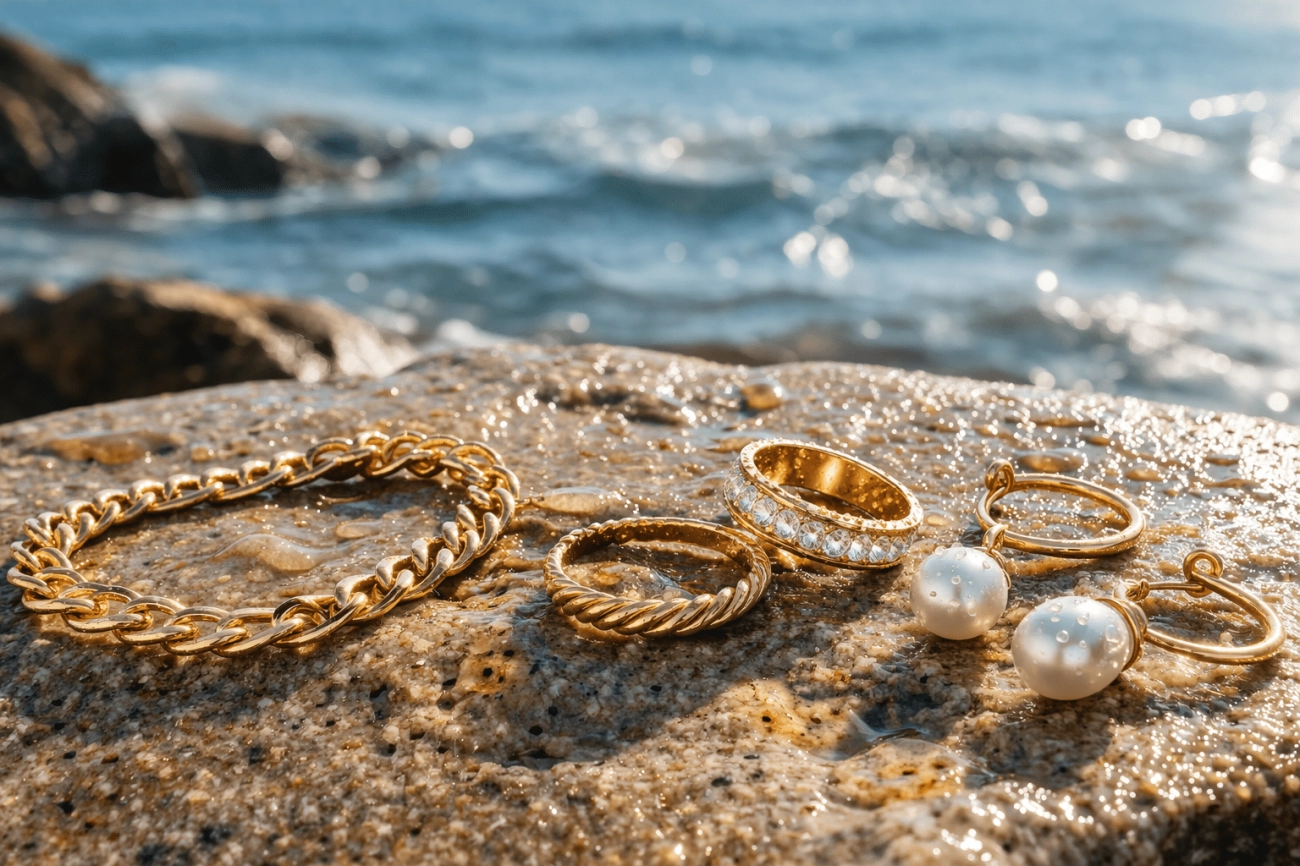
We don’t just claim our pieces are durable; we put them through the ringer to prove what makes jewelry waterproof in real-world conditions. Our quality control process is designed to meet the high expectations of the US market, ensuring every piece of custom stainless steel jewelry we produce holds up to the rigors of daily wear.
To guarantee maximum corrosion resistance, we utilize industrial salt spray testing. This process simulates years of environmental stress in a matter of hours by accelerating the effects of:
We follow strict AQL 2.5 quality commitments to maintain consistency across every production batch. Our process includes destructive testing, where we intentionally stress the metal and coating to ensure the molecular level bonding won’t chip or fade under pressure. If a sample doesn’t meet our standards for tarnish-free jewelry, it never leaves the facility.
Your skin health is a top priority in our engineering process. We conduct rigorous material analysis to ensure total Nickel-free and Lead-free compliance. By strictly using hypoallergenic metals, we eliminate the risk of green skin or irritation, ensuring our jewelry is safe for 24/7 wear. For specific details on our material safety, you can view our frequently asked questions to see how we maintain these high standards.
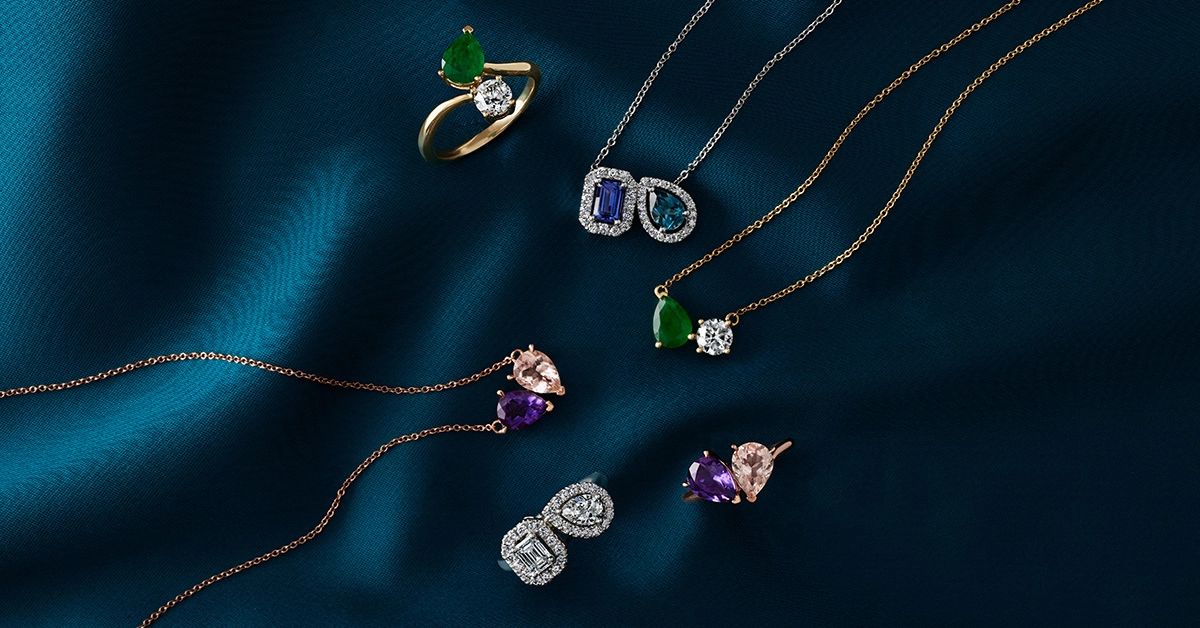
Even with the best engineering, a little common sense keeps your pieces looking brand new for years. People often ask me what makes jewelry waterproof in the long run, and the answer is simple: high-quality materials paired with basic maintenance. Here is how I recommend protecting your investment.
The short answer is yes. However, I always tell my customers to follow the Rinsing Rule. While our marine-grade metals offer incredible corrosion resistance, salt water can leave behind abrasive crystals that may dull the finish over time.
Public pools and hot tubs are a different beast. Chlorine is a harsh oxidant that can eventually stress any surface. Because we utilize a high-end PVD gold plated jewelry manufacturer to handle our coatings, the molecular bond is incredibly strong, but constant chemical exposure is never ideal.
When you invest in tarnish-free jewelry, you are buying durability. Unlike cheap electroplating that flakes off within weeks, our PVD vacuum plating process is designed for the active American lifestyle.
| Exposure Type | Durability Level | Care Tip |
|---|---|---|
| Daily Showers | High | Use mild soap only |
| Gym & Sweat | High | Sweat-proof jewelry only needs a wipe-down |
| Ocean Water | Medium-High | Always rinse with fresh water |
| Pool Chlorine | Medium | Limit long-term soaking |
With proper care, these pieces will remain a staple in your collection, maintaining their luster through workouts, workdays, and weekend trips without the fear of turning green or fading.
I get a lot of questions about how our pieces actually hold up in the real world. When you’re looking for tarnish-free jewelry that survives the gym, the shower, and the beach, these are the answers you need to know.
No. The dreaded “green skin” effect is caused by oxidation when cheap base metals like copper or brass react with your skin’s oils or moisture. Because I use 316L Surgical Stainless Steel as the foundation, there is no copper involved. You can read my detailed jewelry manufacturer guide on why stainless steel doesn’t turn skin green to understand the metallurgy behind it.
For daily wear and water exposure, PVD Vacuum Plating is often the superior choice. While gold-filled jewelry has a thicker layer of gold, it is bonded to a brass core which can eventually corrode if the layer is scratched. PVD on steel creates a molecular level bonding that is much harder and more scratch-resistant, making it the better “life-proof” option.
| Feature | 18k Gold PVD (on Steel) | Gold-Filled (on Brass) |
|---|---|---|
| Waterproof Level | 100% (Marine Grade) | High (but core can corrode) |
| Scratch Resistance | Extremely High | Moderate |
| Base Metal | 316L Stainless Steel | Brass or Bronze |
| Skin Safety | Hypoallergenic | Depends on alloy |
True 316L Surgical Stainless Steel is a marine-grade metal. It is generally non-magnetic (though some Machining processes can introduce a slight magnetic pull). The best way to know is the “rust test.” If you leave it in salt water and it shows zero signs of corrosion or pitting after days, it’s the real deal.
Yes. Unlike traditional electroplating which can be stripped away by the high alcohol content in sanitizers, an 18k gold PVD coating is incredibly chemically stable. You don’t have to panic every time you clean your hands; the finish is designed to withstand harsh daily environments without flaking or losing its luster.


